Capital Medical University Affiliated Beijing You'an Hospital, Beijing, China.
Beijing Institute of Hepatology, Beijing, China.
J Cell Mol Med. 2021 Jul;25(14):6899-6908. doi: 10.1111/jcmm.16699. Epub 2021 Jun 4.
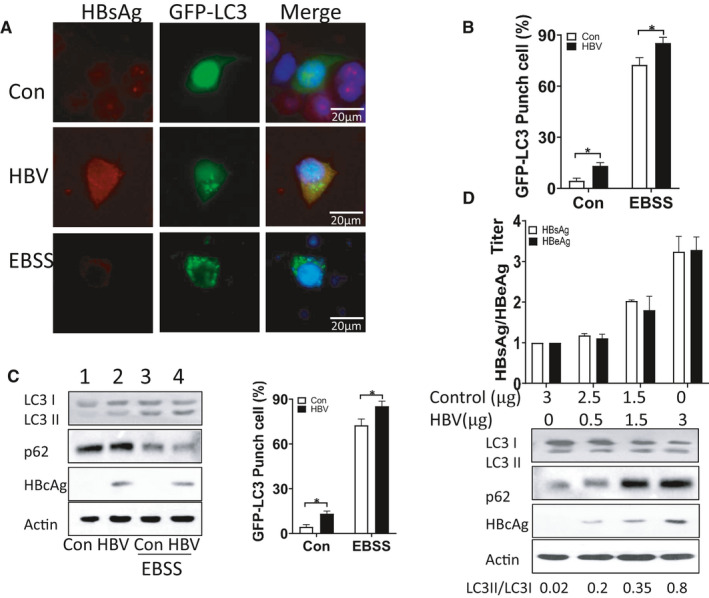
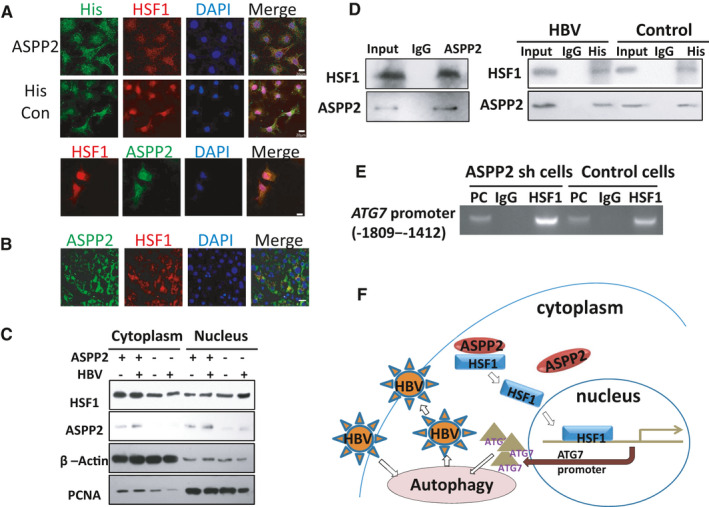
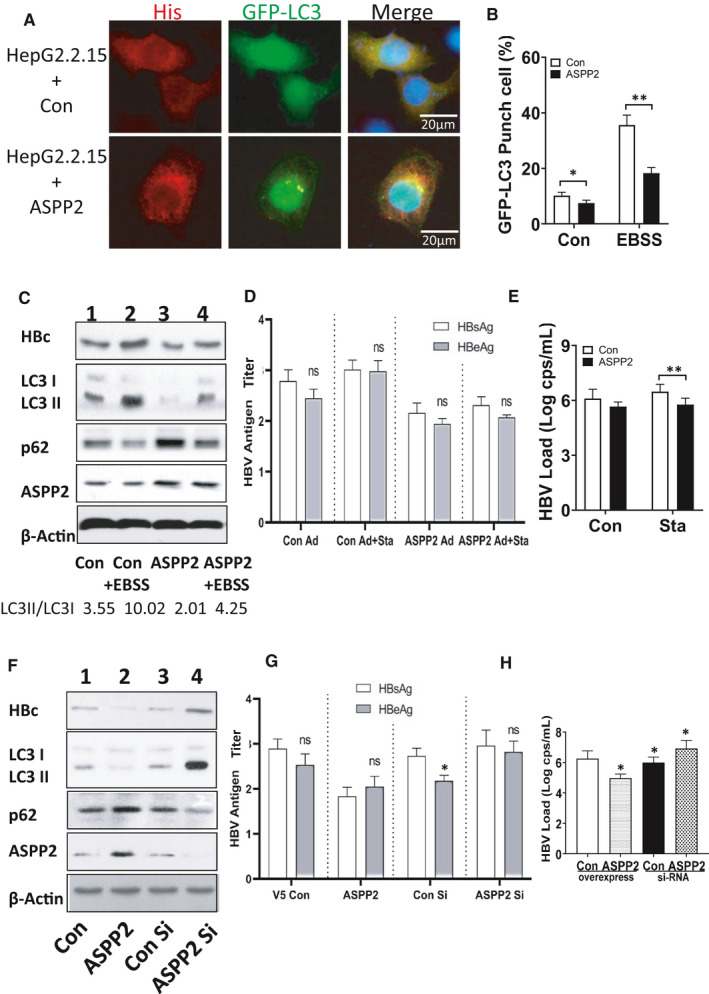
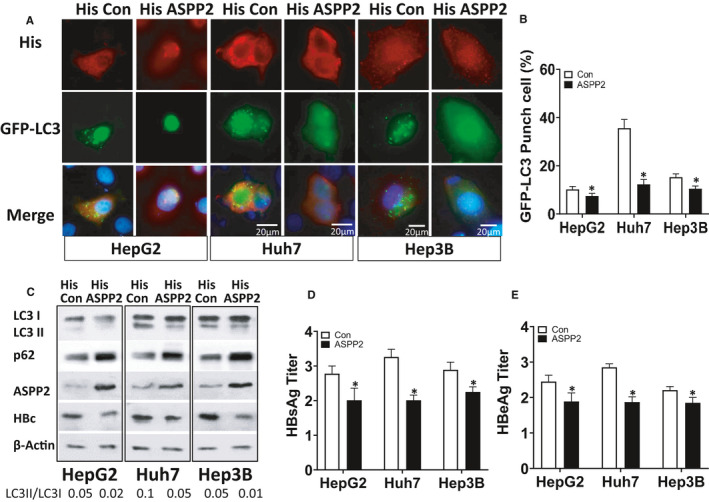
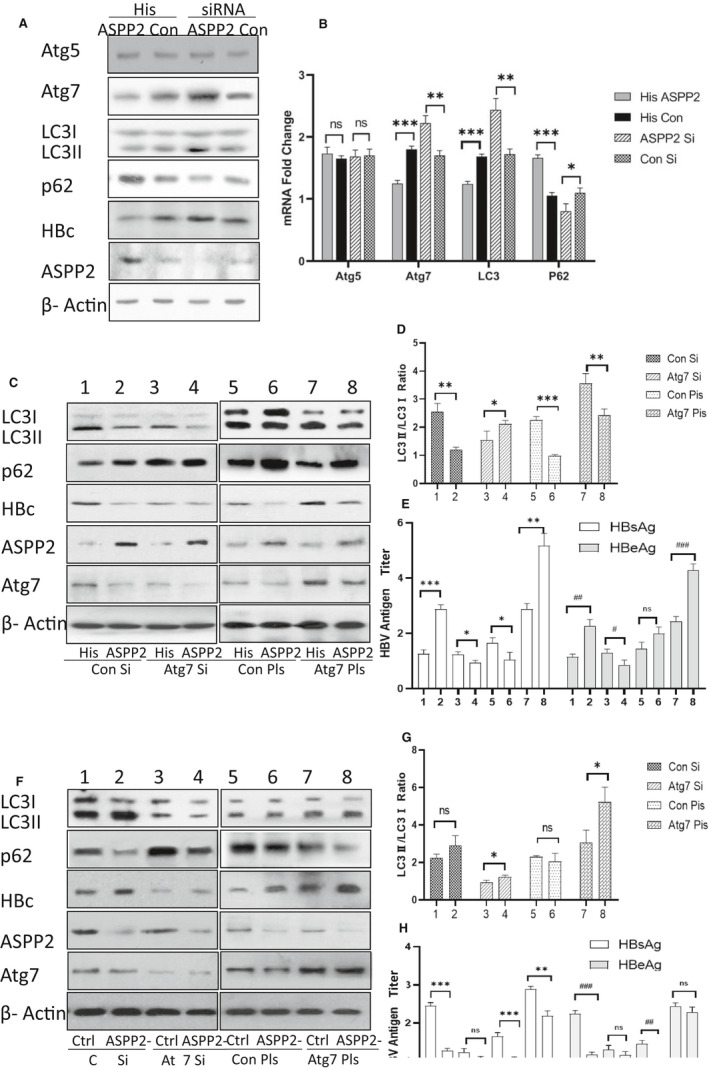
Hepatitis B virus (HBV) is a kind of virus with the capability to induce autophagy, thereby facilitating its replication. Reducing hepatocyte autophagy is proved to be a useful way to inhibit HBV replication. Herein, we reported that p53-binding protein 2 (apoptosis-stimulating protein of p53-2, ASPP2) could attenuate HBV-induced hepatocyte autophagy in a p53-independent manner. Mechanistically, overexpressed ASPP2 binds to HSF1 in cytoplasm of HBV-infected cells, which prevents the translocation of HSF1 to nuclei, thereby inhibiting the transactivation of Atg7. By regulating the transcription of Atg7, ASPP2 reduces hepatocyte autophagy, thereby inhibiting HBV replication. Therefore, ASPP2 is a key regulator of cell autophagy, and overexpression of ASPP2 could be a novel method to inhibit HBV replication in hepatocytes.
乙型肝炎病毒(HBV)是一种能够诱导自噬的病毒,从而促进其复制。减少肝细胞自噬被证明是抑制 HBV 复制的一种有效方法。在这里,我们报道了 p53 结合蛋白 2(凋亡刺激蛋白 p53-2,ASPP2)可以在不依赖 p53 的情况下减弱 HBV 诱导的肝细胞自噬。在机制上,过表达的 ASPP2 与 HBV 感染细胞中的 HSF1 在细胞质中结合,阻止 HSF1 向核内易位,从而抑制 Atg7 的转录激活。通过调节 Atg7 的转录,ASPP2 减少肝细胞自噬,从而抑制 HBV 复制。因此,ASPP2 是细胞自噬的关键调节剂,ASPP2 的过表达可能是抑制肝细胞中 HBV 复制的一种新方法。