State Key Laboratory of Freshwater Ecology and Biotechnology, Chinese Academy of Sciences, Wuhan, 430072, China; Zhejiang Zhonglan Environment Technology Co., LTD, Wenzhou, 325000, China.
Hubei Academy of Environmental Sciences, Wuhan, 430072, China.
Environ Pollut. 2021 Sep 15;285:117485. doi: 10.1016/j.envpol.2021.117485. Epub 2021 May 31.
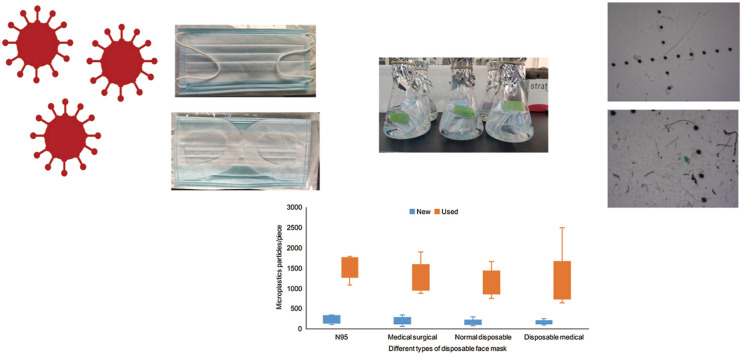
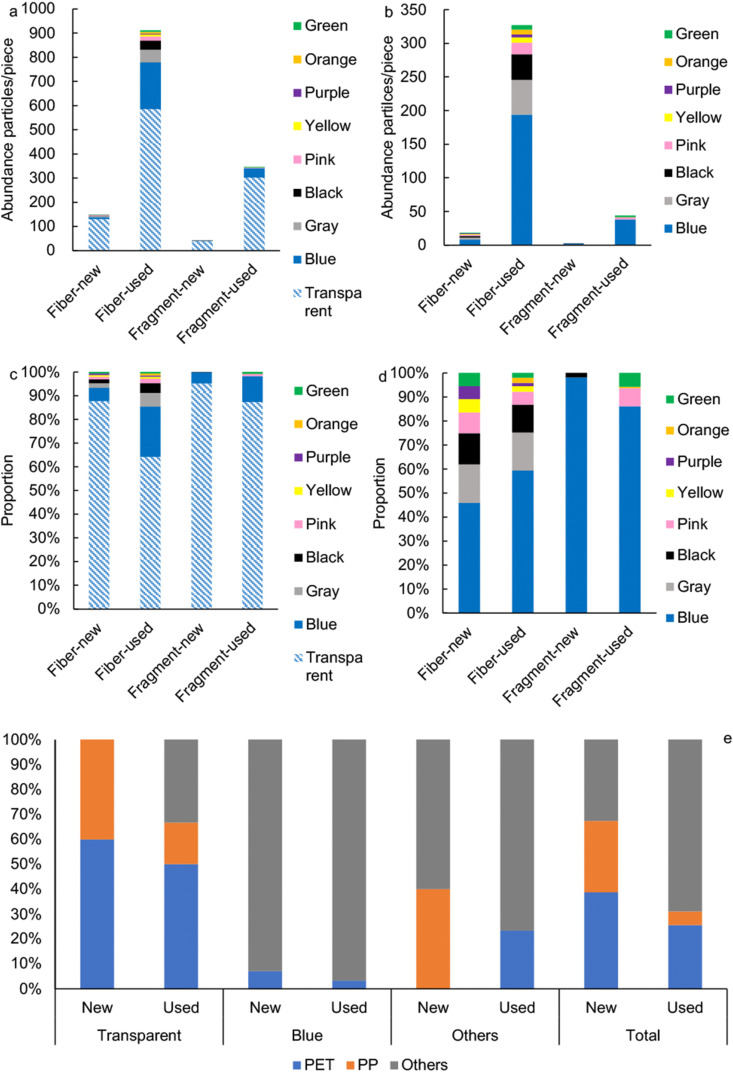
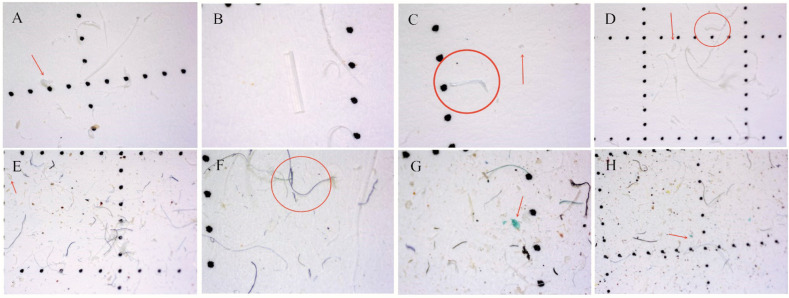
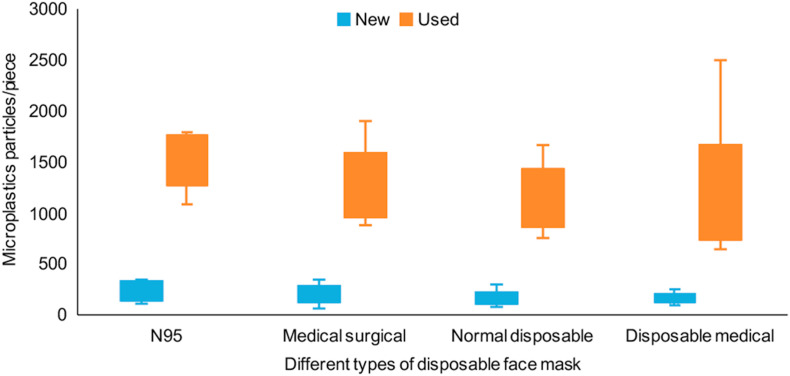
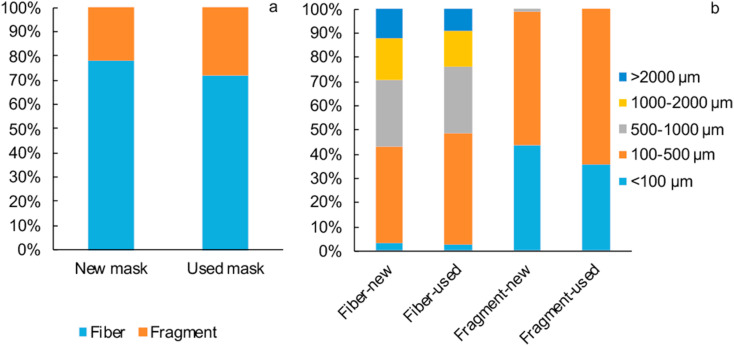
The consumption of disposable face masks increases greatly because of the outbreak of the COVID-19 pandemic. Inappropriate disposal of wasted face masks has already caused the pollution of the environment. As made from plastic nonwoven fabrics, disposable face masks could be a potential source of microplastics for the environment. In this study, we evaluated the ability of new and used disposable face masks of different types to release microplastics into the water. The microplastic release capacity of the used masks increased significantly from 183.00 ± 78.42 particles/piece for the new masks to 1246.62 ± 403.50 particles/piece. Most microplastics released from the face masks were medium size transparent polypropylene fibers originated from the nonwoven fabrics. The abrasion and aging during the using of face masks enhanced the releasing of microplastics since the increasing of medium size and blue microplastics. The face masks could also accumulate airborne microplastics during use. Our results indicated that used disposable masks without effective disposal could be a critical source of microplastics in the environment. The efficient allocation of mask resources and the proper disposal of wasted masks are not only beneficial to pandemic control but also to environmental safety.
由于 COVID-19 疫情的爆发,一次性口罩的消耗量大大增加。废弃口罩的不当处理已经造成了环境污染。由于由塑料无纺布制成,一次性口罩可能成为环境中微塑料的潜在来源。在这项研究中,我们评估了不同类型的新的和使用过的一次性口罩将微塑料释放到水中的能力。使用过的口罩的微塑料释放能力从新口罩的 183.00 ± 78.42 个/片显著增加到 1246.62 ± 403.50 个/片。从口罩释放的大多数微塑料是中等大小的透明聚丙烯纤维,来源于无纺布。由于中等大小和蓝色微塑料的增加,口罩在使用过程中的磨损和老化增强了微塑料的释放。口罩在使用过程中也可以积累空气中的微塑料。我们的结果表明,未经有效处理的使用过的一次性口罩可能是环境中微塑料的一个重要来源。有效分配口罩资源和妥善处理废弃口罩不仅有利于控制大流行,还有利于环境安全。