Sustainable Field Crops Programme, IRTA (Institute for Food and Agricultural Research and Technology), 25198, Lleida, Spain.
Department of Agricultural and Environmental Science, University of Bari 'Aldo Moro', Via G. Amendola 165/A, 70126, Bari, Italy.
Sci Rep. 2021 Jun 4;11(1):11877. doi: 10.1038/s41598-021-91446-2.
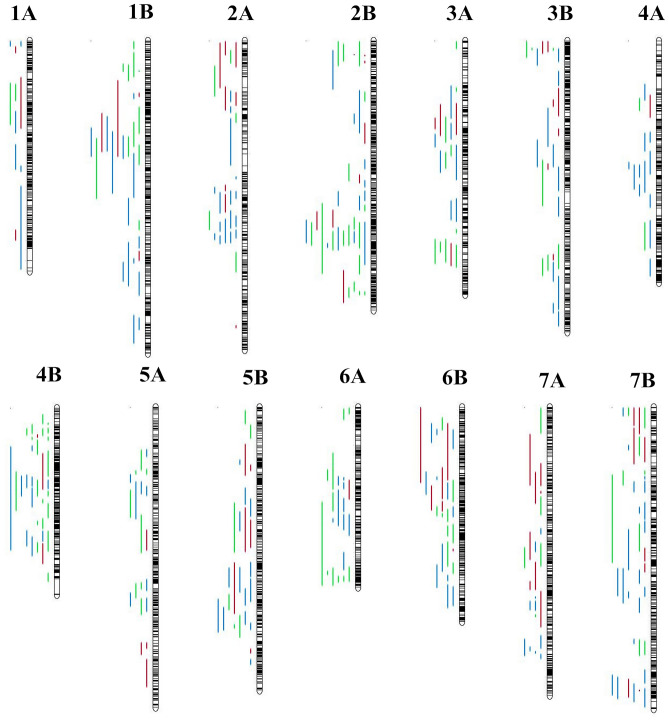
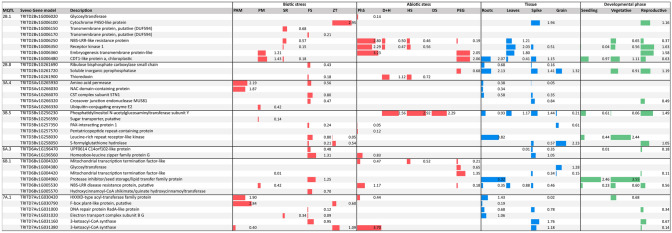
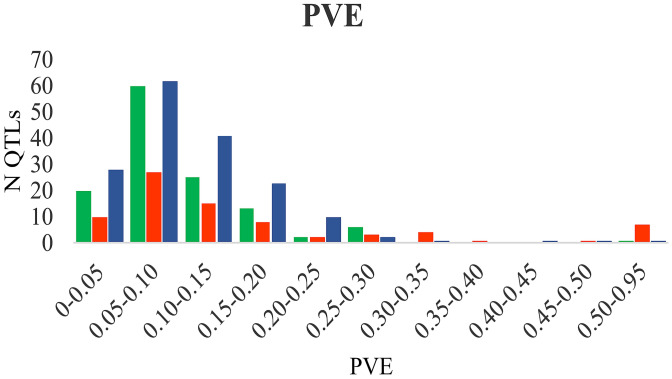
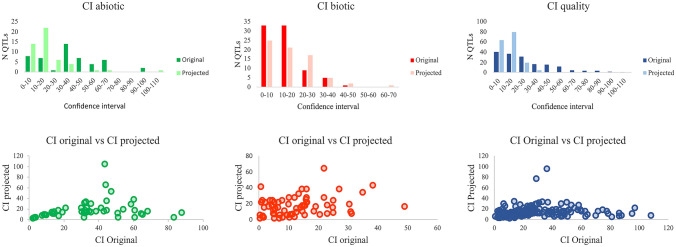
The genetic improvement of durum wheat and enhancement of plant performance often depend on the identification of stable quantitative trait loci (QTL) and closely linked molecular markers. This is essential for better understanding the genetic basis of important agronomic traits and identifying an effective method for improving selection efficiency in breeding programmes. Meta-QTL analysis is a useful approach for dissecting the genetic basis of complex traits, providing broader allelic coverage and higher mapping resolution for the identification of putative molecular markers to be used in marker-assisted selection. In the present study, extensive QTL meta-analysis was conducted on 45 traits of durum wheat, including quality and biotic and abiotic stress-related traits. A total of 368 QTL distributed on all 14 chromosomes of genomes A and B were projected: 171 corresponded to quality-related traits, 127 to abiotic stress and 71 to biotic stress, of which 318 were grouped in 85 meta-QTL (MQTL), 24 remained as single QTL and 26 were not assigned to any MQTL. The number of MQTL per chromosome ranged from 4 in chromosomes 1A and 6A to 9 in chromosome 7B; chromosomes 3A and 7A showed the highest number of individual QTL (4), and chromosome 7B the highest number of undefined QTL (4). The recently published genome sequence of durum wheat was used to search for candidate genes within the MQTL peaks. This work will facilitate cloning and pyramiding of QTL to develop new cultivars with specific quantitative traits and speed up breeding programs.
硬质小麦的遗传改良和植物性能的提高通常依赖于稳定的数量性状位点 (QTL) 和紧密连锁的分子标记的鉴定。这对于更好地理解重要农艺性状的遗传基础以及确定在育种计划中提高选择效率的有效方法至关重要。元 QTL 分析是解析复杂性状遗传基础的一种有用方法,为鉴定用于分子辅助选择的假定分子标记提供了更广泛的等位基因覆盖和更高的图谱分辨率。在本研究中,对硬质小麦的 45 个性状进行了广泛的 QTL 元分析,包括品质和生物及非生物胁迫相关性状。共预测到分布在基因组 A 和 B 的 14 条染色体上的 368 个 QTL:171 个对应于品质相关性状,127 个对应于非生物胁迫,71 个对应于生物胁迫,其中 318 个被分组为 85 个元 QTL (MQTL),24 个仍然是单个 QTL,26 个未被分配到任何 MQTL。每个染色体上的 MQTL 数量从 1A 和 6A 染色体上的 4 个到 7B 染色体上的 9 个不等;3A 和 7A 染色体上的单个 QTL 数量最多(4 个),7B 染色体上的未定义 QTL 数量最多(4 个)。利用最近公布的硬质小麦基因组序列,在 MQTL 峰内搜索候选基因。这项工作将有助于克隆和聚合 QTL,以开发具有特定数量性状的新品种,并加速育种计划。