Department of Physical Medicine and Rehabilitation, The Johns Hopkins Hospital, Baltimore, MD.
Department of Physical Medicine and Rehabilitation, The Johns Hopkins Hospital, Baltimore, MD.
Arch Phys Med Rehabil. 2021 Sep;102(9):1840-1847. doi: 10.1016/j.apmr.2021.05.006. Epub 2021 Jun 4.
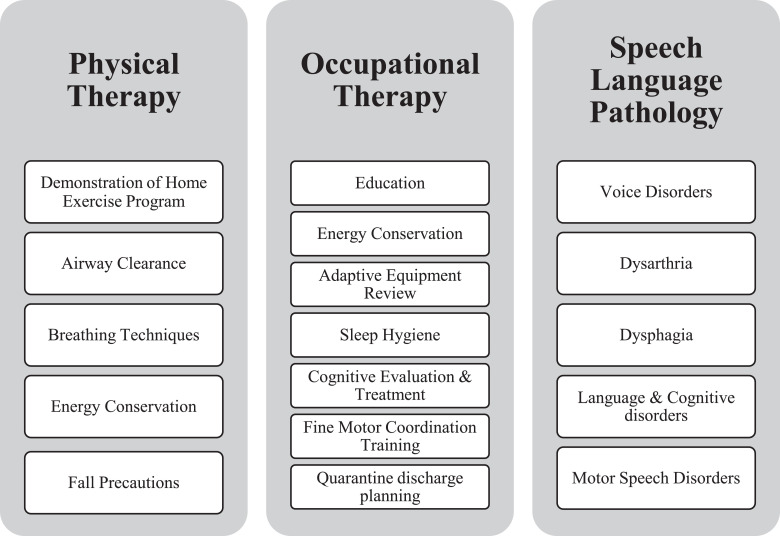
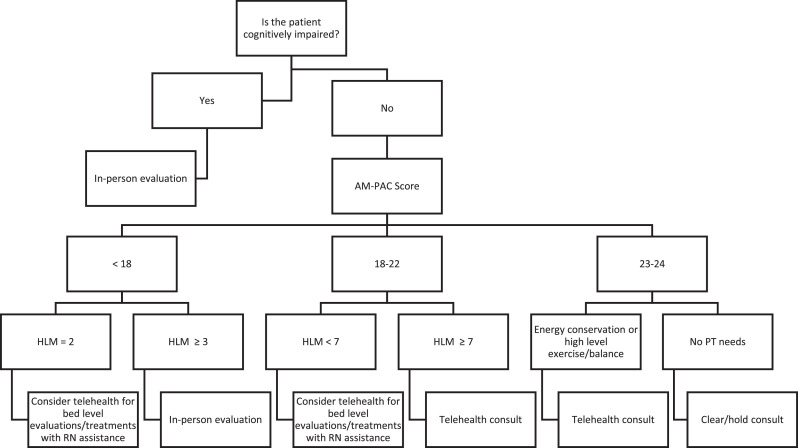
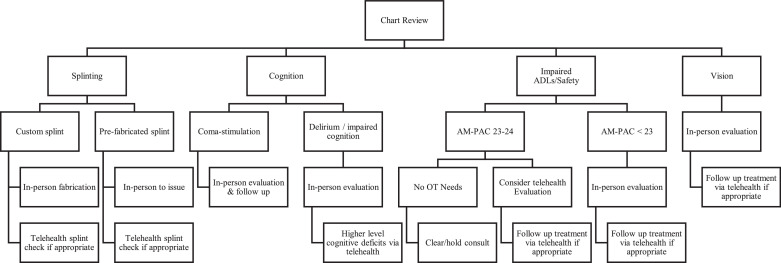
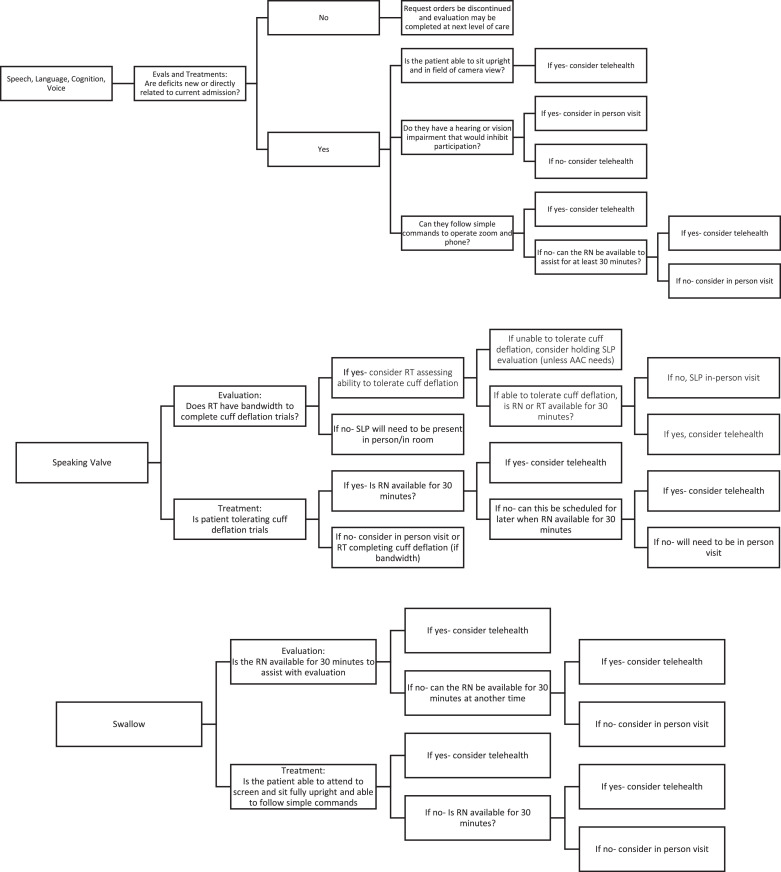
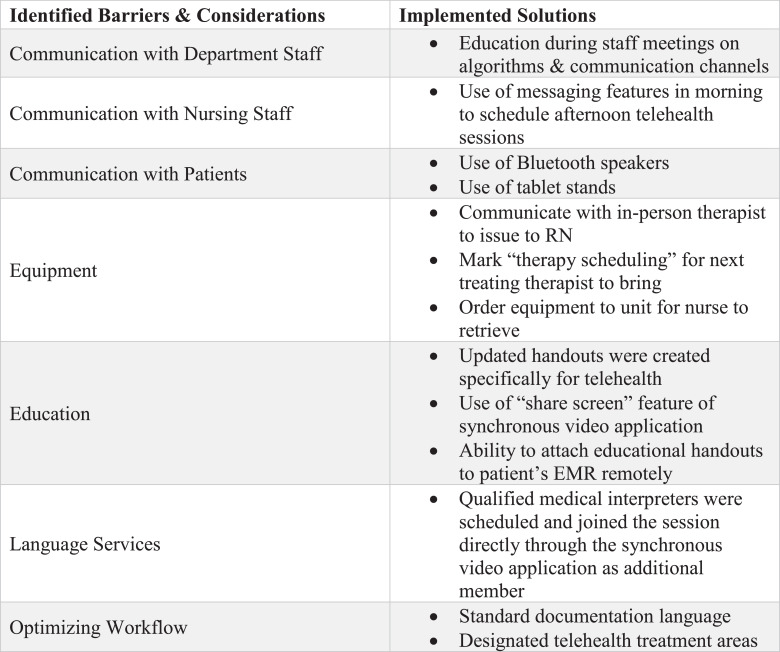
This article outlines a multidisciplinary approach to implementing a telehealth program in the acute care hospital setting during the coronavirus disease 2019 (COVID-19) pandemic. Telehealth has been used in many practice areas, although it can be a particular challenge to establish in an acute care hospital given the fast-paced environment. However, the COVID-19 pandemic presented a unique situation. In-person treatment interactions became increasingly high risk for both patient and provider, and there was an emerging need to conserve personal protective equipment and limit exposure. In response to these developments, physical therapists, occupational therapists, and speech language pathologists treating an adult population turned to telehealth to supplement in-person treatment. This article outlines the clinical reasoning and practical application to implementing a telehealth program in an acute care hospital and includes regulations, identified successful strategies, barriers, considerations, decision-making algorithms, and discipline-specific interventions.
本文概述了在 2019 年冠状病毒病(COVID-19)大流行期间,在急症医院环境中实施远程医疗计划的多学科方法。远程医疗已在许多实践领域得到应用,尽管在快节奏的环境中,在急症医院建立远程医疗可能是一个特别的挑战。然而,COVID-19 大流行带来了一个独特的情况。对于患者和医务人员来说,面对面的治疗互动风险越来越高,而且需要保护个人防护设备并限制接触。针对这些发展,治疗成年患者的物理治疗师、职业治疗师和言语语言病理学家转向远程医疗来补充面对面治疗。本文概述了在急症医院实施远程医疗计划的临床推理和实际应用,包括法规、确定的成功策略、障碍、考虑因素、决策算法和特定于学科的干预措施。