Center for Cancer Prevention and Drug Development, Hem-Onc, Department of Medicine, Stephenson Cancer Center, University of Oklahoma HSC, Oklahoma City, OK, USA.
Chemopreventive Agent Development Research Group, Division of Cancer Prevention, National Cancer Institute, Rockville, MD, USA.
Neoplasia. 2021 Jun;23(6):574-583. doi: 10.1016/j.neo.2021.05.010. Epub 2021 Jun 3.
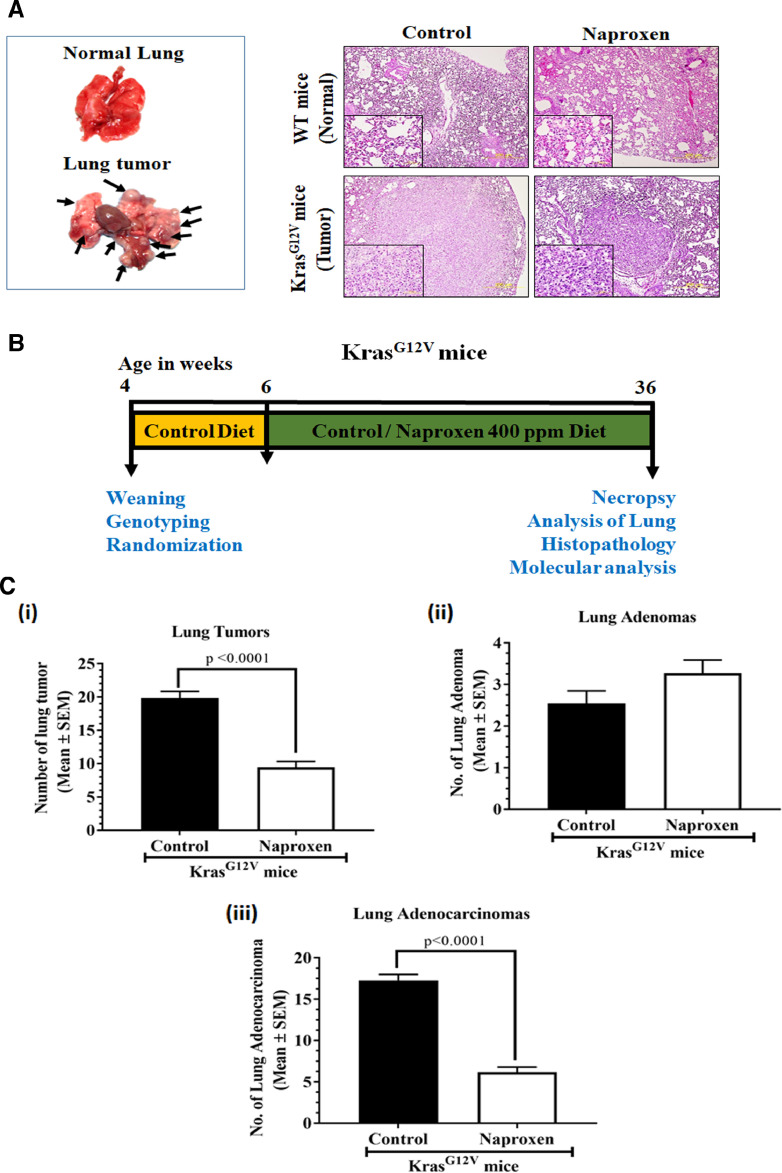
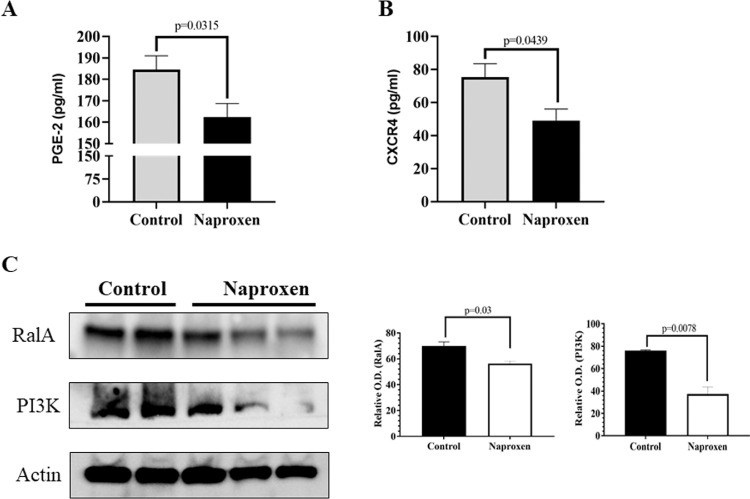
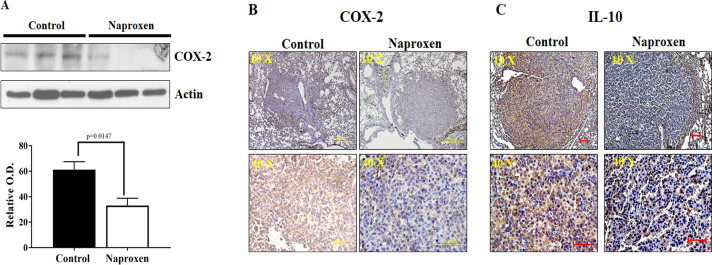
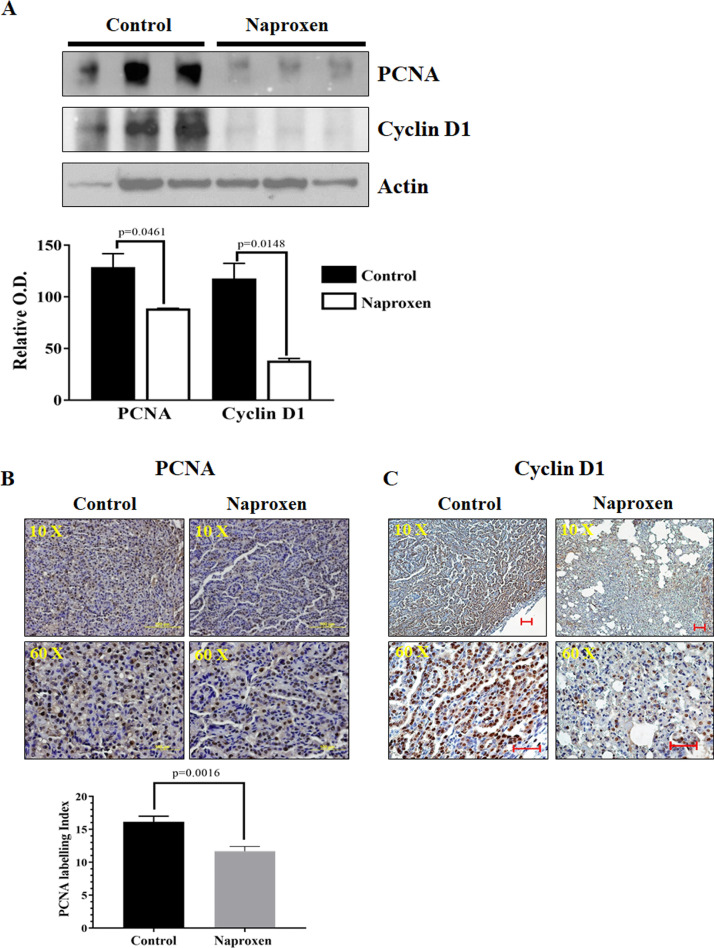
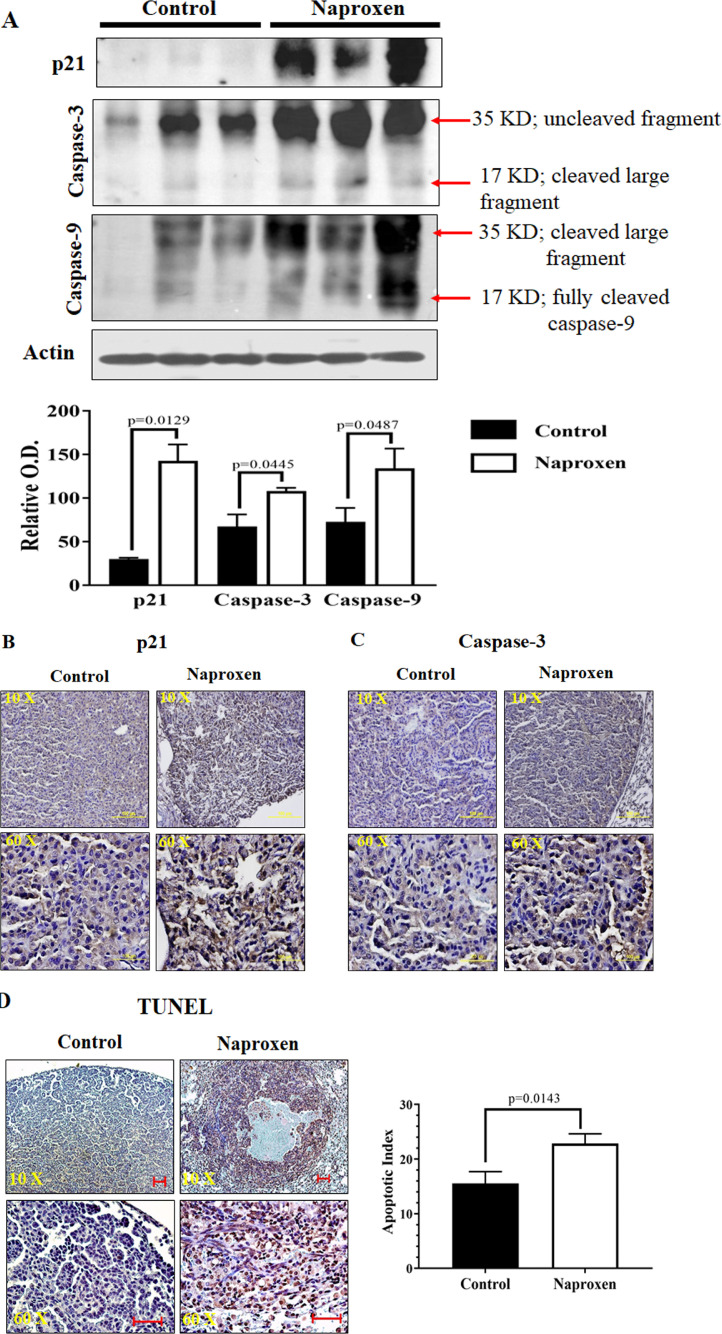
Lung cancer is the leading cause of cancer related deaths worldwide. The present study investigated the effects of naproxen (NSAID) on lung adenocarcinoma in spontaneous lung cancer mouse model. Six-week-old transgenic Kras mice (n = 20; male + female) were fed modified AIN-76A diets containing naproxen (0/400 ppm) for 30 wk and euthanized at 36 wk of age. Lungs were evaluated for tumor incidence, multiplicity, and histopathological stage (adenoma and adenocarcinoma). Lung tumors were noticeable as early as 12 wk of age exclusively in the Kras mice. By 36 wk age, 100% of Kras mice on control diet developed lung tumors, mostly adenocarcinomas. Kras mice fed control diet developed 19.8 ± 0.96 (Mean ± SEM) lung tumors (2.5 ± 0.3 adenoma, 17.3 ± 0.7 adenocarcinoma). Administration of naproxen (400 ppm) inhibited lung tumor multiplicity by ∼52% (9.4 ± 0.85; P < 0001) and adenocarcinoma by ∼64% (6.1 ± 0.6; P < 0001), compared with control-diet-fed mice. However, no significant difference was observed in the number of adenomas in either diet, suggesting that naproxen was more effective in inhibiting tumor progression to adenocarcinoma. Biomarker analysis showed significantly reduced inflammation (COX-2, IL-10), reduced tumor cell proliferation (PCNA, cyclin D1), and increased apoptosis (p21, caspase-3) in the lung tumors exposed to naproxen. Decreased serum levels of PGE and CXCR4 were observed in naproxen diet fed Kras mice. Gene expression analysis of tumors revealed a significant increase in cytokine modulated genes (H2-Aa, H2-Ab1, Clu), which known to further modulate the cytokine signaling pathways. Overall, the results suggest a chemopreventive role of naproxen in inhibiting spontaneous lung adenocarcinoma formation in Kras mice.
肺癌是全球癌症相关死亡的主要原因。本研究探讨了萘普生(非甾体抗炎药)对自发性肺癌小鼠模型中肺腺癌的影响。将 6 周龄的转基因 Kras 小鼠(n=20;雄性+雌性)喂食含有萘普生(0/400 ppm)的改良 AIN-76A 饮食 30 周,并在 36 周龄时安乐死。评估肺部肿瘤的发生率、多发性和组织病理学阶段(腺瘤和腺癌)。早在 12 周龄时,Kras 小鼠的肺部肿瘤就很明显。到 36 周龄时,喂食对照饮食的所有 Kras 小鼠均发生肺部肿瘤,主要为腺癌。喂食对照饮食的 Kras 小鼠发生 19.8±0.96(平均值±SEM)肺部肿瘤(2.5±0.3 个腺瘤,17.3±0.7 个腺癌)。萘普生(400 ppm)的给药抑制了肺肿瘤多发性约 52%(9.4±0.85;P<0.0001),腺癌约 64%(6.1±0.6;P<0.0001),与喂食对照饮食的小鼠相比。然而,两种饮食中腺瘤的数量均无显著差异,表明萘普生在抑制肿瘤向腺癌进展方面更有效。生物标志物分析显示,暴露于萘普生的肺肿瘤中炎症(COX-2、IL-10)减少,肿瘤细胞增殖(PCNA、cyclin D1)减少,细胞凋亡(p21、caspase-3)增加。在喂食萘普生的 Kras 小鼠中观察到血清 PGE 和 CXCR4 水平降低。肿瘤基因表达分析显示,细胞因子调节基因(H2-Aa、H2-Ab1、Clu)显著增加,这些基因已知进一步调节细胞因子信号通路。总的来说,结果表明萘普生在抑制 Kras 小鼠自发性肺腺癌形成中具有化学预防作用。