Xiong Jianping, Hu Haitao, Kang Wenzhe, Liu Hao, Ma Fuhai, Ma Shuai, Li Yang, Jin Peng, Tian Yantao
Department of Pancreatic and Gastric Surgery, National Cancer Center/National Clinical Research Center for Cancer/Cancer Hospital, Chinese Academy of Medical Sciences and Peking Union Medical College, Beijing, China.
Front Surg. 2021 May 21;8:617744. doi: 10.3389/fsurg.2021.617744. eCollection 2021.
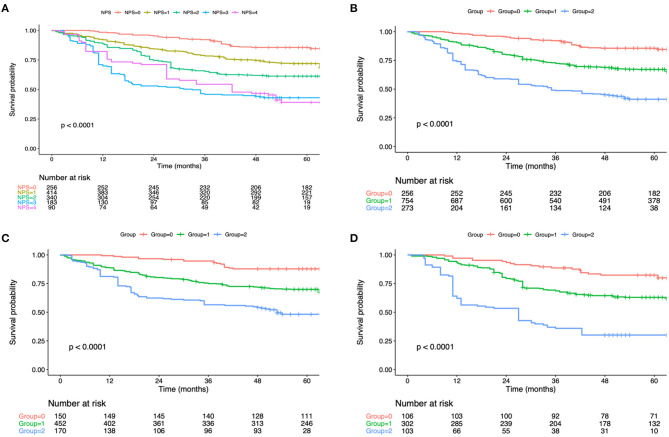
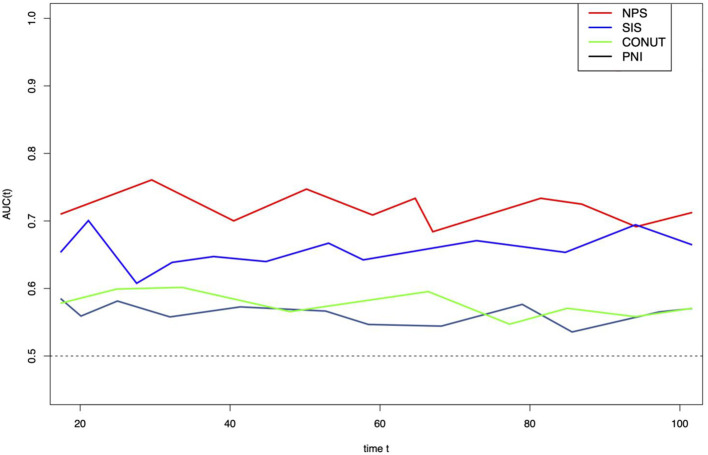
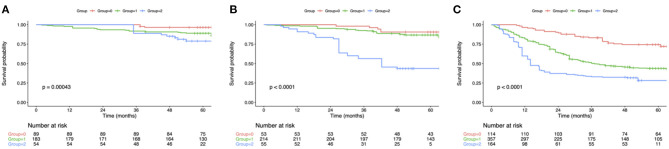
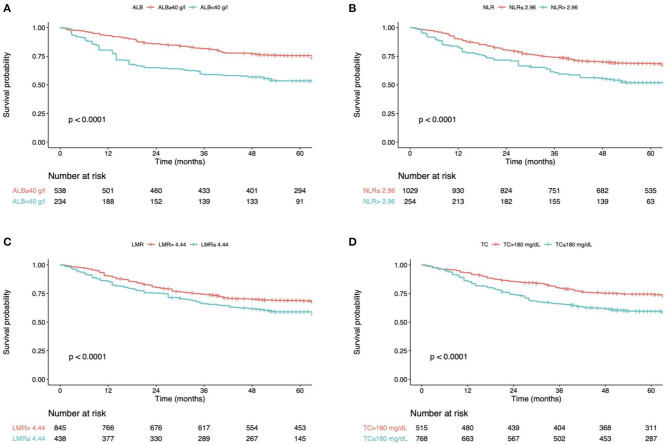
The Naples prognostic score (NPS) is established according to nutritional or inflammatory state, which has been identified as a new prognostic score for various malignant tumors. However, its prognosis prediction effect on gastric cancer (GC) patients is still unknown so far. The present work aimed to examine the NPS function in the prediction of GC prognosis. In this study, patients undergoing surgery with no preoperative therapy were retrospectively examined from June 2011 to August 2019. Typically, the total cholesterol level, serum albumin content, neutrophil-to-lymphocyte ratio and lymphocyte-to-monocyte ratio were determined to calculate the NPS. Besides, the prognostic value of NPS was evaluated by survival analyses. Time-dependent receiver operating characteristic (t-ROC) curve analysis was also carried out to compare the prognostic value of the scoring systems. Altogether 1,283 cases were enrolled into the present work. NPS was markedly related to age, gender, tumor size, body mass index, vascular invasion, perineural invasion, and pTNM stage. Upon multivariate analysis, NPS was identified as an independent prognostic factor for the prediction of overall survival (OS) ( < 0.001). In subgroup analyses stratified by adjuvant chemotherapy or surgery alone, NPS was still the independent prognostic factor for OS in both groups (both < 0.001). Furthermore, NPS exhibited higher accuracy in the prediction of OS than additional prognostic factors, as revealed by the results of t-ROC curve analysis. NPS is a simple and useful scoring system that can be used to independently predict the survival of GC cases undergoing surgery.
那不勒斯预后评分(NPS)是根据营养或炎症状态建立的,已被确定为各种恶性肿瘤的一种新的预后评分。然而,其对胃癌(GC)患者的预后预测效果迄今仍不明确。本研究旨在探讨NPS在预测GC预后中的作用。在本研究中,对2011年6月至2019年8月期间接受手术且未进行术前治疗的患者进行了回顾性研究。通常,测定总胆固醇水平、血清白蛋白含量、中性粒细胞与淋巴细胞比值以及淋巴细胞与单核细胞比值以计算NPS。此外,通过生存分析评估NPS的预后价值。还进行了时间依赖性受试者工作特征(t-ROC)曲线分析,以比较各评分系统的预后价值。本研究共纳入1283例病例。NPS与年龄、性别、肿瘤大小、体重指数、血管侵犯、神经周围侵犯和pTNM分期显著相关。多因素分析显示,NPS被确定为预测总生存期(OS)的独立预后因素(<0.001)。在按辅助化疗或单纯手术分层的亚组分析中,NPS在两组中均仍是OS的独立预后因素(均<0.001)。此外,t-ROC曲线分析结果显示,NPS在预测OS方面比其他预后因素具有更高的准确性。NPS是一种简单且有用的评分系统,可用于独立预测接受手术的GC患者的生存期。