Spinoza Centre for Neuroimaging, Amsterdam, Netherlands.
Experimental and Applied Psychology, VU University Amsterdam, Amsterdam, Netherlands.
Nat Commun. 2021 Jun 7;12(1):3374. doi: 10.1038/s41467-021-23785-7.
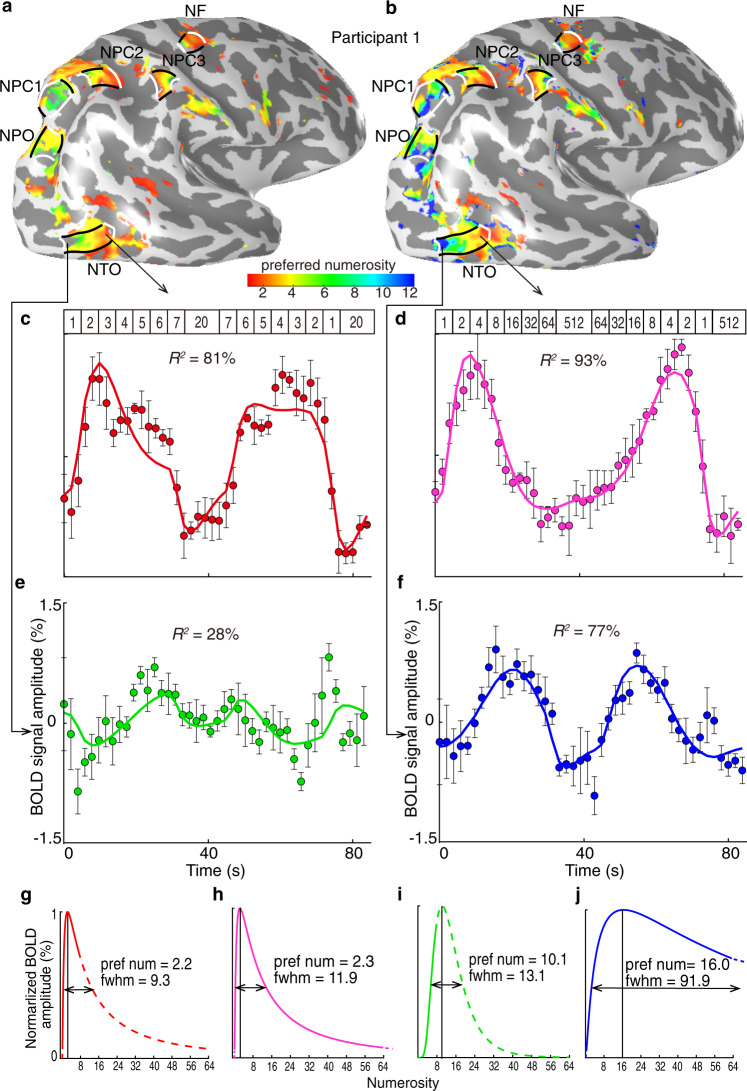
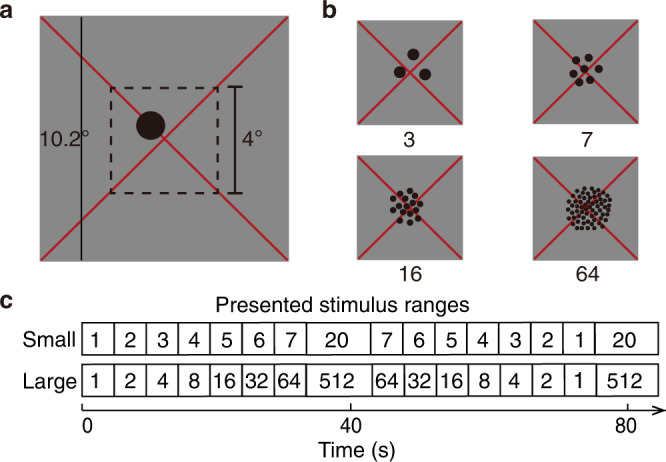
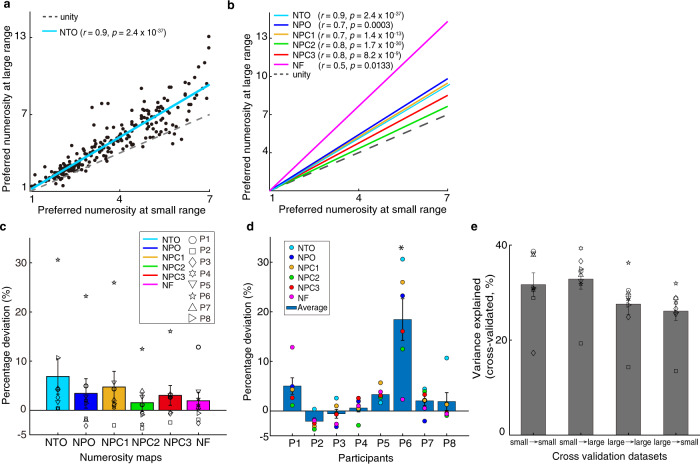
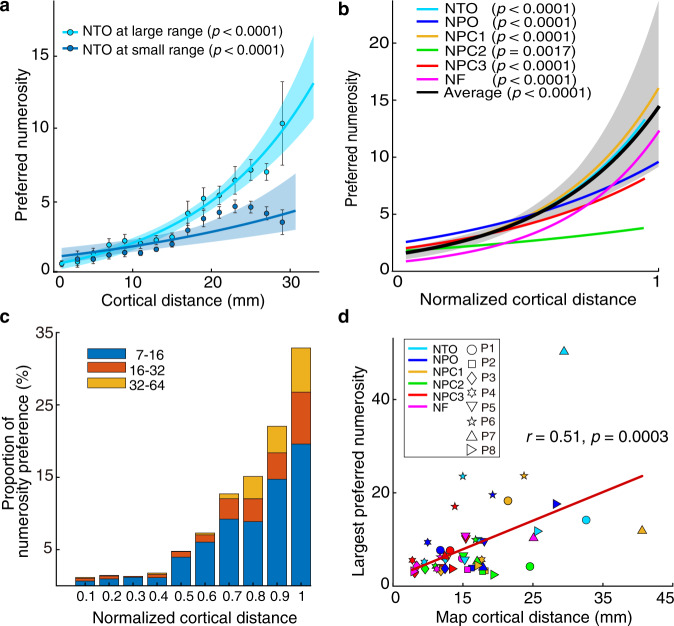
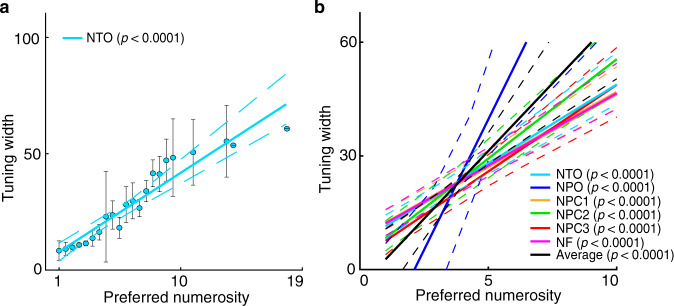
Numerosity, the set size of a group of items, helps guide behaviour and decisions. Non-symbolic numerosities are represented by the approximate number system. However, distinct behavioural performance suggests that small numerosities, i.e. subitizing range, are implemented differently in the brain than larger numerosities. Prior work has shown that neural populations selectively responding (i.e. hemodynamic responses) to small numerosities are organized into a network of topographical maps. Here, we investigate how neural populations respond to large numerosities, well into the ANS. Using 7 T fMRI and biologically-inspired analyses, we found a network of neural populations tuned to both small and large numerosities organized within the same topographic maps. These results demonstrate a continuum of numerosity preferences that progressively cover both the subitizing range and beyond within the same numerosity map, suggesting a single neural mechanism. We hypothesize that differences in map properties, such as cortical magnification and tuning width, underlie known differences in behaviour.
数量,即一组项目的集合大小,有助于指导行为和决策。非符号数量由近似数量系统表示。然而,不同的行为表现表明,小数量,即亚数量,在大脑中的实现方式与较大数量不同。先前的研究表明,对小数量有选择性反应(即血流动力学反应)的神经群体组织成一个拓扑图网络。在这里,我们研究了神经群体对大数量的反应,这些大数量远远超出了近似数量系统。使用 7T fMRI 和受生物学启发的分析,我们发现一个对小数量和大数量都有反应的神经群体网络,这些群体组织在相同的拓扑图中。这些结果表明,在相同的数量图中,存在一种从亚数量范围到超出范围的数量偏好连续体,这表明存在一种单一的神经机制。我们假设,皮层放大和调谐宽度等地图特性的差异是已知行为差异的基础。