
固定化菌 BIOMIG1 细胞在升流式填充床反应器中去除废水中洁尔灭的生物去除作用。
Biological removal of benzalkonium chlorides from wastewater by immobilized cells of Pseudomonas sp. BIOMIG1 in an up-flow packed bed reactor.
机构信息
Institute of Environmental Sciences, Bogazici University, Bebek, 34342 Istanbul, Turkey.
Institute of Environmental Sciences, Bogazici University, Bebek, 34342 Istanbul, Turkey.
出版信息
J Hazard Mater. 2021 Sep 15;418:126210. doi: 10.1016/j.jhazmat.2021.126210. Epub 2021 May 24.
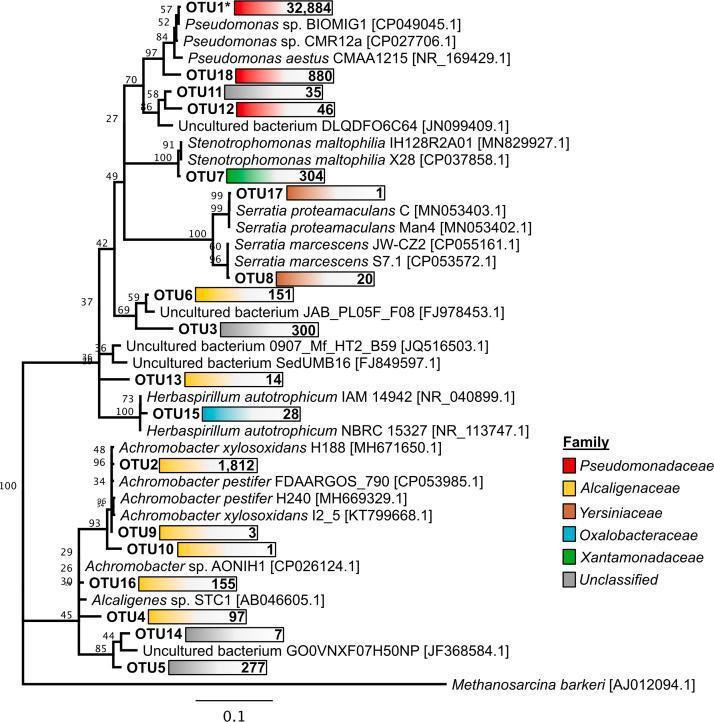
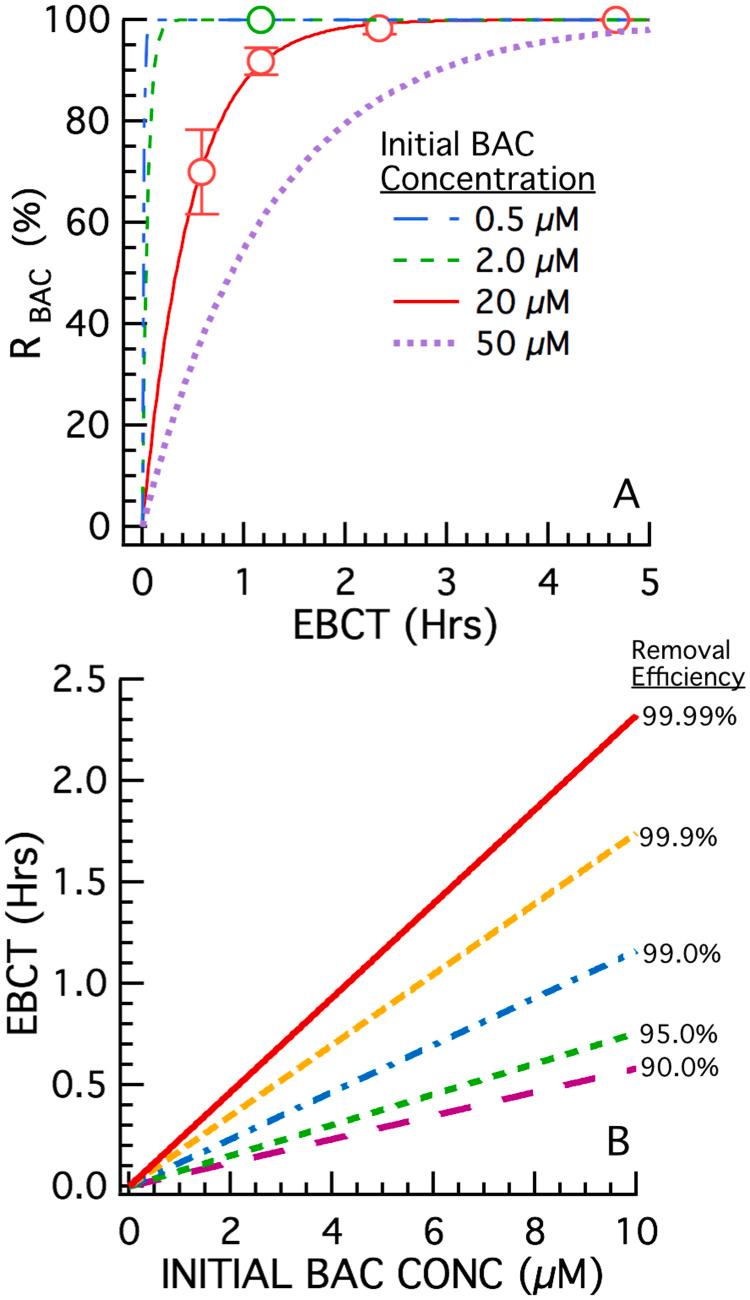
Quaternary ammonium compounds (QACs) are active ingredients of many disinfectants used against SARS-CoV-2 to control the transmission of the virus through human-contact surfaces. As a result, QAC consumption has increased more than twice during the pandemic. Consequently, the concentration of QACs in wastewater and receiving environments may increase. Due to their antimicrobial activity, high levels of QACs in wastewater may cause malfunctioning of biological treatment systems resulting in inadequate treatment of wastewater. In this study, a biocatalyst was produced by entrapping Pseudomonas sp. BIOMIG1 capable of degrading QACs in calcium alginate. Bioactive 3-mm alginate beads degraded benzalkonium chlorides (BACs), a group of QACs, with a rate of 0.47 µM-BACs/h in shake flasks. A bench-scale continuous up-flow reactor packed with BIOMIG1-beads was operated over one and a half months with either synthetic wastewater or secondary effluent containing 2-20 µM BACs at an empty bed contact time (EBCT) ranging between 0.6 and 4.7 h. Almost complete BAC removal was achieved from synthetic and real wastewater at and above 1.2 h EBCT without aeration and effluent recirculation. The microbial community in beads dominantly composed of BIOMIG1 with trace number of Achromobacter spp. after the operation of the reactor with the real wastewater, suggesting that BIOMIG1 over-competed native wastewater bacteria during the operation. This reactor system offers a low cost and robust treatment of QACs in wastewater. It can be integrated to conventional treatment systems for efficient removal of QACs from the wastewater, especially during the pandemic period.
季铵化合物(QACs)是许多用于对抗 SARS-CoV-2 的消毒剂的有效成分,可通过人体接触表面控制病毒的传播。因此,在大流行期间,QAC 的消耗量增加了两倍多。因此,废水中 QAC 的浓度和接收环境可能会增加。由于其抗菌活性,废水中高水平的 QAC 可能导致生物处理系统故障,从而导致废水处理不足。在这项研究中,通过包埋能够降解 QAC 的假单胞菌 BIOMIG1 生产了一种生物催化剂在海藻酸钠中。活性 3-mm 海藻酸盐珠在摇瓶中以 0.47 µM-BACs/h 的速率降解了季铵化合物 (BACs),这是 QAC 的一组。使用含有 2-20 µM BACs 的合成废水或二级出水,在空床接触时间 (EBCT) 为 0.6 至 4.7 小时之间,用 BIOMIG1 珠填充的台式连续上流反应器运行了一个半月以上。在不曝气和回流的情况下,在 1.2 小时 EBCT 及以上的时间,从合成和实际废水中几乎完全去除了 BAC。在使用实际废水运行该反应器后,珠中的微生物群落主要由 BIOMIG1 组成,痕量数量的不动杆菌属(Achromobacter spp.),这表明 BIOMIG1 在运行过程中过度竞争了天然废水细菌。该反应器系统提供了一种低成本且强大的废水 QAC 处理方法。它可以集成到传统处理系统中,以从废水中有效去除 QAC,特别是在大流行期间。



 Zotero 插件