
兰尼碱受体2(RyR2)抑制剂EL20对儿茶酚胺能多形性室性心动过速患者诱导多能干细胞衍生心肌细胞的疗效
Efficacy of RyR2 inhibitor EL20 in induced pluripotent stem cell-derived cardiomyocytes from a patient with catecholaminergic polymorphic ventricular tachycardia.
作者信息
Word Tarah A, Quick Ann P, Miyake Christina Y, Shak Mayra K, Pan Xiaolu, Kim Jean J, Allen Hugh D, Sibrian-Vazquez Martha, Strongin Robert M, Landstrom Andrew P, Wehrens Xander H T
机构信息
Department of Molecular Physiology & Biophysics, Cardiovascular Research Institute, Baylor College of Medicine, Houston, TX, USA.
Section of Cardiology, Department of Pediatrics, Baylor College of Medicine, Houston, TX, USA.
出版信息
J Cell Mol Med. 2021 Jun 10;25(13):6115-24. doi: 10.1111/jcmm.16521.
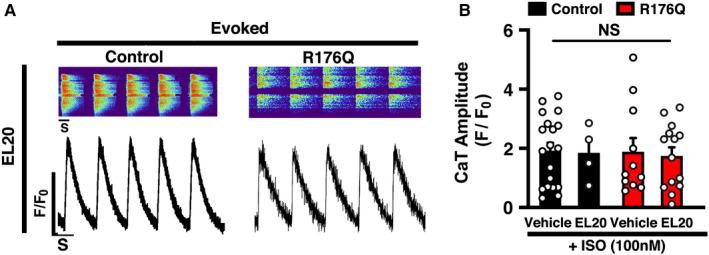
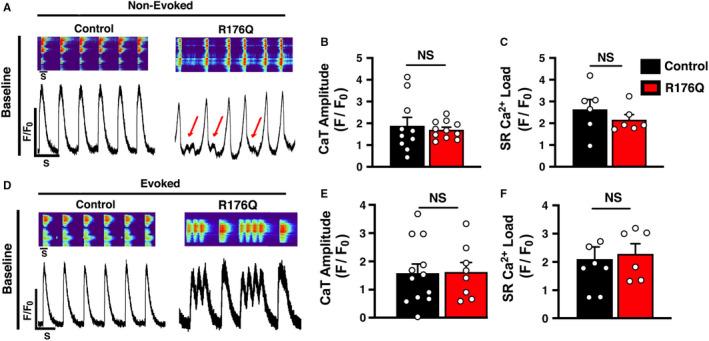
Catecholaminergic polymorphic ventricular tachycardia (CPVT) is an inherited cardiac arrhythmia syndrome that often leads to sudden cardiac death. The most common form of CPVT is caused by autosomal-dominant variants in the cardiac ryanodine receptor type-2 (RYR2) gene. Mutations in RYR2 promote calcium (Ca ) leak from the sarcoplasmic reticulum (SR), triggering lethal arrhythmias. Recently, it was demonstrated that tetracaine derivative EL20 specifically inhibits mutant RyR2, normalizes Ca handling and suppresses arrhythmias in a CPVT mouse model. The objective of this study was to determine whether EL20 normalizes SR Ca handling and arrhythmic events in induced pluripotent stem cell-derived cardiomyocytes (iPSC-CMs) from a CPVT patient. Blood samples from a child carrying RyR2 variant RyR2 variant Arg-176-Glu (R176Q) and a mutation-negative relative were reprogrammed into iPSCs using a Sendai virus system. iPSC-CMs were derived using the Stemdiff kit. Confocal Ca imaging was used to quantify RyR2 activity in the absence and presence of EL20. iPSC-CMs harbouring the R176Q variant demonstrated spontaneous SR Ca release events, whereas administration of EL20 diminished these abnormal events at low nanomolar concentrations (IC = 82 nM). Importantly, treatment with EL20 did not have any adverse effects on systolic Ca handling in control iPSC-CMs. Our results show for the first time that tetracaine derivative EL20 normalized SR Ca handling and suppresses arrhythmogenic activity in iPSC-CMs derived from a CPVT patient. Hence, this study confirms that this RyR2-inhibitor represents a promising therapeutic candidate for treatment of CPVT.
儿茶酚胺能多形性室性心动过速(CPVT)是一种遗传性心律失常综合征,常导致心源性猝死。CPVT最常见的形式是由心脏2型兰尼碱受体(RYR2)基因的常染色体显性变异引起的。RYR2中的突变会促进钙(Ca)从肌浆网(SR)泄漏,引发致命性心律失常。最近,已证明丁卡因衍生物EL20能特异性抑制突变型RyR2,使钙处理正常化,并在CPVT小鼠模型中抑制心律失常。本研究的目的是确定EL20是否能使CPVT患者诱导多能干细胞衍生的心肌细胞(iPSC-CMs)中的SR钙处理和心律失常事件正常化。使用仙台病毒系统将携带RyR2变异体RyR2变异体Arg-176-Glu(R176Q)的儿童和一名无突变亲属的血样重编程为iPSC。使用Stemdiff试剂盒获得iPSC-CMs。共聚焦钙成像用于在不存在和存在EL20的情况下量化RyR2活性。携带R176Q变异体的iPSC-CMs表现出自发性SR钙释放事件,而在低纳摩尔浓度(IC = 82 nM)下给予EL20可减少这些异常事件。重要的是,用EL20处理对对照iPSC-CMs的收缩期钙处理没有任何不利影响。我们的结果首次表明,丁卡因衍生物EL20使CPVT患者来源的iPSC-CMs中的SR钙处理正常化,并抑制致心律失常活性。因此,本研究证实这种RyR2抑制剂是治疗CPVT的有前景的治疗候选物。



 Zotero 插件