Department of Pediatrics, UCSF, San Francisco, CA, USA.
Bakar Computational Health Sciences Institute, UCSF, San Francisco, CA, USA.
Sci Rep. 2021 Jun 10;11(1):12310. doi: 10.1038/s41598-021-91625-1.
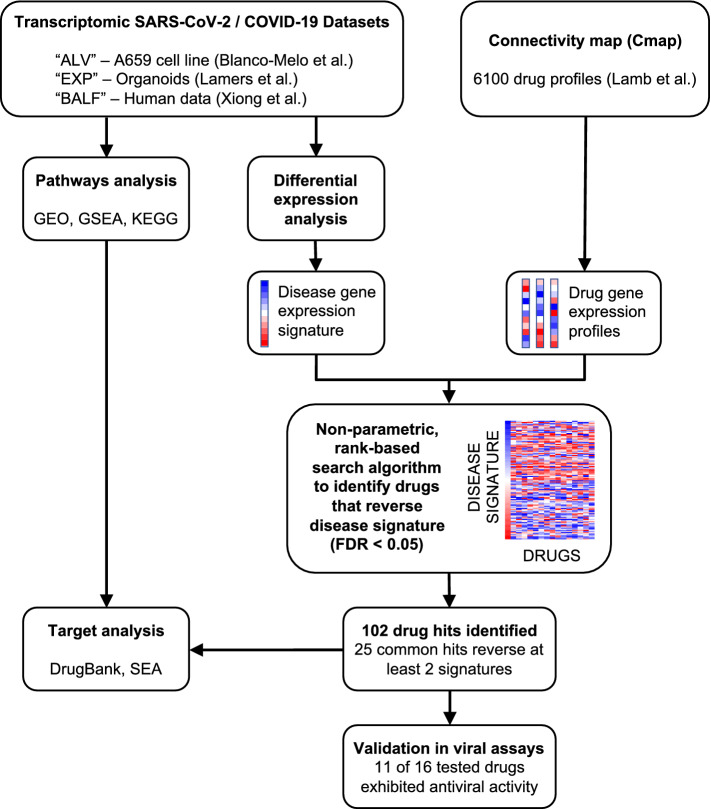
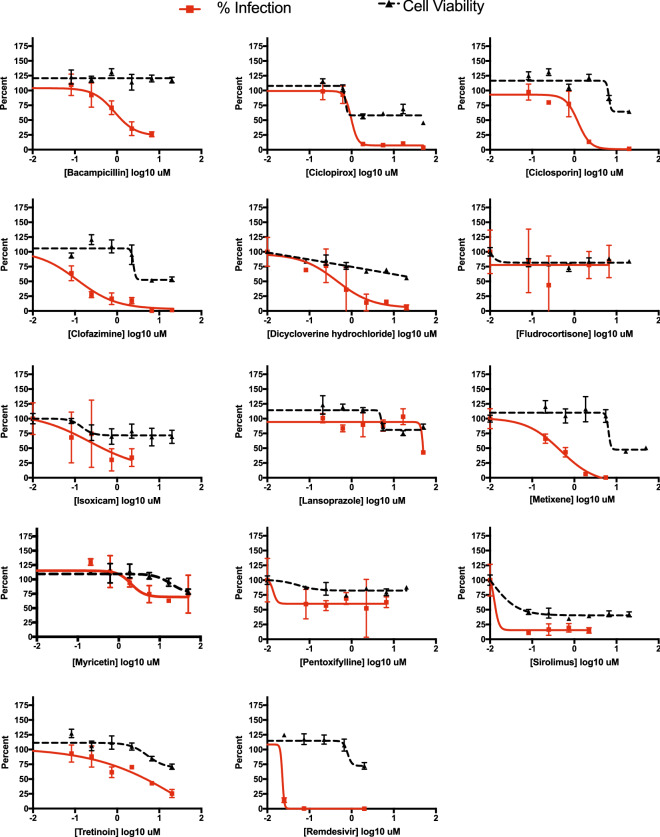
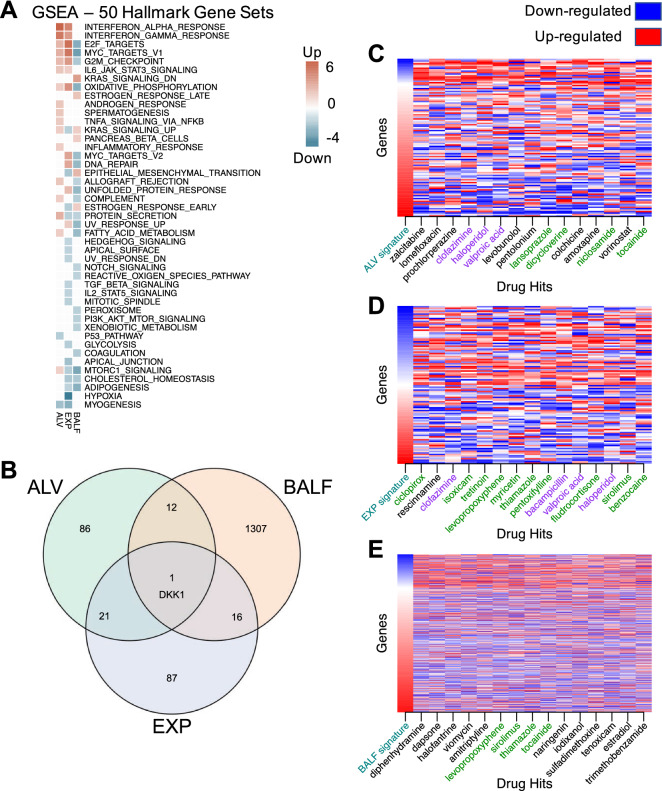
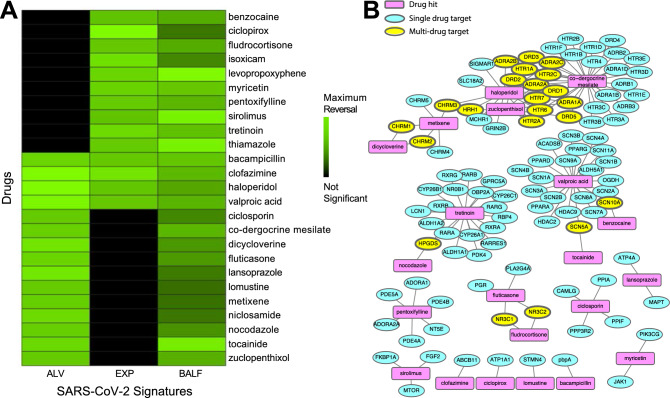
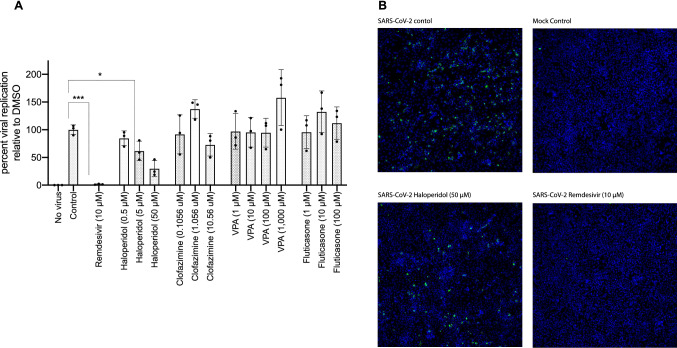
The novel SARS-CoV-2 virus emerged in December 2019 and has few effective treatments. We applied a computational drug repositioning pipeline to SARS-CoV-2 differential gene expression signatures derived from publicly available data. We utilized three independent published studies to acquire or generate lists of differentially expressed genes between control and SARS-CoV-2-infected samples. Using a rank-based pattern matching strategy based on the Kolmogorov-Smirnov Statistic, the signatures were queried against drug profiles from Connectivity Map (CMap). We validated 16 of our top predicted hits in live SARS-CoV-2 antiviral assays in either Calu-3 or 293T-ACE2 cells. Validation experiments in human cell lines showed that 11 of the 16 compounds tested to date (including clofazimine, haloperidol and others) had measurable antiviral activity against SARS-CoV-2. These initial results are encouraging as we continue to work towards a further analysis of these predicted drugs as potential therapeutics for the treatment of COVID-19.
新型严重急性呼吸系统综合症冠状病毒 2 型(SARS-CoV-2)于 2019 年 12 月出现,目前针对它的有效治疗方法较少。我们应用一种计算药物重定位的方法,针对从公开数据中获得的 SARS-CoV-2 差异基因表达谱进行分析。我们利用三个独立的已发表研究,获取或生成对照和 SARS-CoV-2 感染样本之间差异表达基因的列表。使用基于排序的模式匹配策略(基于柯尔莫哥洛夫-斯米尔诺夫统计量),对来自 Connectivity Map(CMap)的药物谱进行查询。我们在 Calu-3 或 293T-ACE2 细胞中的活 SARS-CoV-2 抗病毒测定中验证了我们的前 16 个预测命中。在人类细胞系中的验证实验表明,迄今为止测试的 16 种化合物中的 11 种(包括氯法齐明、氟哌啶醇等)对 SARS-CoV-2 具有可测量的抗病毒活性。这些初步结果令人鼓舞,因为我们继续进一步分析这些预测药物,作为治疗 COVID-19 的潜在疗法。