
采用线粒体 DNA 和全基因组 SNP 方法在印度-澳大利亚地区对棕色带纹斑竹鲨 Chiloscyllium punctatum 中的隐存种进行划分。
Delimiting cryptic species within the brown-banded bamboo shark, Chiloscyllium punctatum in the Indo-Australian region with mitochondrial DNA and genome-wide SNP approaches.
机构信息
School of Biological Sciences, The University of Queensland, Brisbane, QLD, 4072, Australia.
Research Center for Oceanography, Indonesian Institute of Sciences, Jalan Pasir Putih I No. 1 Ancol, Jakarta, 14430, Indonesia.
出版信息
BMC Ecol Evol. 2021 Jun 16;21(1):121. doi: 10.1186/s12862-021-01852-3.
BACKGROUND
Delimiting cryptic species in elasmobranchs is a major challenge in modern taxonomy due the lack of available phenotypic features. Employing stand-alone genetics in splitting a cryptic species may prove problematic for further studies and for implementing conservation management. In this study, we examined mitochondrial DNA and genome-wide nuclear single nucleotide polymorphisms (SNPs) in the brown-banded bambooshark, Chiloscyllium punctatum to evaluate potential cryptic species and the species-population boundary in the group.
RESULTS
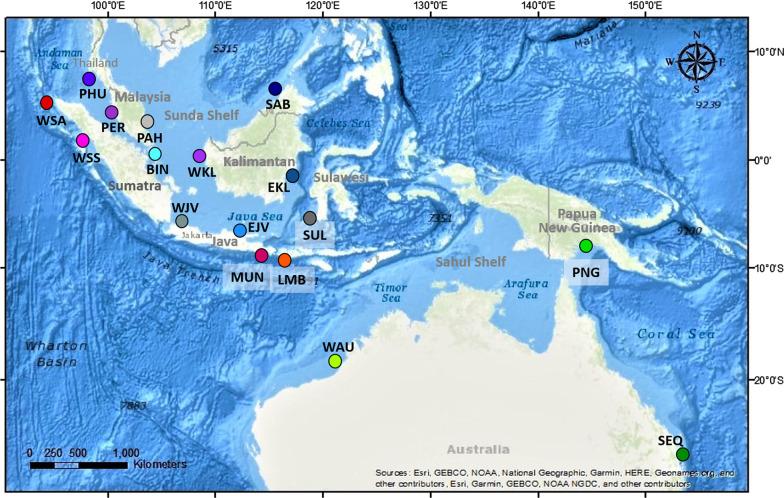
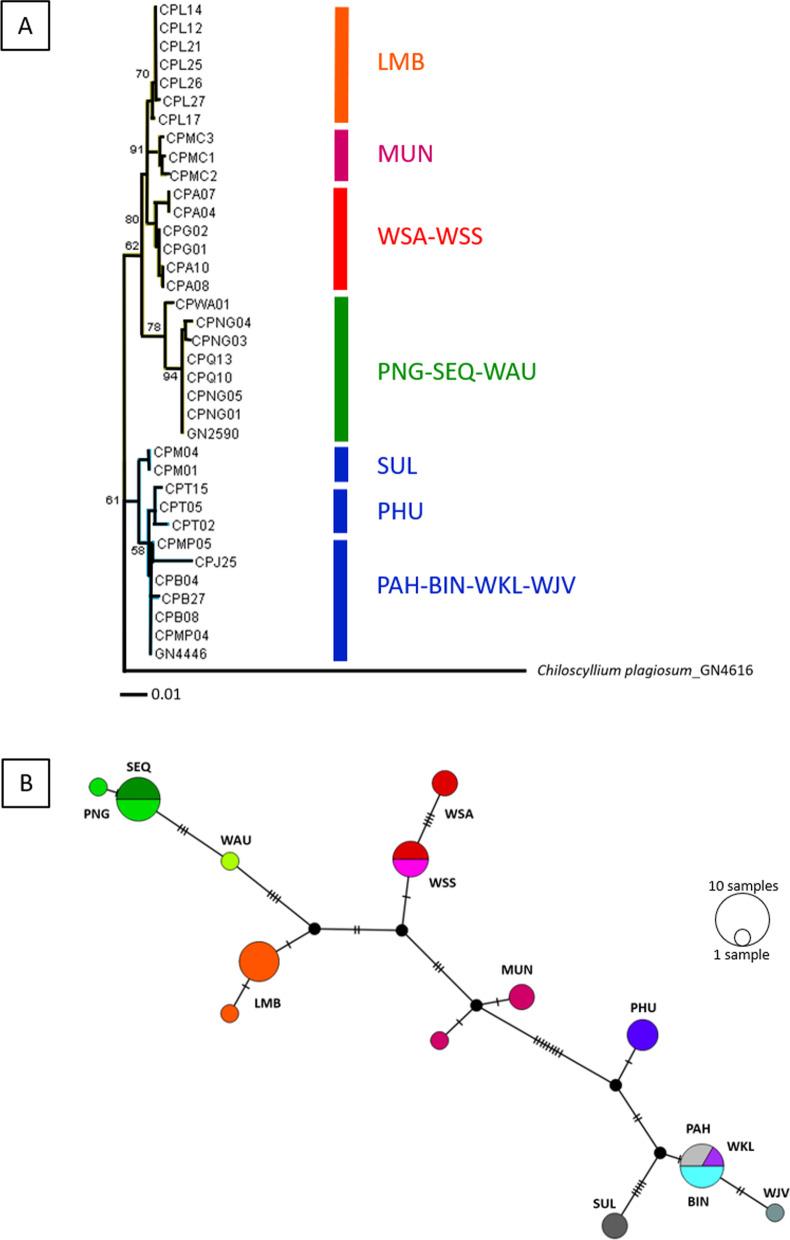
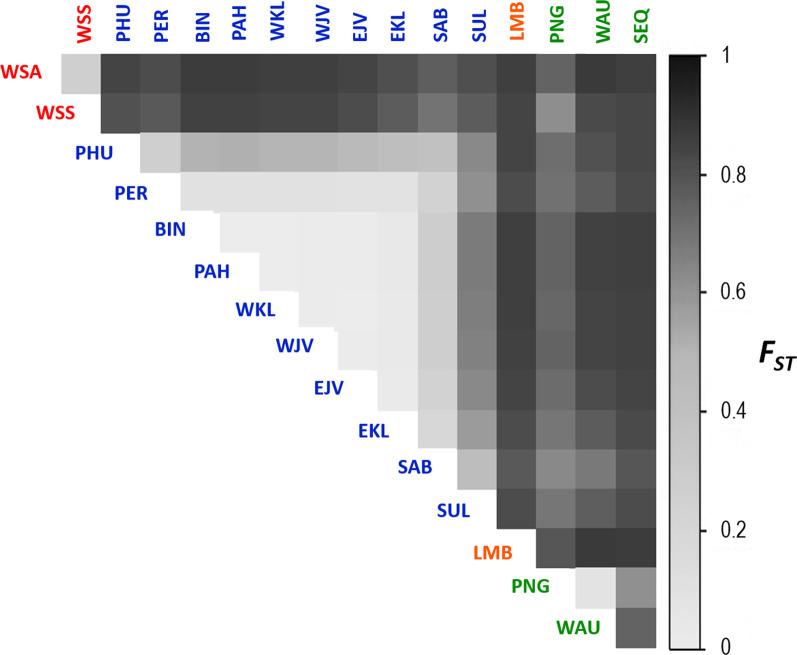
Both mtDNA and SNP analyses showed potential delimitation within C. punctatum from the Indo-Australian region and consisted of four operational taxonomic units (OTUs), i.e. those from Indo-Malay region, the west coast of Sumatra, Lesser Sunda region, and the Australian region. Each OTU can be interpreted differently depending on available supporting information, either based on biological, ecological or geographical data. We found that SNP data provided more robust results than mtDNA data in determining the boundary between population and cryptic species.
CONCLUSION
To split a cryptic species complex and erect new species based purely on the results of genetic analyses is not recommended. The designation of new species needs supportive diagnostic morphological characters that allow for species recognition, as an inability to recognise individuals in the field creates difficulties for future research, management for conservation and fisheries purposes. Moreover, we recommend that future studies use a comprehensive sampling regime that encompasses the full range of a species complex. This approach would increase the likelihood of identification of operational taxonomic units rather than resulting in an incorrect designation of new species.
背景
由于缺乏可用的表型特征,在鲨鱼中划分隐种是现代分类学的主要挑战。在分离隐种时单独使用遗传学可能会对进一步的研究和实施保护管理造成问题。在这项研究中,我们检查了棕色带斑竹鲨 Chiloscyllium punctatum 的线粒体 DNA 和全基因组核单核苷酸多态性(SNP),以评估该群体中的潜在隐种和物种-种群边界。
结果
mtDNA 和 SNP 分析都显示出来自印度-澳大利亚地区的 C. punctatum 内存在潜在的划分,并由四个操作分类单位(OTU)组成,即来自印度-马来地区、苏门答腊西海岸、小巽他群岛地区和澳大利亚地区。每个 OTU 可以根据可用的支持信息以不同的方式解释,无论是基于生物、生态还是地理数据。我们发现 SNP 数据在确定种群和隐种之间的边界方面比 mtDNA 数据提供了更可靠的结果。
结论
纯粹基于遗传分析的结果来划分隐种复合体并建立新种是不可取的。新种的指定需要有支持性的鉴别形态特征,以便能够识别物种,因为无法在野外识别个体给未来的研究、保护和渔业管理带来困难。此外,我们建议未来的研究使用全面的采样方案,涵盖物种复合体的全部范围。这种方法将增加识别操作分类单位的可能性,而不是导致错误地指定新种。




 Zotero 插件