Turku Bioscience Centre, University of Turku and Åbo Akademi University, Turku, Finland.
Division of Tumor Biology and Immunology, Oncode Institute, The Netherlands Cancer Institute, Amsterdam, The Netherlands.
Cancer Res. 2021 Aug 15;81(16):4319-4331. doi: 10.1158/0008-5472.CAN-20-3651. Epub 2021 Jun 18.
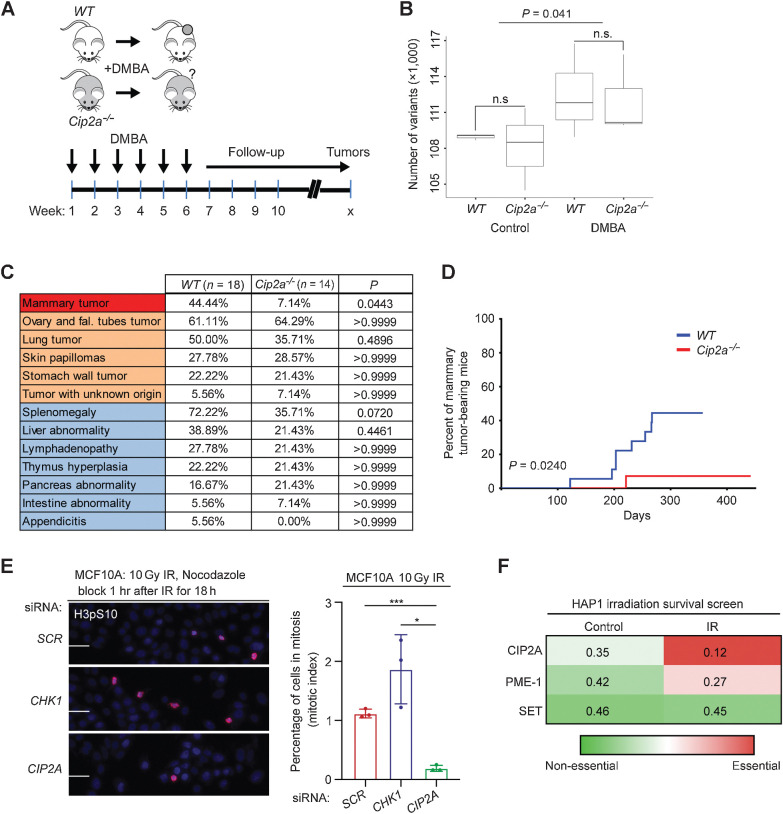
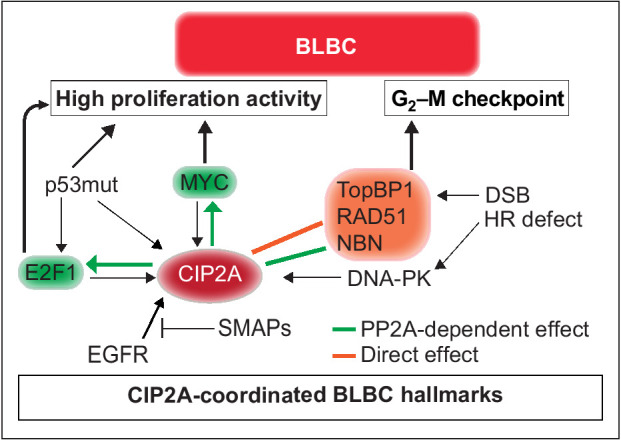
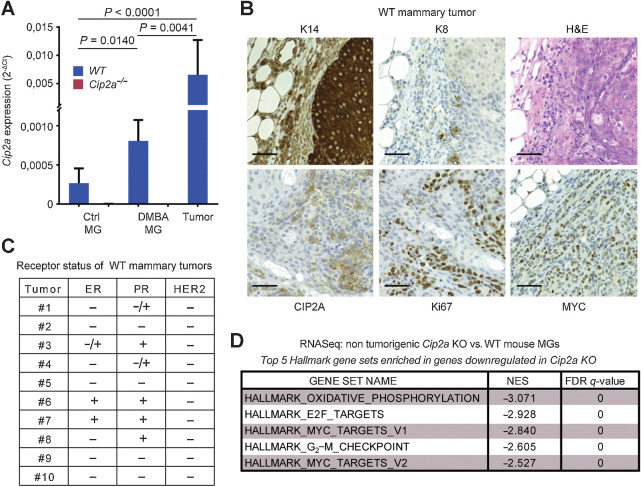
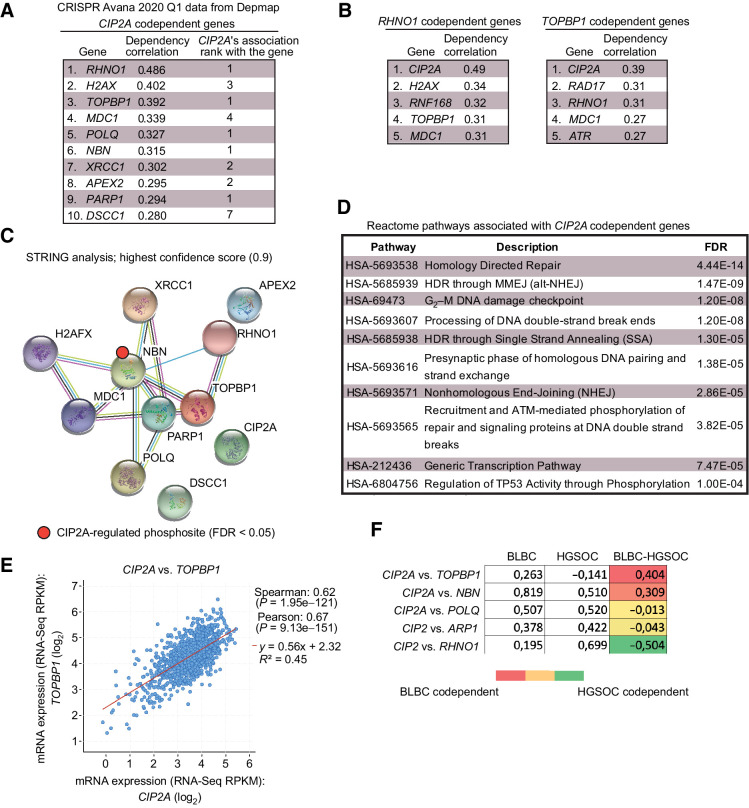
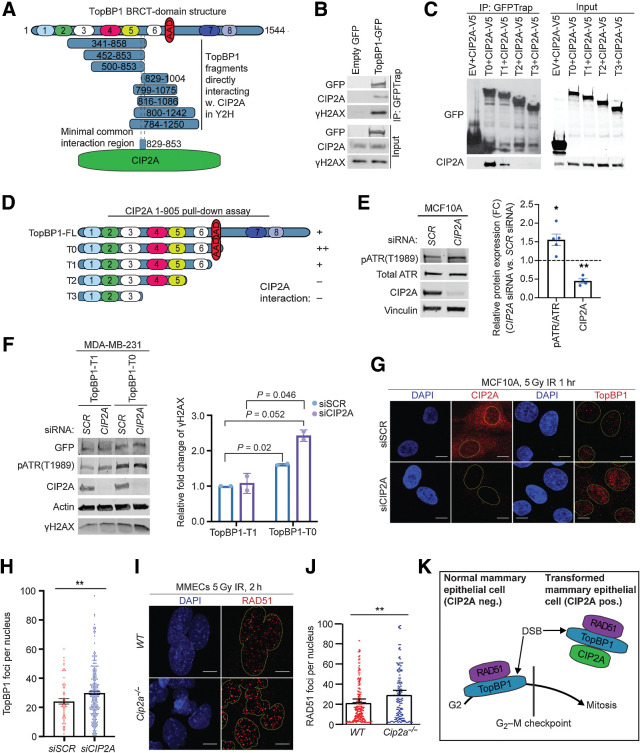
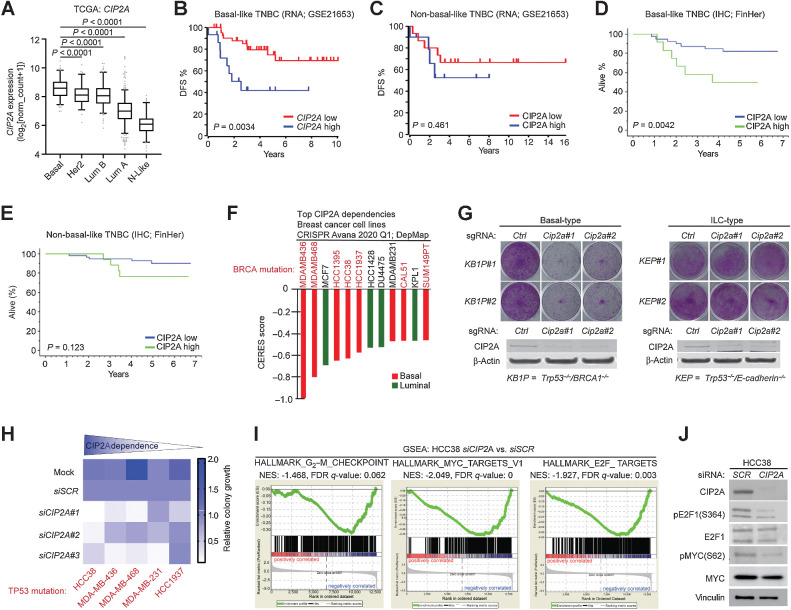
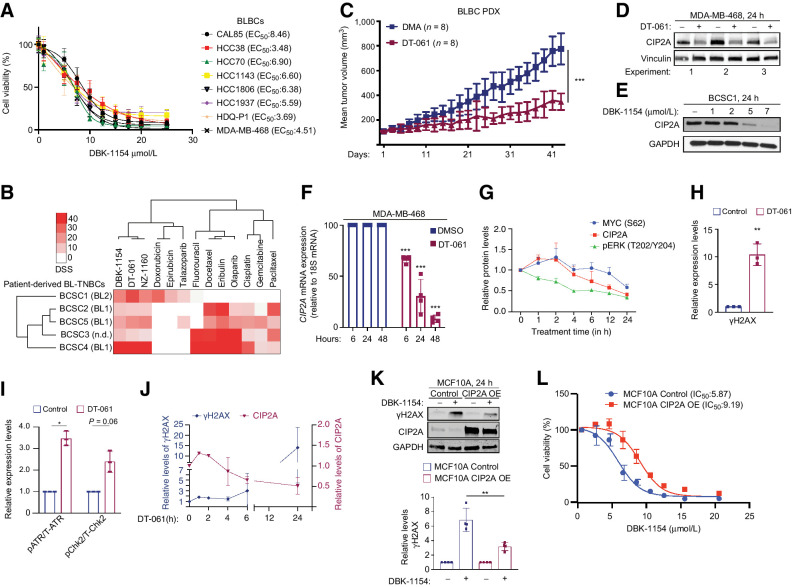
Basal-like breast cancers (BLBC) are characterized by defects in homologous recombination (HR), deficient mitotic checkpoint, and high-proliferation activity. Here, we discover CIP2A as a candidate driver of BLBC. CIP2A was essential for DNA damage-induced initiation of mouse BLBC-like mammary tumors and for survival of HR-defective BLBC cells. CIP2A was dispensable for normal mammary gland development and for unperturbed mitosis, but selectively essential for mitotic progression of DNA damaged cells. A direct interaction between CIP2A and a DNA repair scaffold protein TopBP1 was identified, and CIP2A inhibition resulted in enhanced DNA damage-induced TopBP1 and RAD51 recruitment to chromatin in mammary epithelial cells. In addition to its role in tumor initiation, and survival of BRCA-deficient cells, CIP2A also drove proliferative MYC and E2F1 signaling in basal-like triple-negative breast cancer (BL-TNBC) cells. Clinically, high CIP2A expression was associated with poor patient prognosis in BL-TNBCs but not in other breast cancer subtypes. Small-molecule reactivators of PP2A (SMAP) inhibited CIP2A transcription, phenocopied the CIP2A-deficient DNA damage response (DDR), and inhibited growth of patient-derived BLBC xenograft. In summary, these results demonstrate that CIP2A directly interacts with TopBP1 and coordinates DNA damage-induced mitotic checkpoint and proliferation, thereby driving BLBC initiation and progression. SMAPs could serve as a surrogate therapeutic strategy to inhibit the oncogenic activity of CIP2A in BLBCs. SIGNIFICANCE: These results identify CIP2A as a nongenetic driver and therapeutic target in basal-like breast cancer that regulates DNA damage-induced G-M checkpoint and proliferative signaling.
基底样乳腺癌 (BLBC) 的特征是同源重组 (HR) 缺陷、有丝分裂检查点缺陷和高增殖活性。在这里,我们发现 CIP2A 是 BLBC 的候选驱动基因。CIP2A 对于 DNA 损伤诱导的小鼠 BLBC 样乳腺肿瘤的起始以及 HR 缺陷的 BLBC 细胞的存活是必不可少的。CIP2A 对于正常乳腺发育和未受干扰的有丝分裂是可有可无的,但对于 DNA 损伤细胞的有丝分裂进展是选择性必需的。鉴定到 CIP2A 与 DNA 修复支架蛋白 TopBP1 之间的直接相互作用,并且 CIP2A 抑制导致在乳腺上皮细胞中增强的 DNA 损伤诱导的 TopBP1 和 RAD51 募集到染色质。除了在 BRCA 缺陷细胞的肿瘤起始和存活中的作用之外,CIP2A 还驱动基底样三阴性乳腺癌 (BL-TNBC) 细胞中的增殖 MYC 和 E2F1 信号。临床上,CIP2A 的高表达与 BL-TNBC 中的不良患者预后相关,但与其他乳腺癌亚型无关。PP2A 的小分子再激活剂 (SMAP) 抑制 CIP2A 转录,表型模拟 CIP2A 缺陷的 DNA 损伤反应 (DDR),并抑制患者来源的 BLBC 异种移植物的生长。总之,这些结果表明 CIP2A 与 TopBP1 直接相互作用,并协调 DNA 损伤诱导的有丝分裂检查点和增殖,从而驱动 BLBC 的起始和进展。SMAP 可以作为抑制 BLBC 中 CIP2A 致癌活性的替代治疗策略。意义:这些结果确定 CIP2A 是基底样乳腺癌中的非遗传驱动基因和治疗靶点,它调节 DNA 损伤诱导的 G-M 检查点和增殖信号。