Graduate School of Natural Science, Konan University, Kobe, Hyogo, Japan.
Graduate School of Natural Science, Konan University, Kobe, Hyogo, Japan; Institute for Integrative Neurobiology, Konan University, Kobe, Hyogo, Japan.
J Biol Chem. 2021 Jul;297(1):100891. doi: 10.1016/j.jbc.2021.100891. Epub 2021 Jun 18.
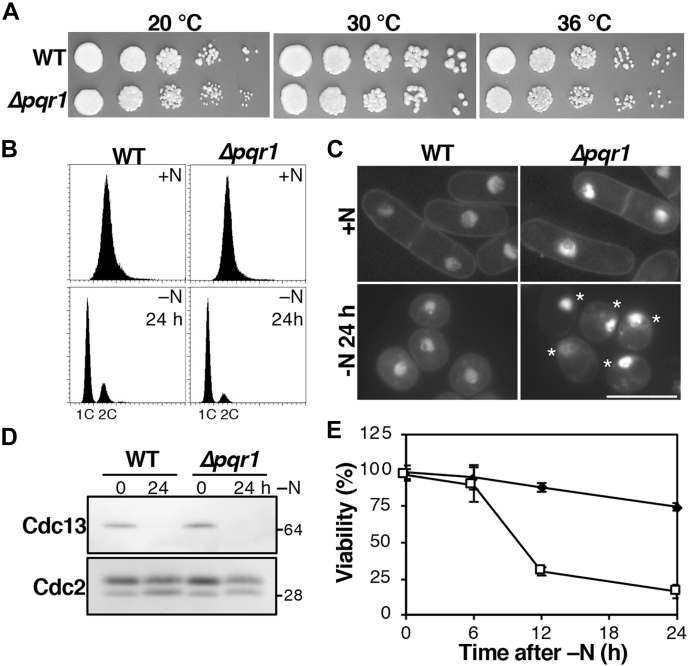
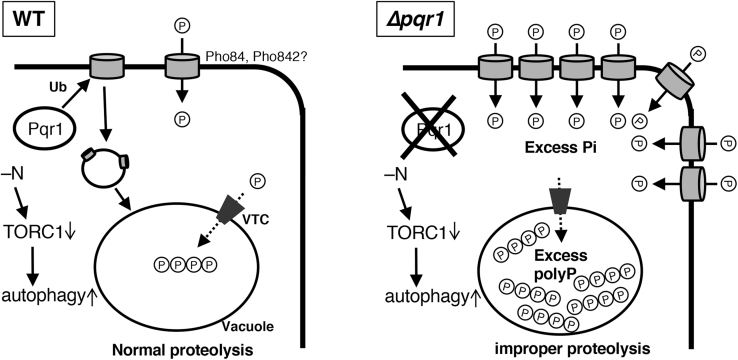
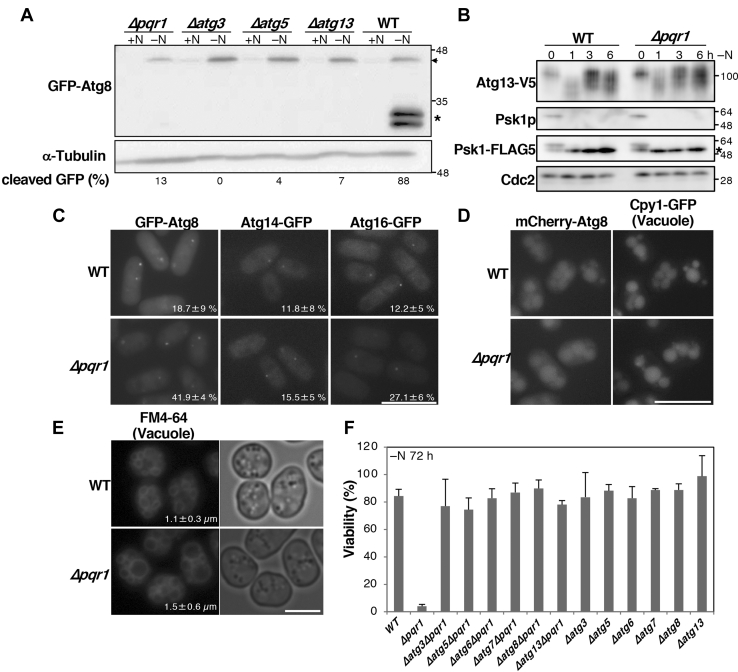
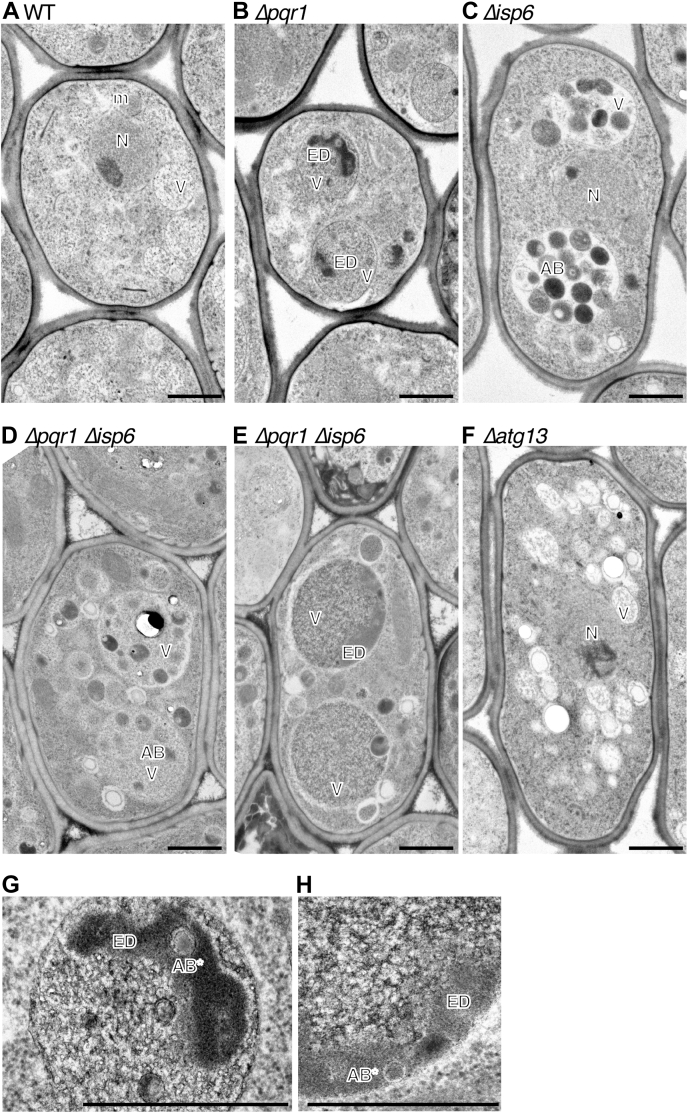
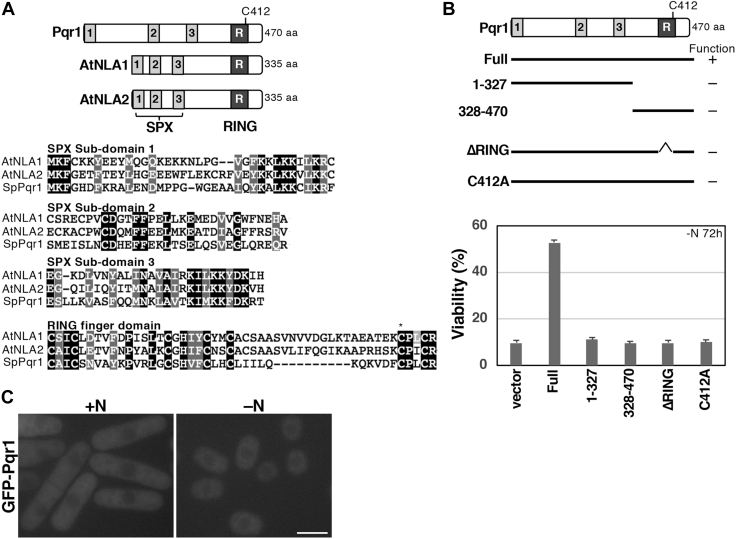
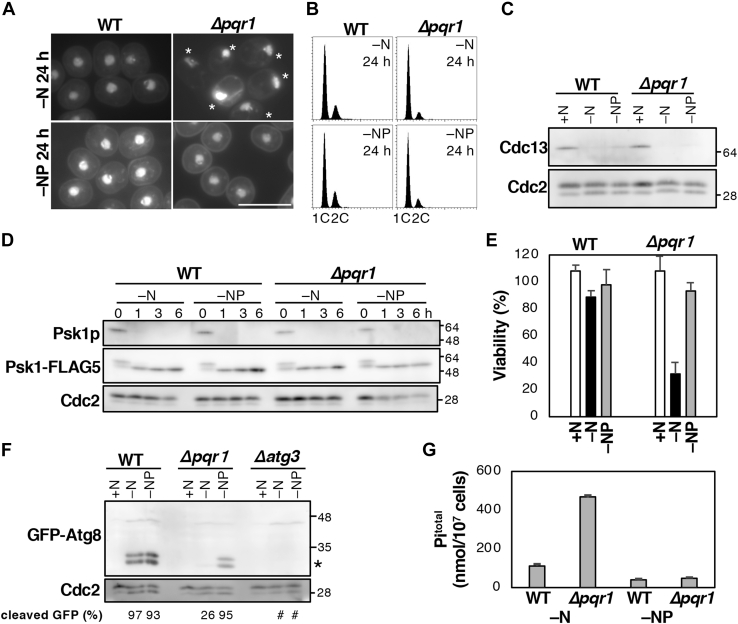
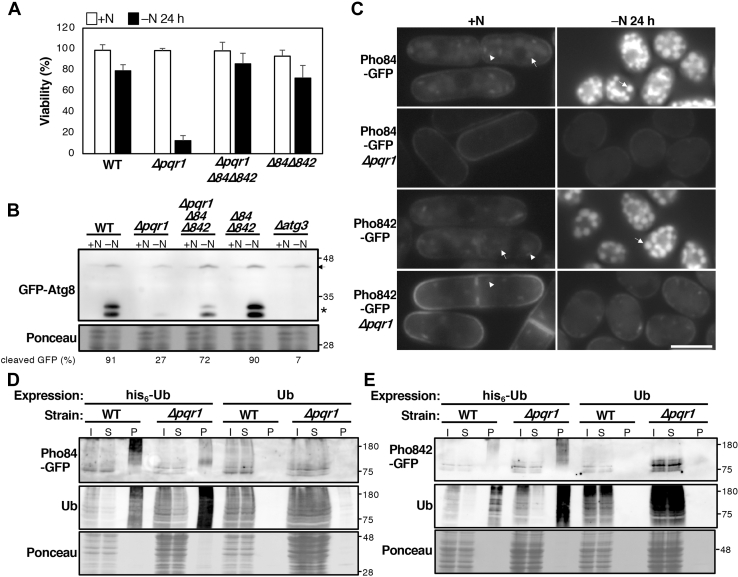
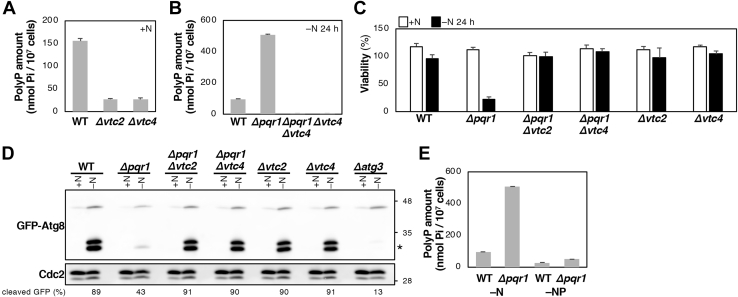
Regulation of cellular proliferation and quiescence is a central issue in biology that has been studied using model unicellular eukaryotes, such as the fission yeast Schizosaccharomyces pombe. We previously reported that the ubiquitin/proteasome pathway and autophagy are essential to maintain quiescence induced by nitrogen deprivation in S. pombe; however, specific ubiquitin ligases that maintain quiescence are not fully understood. Here we investigated the SPX-RING-type ubiquitin ligase Pqr1, identified as required for quiescence in a genetic screen. Pqr1 is found to be crucial for vacuolar proteolysis, the final step of autophagy, through proper regulation of phosphate and its polymer polyphosphate. Pqr1 restricts phosphate uptake into the cell through ubiquitination and subsequent degradation of phosphate transporters on plasma membranes. We hypothesized that Pqr1 may act as the central regulator for phosphate control in S. pombe, through the function of the SPX domain involved in phosphate sensing. Deletion of pqr1 resulted in hyperaccumulation of intracellular phosphate and polyphosphate and in improper autophagy-dependent proteolysis under conditions of nitrogen starvation. Polyphosphate hyperaccumulation in pqr1-deficient cells was mediated by the polyphosphate synthase VTC complex in vacuoles. Simultaneous deletion of VTC complex subunits rescued Pqr1 mutant phenotypes, including defects in proteolysis and loss of viability during quiescence. We conclude that excess polyphosphate may interfere with proteolysis in vacuoles by mechanisms that as yet remain unknown. The present results demonstrate a connection between polyphosphate metabolism and vacuolar functions for proper autophagy-dependent proteolysis, and we propose that polyphosphate homeostasis contributes to maintenance of cellular viability during quiescence.
细胞增殖和静止期的调控是生物学中的一个核心问题,人们曾使用模式单细胞真核生物(如裂殖酵母 Schizosaccharomyces pombe)对此进行研究。我们之前曾报道过,泛素/蛋白酶体途径和自噬对于维持裂殖酵母因氮饥饿而进入静止期是必需的;然而,维持静止期的特定泛素连接酶尚未完全被阐明。在这里,我们研究了 SPX-RING 型泛素连接酶 Pqr1,它是通过遗传筛选鉴定出的裂殖酵母静止期所必需的基因。研究发现 Pqr1 对于液泡蛋白降解(自噬的最后一步)至关重要,这一过程通过对磷酸盐及其聚合物多磷酸盐的适当调控来实现。Pqr1 通过泛素化及其随后对质膜上磷酸盐转运蛋白的降解,限制细胞内磷酸盐的摄取。我们假设 Pqr1 可能作为裂殖酵母中磷酸盐控制的中央调节剂,通过参与磷酸盐感应的 SPX 结构域发挥作用。pqr1 缺失会导致细胞内磷酸盐和多磷酸盐的过度积累,以及在氮饥饿条件下,自噬依赖性蛋白水解的异常。pqr1 缺失细胞中多磷酸盐的过度积累是由液泡中的多磷酸盐合酶 VTC 复合物介导的。VTC 复合物亚基的同时缺失可挽救 Pqr1 突变体的表型,包括蛋白水解缺陷和在静止期丧失活力。我们得出结论,过量的多磷酸盐可能通过尚未完全阐明的机制干扰液泡中的蛋白水解。本研究结果表明,多磷酸盐代谢与液泡功能之间存在联系,以确保适当的自噬依赖性蛋白水解,我们提出多磷酸盐稳态有助于维持细胞在静止期的活力。