The Center for Clinical Molecular Medical Detection, The First Affiliated Hospital of Chongqing Medical University, 1 Friendship Road, Yuzhong District, Chongqing 400016, China.
Department of Clinical Laboratory, The First Affiliated Hospital of Chongqing Medical University, 1 Friendship Road, Yuzhong District, Chongqing 400016, China.
Biomed Res Int. 2021 Jun 1;2021:3271395. doi: 10.1155/2021/3271395. eCollection 2021.
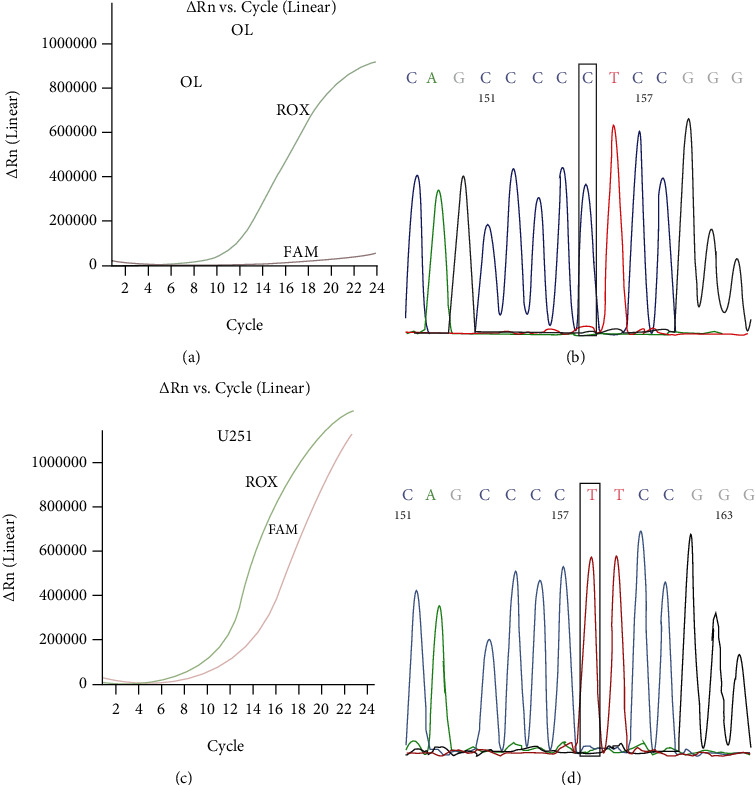
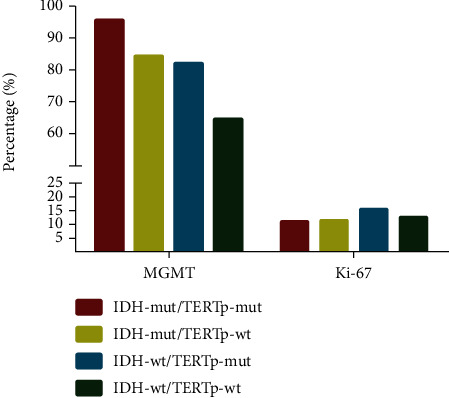
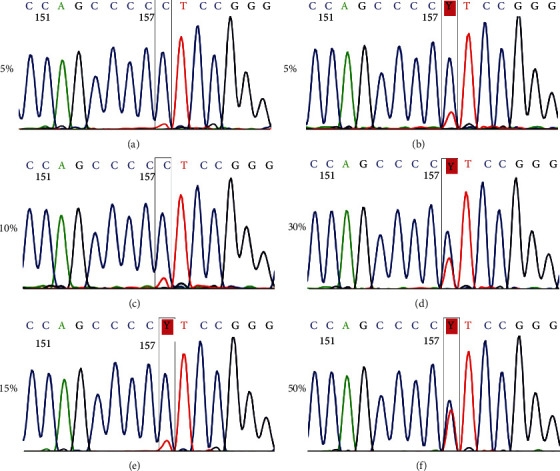
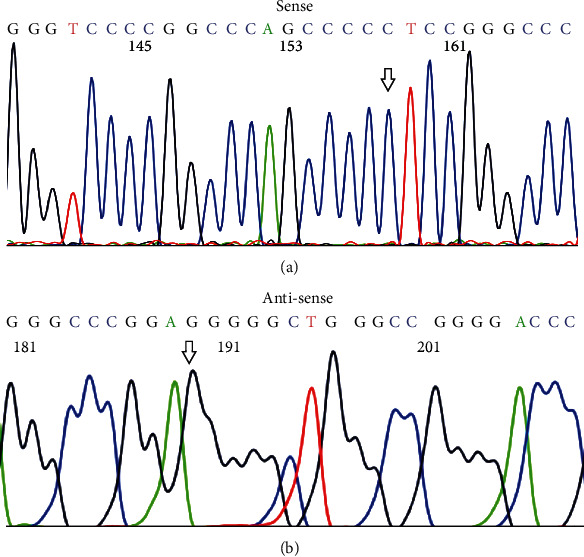
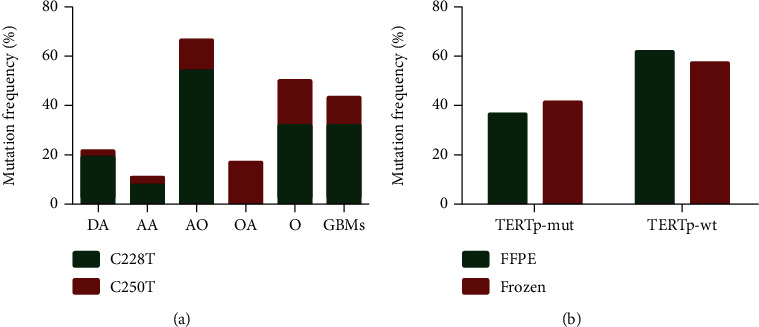
Gliomas are the most common type of primary brain tumor, yet the prognosis for glioma patients remains poor. Mutations in the promoter region of the telomerase reverse transcriptase gene (TERTp) are associated with diagnosis and poor prognosis in gliomas. Here, we developed a precise and rapid Sanger sequencing assay to screen or TERTp mutations. We established the Sanger sequencing approach for the detection of TERTp mutations based on human glioma cell lines U251 and assessed the analytical validation by determining the accuracy, sensitivity, precision, and specificity. In our study, we verified the accuracy of Sanger sequencing by the real-time polymerase chain reaction method. Our data showed that TERTp mutations were detected at an analytical sensitivity of 10% per mutant. The precision and specificity validation also showed the desired results. In total, 147 glioma patients were investigated for TERTp mutations, and of each patient, clinical data and molecular characteristics were analyzed. We found that anaplastic oligodendroglioma had the highest frequency of TERTp mutations (66.7%). No differences in TERTp mutation frequency were observed between frozen tissue specimens and formalin-fixed and paraffin-embedded tissue. TERTp mutations were associated with older patients (≥45 years), whereas isocitrate dehydrogenase (IDH) mutations were inclined to a younger age (<45 years), frontal location, and pathologic stage II-III patients. IDH mutations were significantly associated with O6-methylguanine-DNA methyltransferase (MGMT) methylation ( = 0.003) and lower Ki-67 protein expression ( = 0.011). Moreover, MGMT methylation was enriched in IDH-mutant/TERTp-mutant gliomas, and Ki-67 protein expression was the highest in the IDH-wild type/TERTp-mutant group. Taken together, the findings of this study indicate the establishment of a rapid, precise, and practical Sanger sequencing technique for TERTp mutations in gliomas that may show promising results in clinical applications.
神经胶质瘤是最常见的原发性脑肿瘤,但神经胶质瘤患者的预后仍然很差。端粒酶逆转录酶基因(TERTp)启动子区域的突变与神经胶质瘤的诊断和预后不良有关。在这里,我们开发了一种精确和快速的 Sanger 测序法来筛选 TERTp 突变。我们基于人神经胶质瘤细胞系 U251 建立了检测 TERTp 突变的 Sanger 测序方法,并通过确定准确性、灵敏度、精密度和特异性来评估分析验证。在我们的研究中,我们通过实时聚合酶链反应方法验证了 Sanger 测序的准确性。我们的数据表明,TERTp 突变的检测分析灵敏度为每个突变体 10%。精密度和特异性验证也显示出了理想的结果。共有 147 名神经胶质瘤患者接受了 TERTp 突变检测,对每位患者的临床资料和分子特征进行了分析。我们发现间变性少突胶质细胞瘤的 TERTp 突变频率最高(66.7%)。在冷冻组织标本和福尔马林固定石蜡包埋组织之间,TERTp 突变的频率没有差异。TERTp 突变与年龄较大的患者(≥45 岁)相关,而异柠檬酸脱氢酶(IDH)突变则与年龄较小的患者(<45 岁)、额叶位置和病理分期 II-III 患者相关。IDH 突变与 O6-甲基鸟嘌呤-DNA 甲基转移酶(MGMT)甲基化显著相关(=0.003),与 Ki-67 蛋白表达水平较低显著相关(=0.011)。此外,MGMT 甲基化在 IDH 突变/TERTp 突变的神经胶质瘤中富集,而 IDH 野生型/TERTp 突变组的 Ki-67 蛋白表达最高。综上所述,本研究的结果表明,建立了一种快速、精确、实用的 Sanger 测序技术,用于检测神经胶质瘤中的 TERTp 突变,该技术可能在临床应用中显示出良好的效果。