Environmentally Integrated Dairy Management Research Unit, U.S. Dairy Forage Research Center, U.S. Department of Agriculture-Agricultural Research Service (USDA-ARS), Marshfield, Wisconsin, USA.
Upper Midwest Water Science Center, U.S. Geological Survey, Marshfield, Wisconsin, USA.
Environ Health Perspect. 2021 Jun;129(6):67004. doi: 10.1289/EHP7813. Epub 2021 Jun 23.
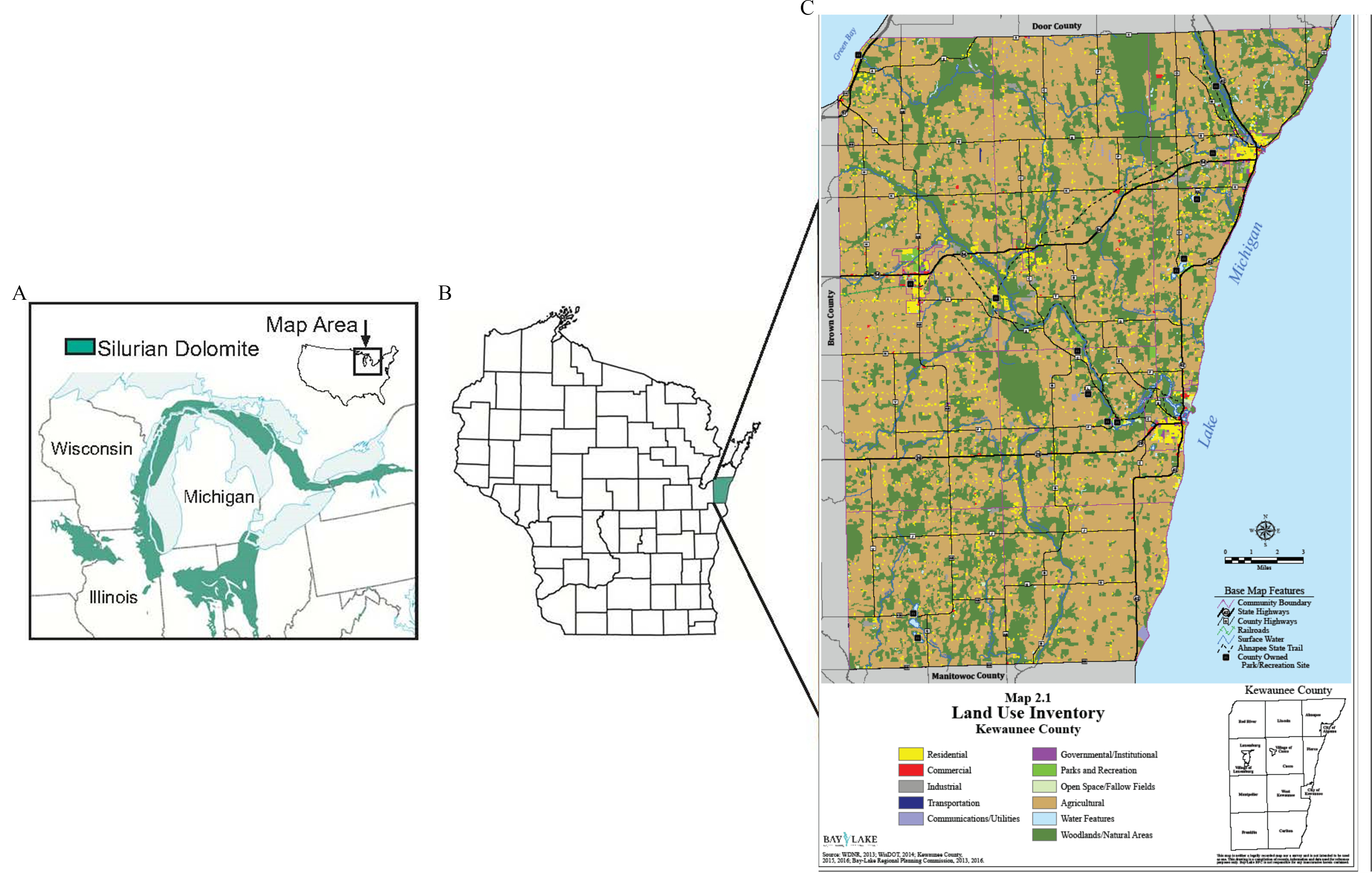
Groundwater quality in the Silurian dolomite aquifer in northeastern Wisconsin, USA, has become contentious as dairy farms and exurban development expand.
We investigated private household wells in the region, determining the extent, sources, and risk factors of nitrate and microbial contamination.
Total coliforms, , and nitrate were evaluated by synoptic sampling during groundwater recharge and no-recharge periods. Additional seasonal sampling measured genetic markers of human and bovine fecal-associated microbes and enteric zoonotic pathogens. We constructed multivariable regression models of detection probability (log-binomial) and concentration (gamma) for each contaminant to identify risk factors related to land use, precipitation, hydrogeology, and well construction.
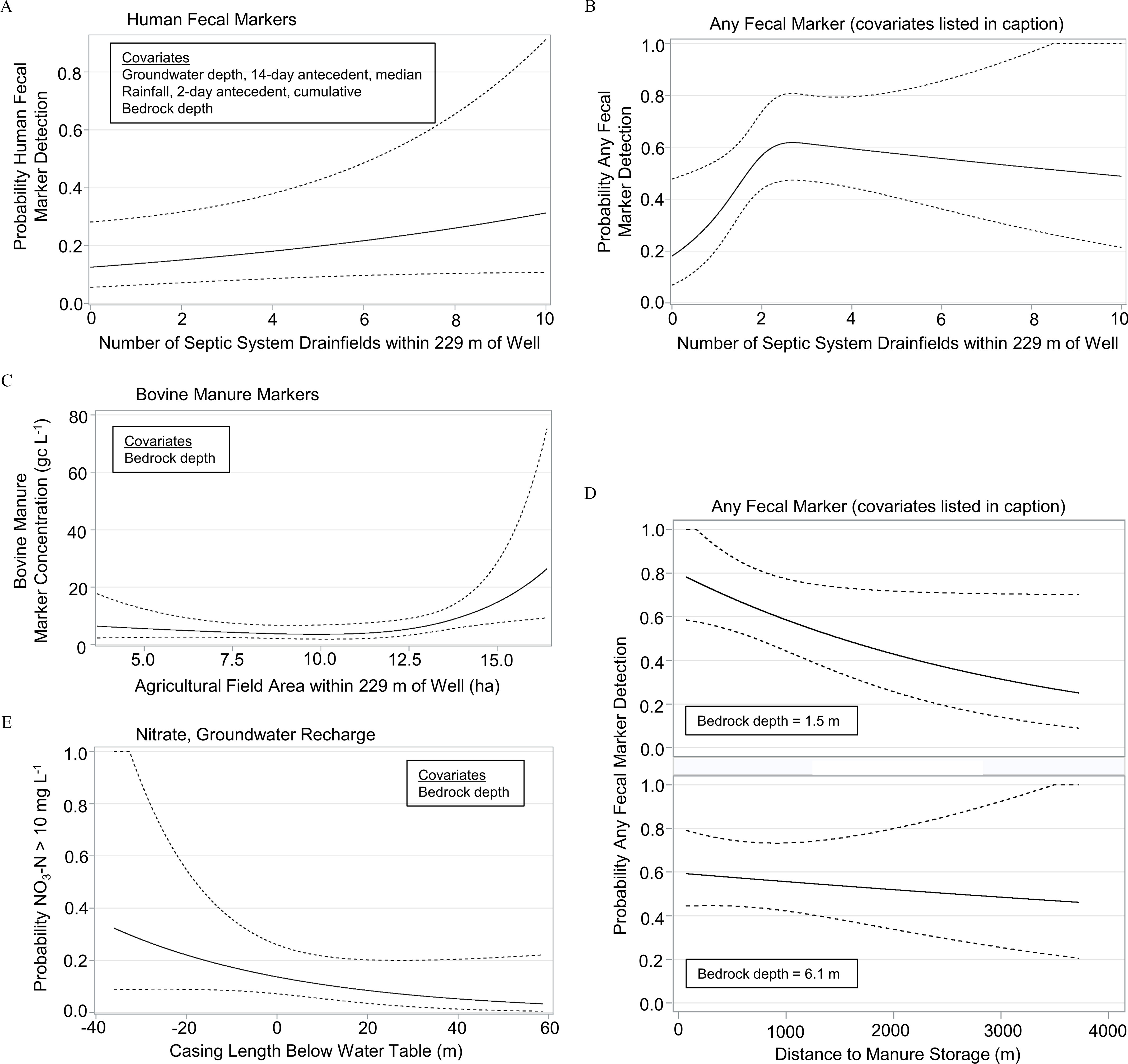
Total coliforms and nitrate were strongly associated with depth-to-bedrock at well sites and nearby agricultural land use, but not septic systems. Both human wastewater and cattle manure contributed to well contamination. Rotavirus group A, , and were the most frequently detected pathogens. Wells positive for human fecal markers were associated with depth-to-groundwater and number of septic system drainfield within . Manure-contaminated wells were associated with groundwater recharge and the area size of nearby agricultural land. Wells positive for any fecal-associated microbe, regardless of source, were associated with septic system density and manure storage proximity modified by bedrock depth. Well construction was generally not related to contamination, indicating land use, groundwater recharge, and bedrock depth were the most important risk factors.
These findings may inform policies to minimize contamination of the Silurian dolomite aquifer, a major water supply for the U.S. and Canadian Great Lakes region. https://doi.org/10.1289/EHP7813.
随着奶牛场和远郊发展的扩张,美国威斯康星州东北部志留系白云岩含水层的地下水水质问题引起了争议。
我们调查了该地区的私人住宅井,确定了硝酸盐和微生物污染的程度、来源和风险因素。
在地下水补给和非补给期进行同步采样,评估总大肠菌群、和硝酸盐。额外的季节性采样测量了人粪和牛粪相关微生物以及肠道动物传染病原体的遗传标记物。我们构建了每个污染物的检出概率(对数二项式)和浓度(伽马)的多变量回归模型,以确定与土地利用、降水、水文地质和井结构有关的风险因素。
总大肠菌群和硝酸盐与井位和附近农业土地利用的基岩深度密切相关,但与化粪池系统无关。人类废水和牛粪便都导致了井的污染。轮状病毒 A、和 是最常检测到的病原体。检测到人类粪便标记物的井与地下水深度和化粪池系统排水场的数量有关。受粪便污染的井与地下水补给和附近农业土地的面积大小有关。无论来源如何,检测到任何粪便相关微生物的井都与化粪池系统密度和受基岩深度修饰的粪便储存位置有关。井的结构一般与污染无关,这表明土地利用、地下水补给和基岩深度是最重要的风险因素。
这些发现可能为美国和加拿大五大湖地区主要供水的志留系白云岩含水层的污染最小化政策提供信息。https://doi.org/10.1289/EHP7813.