Department of Medicine, Obstetrics and Gynecology Clinic, University of Udine, Udine, Italy.
Department of Maternal and Child Health, Obstetrics and Gynecology Clinic, University-Hospital of Udine, Udine, Italy.
Am J Case Rep. 2021 Jun 24;22:e931167. doi: 10.12659/AJCR.931167.
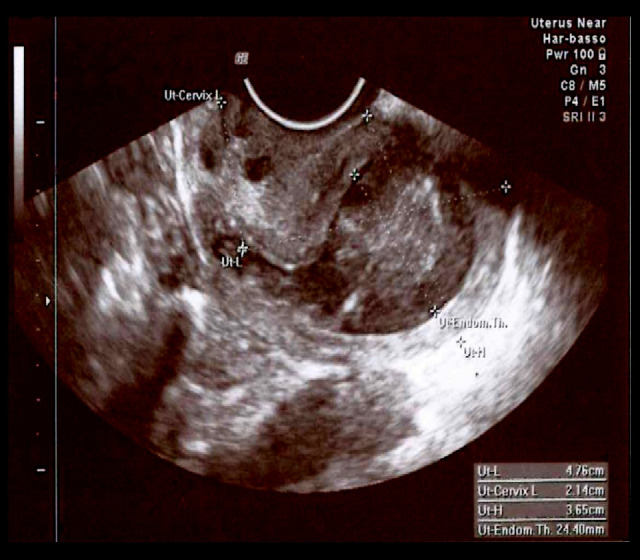
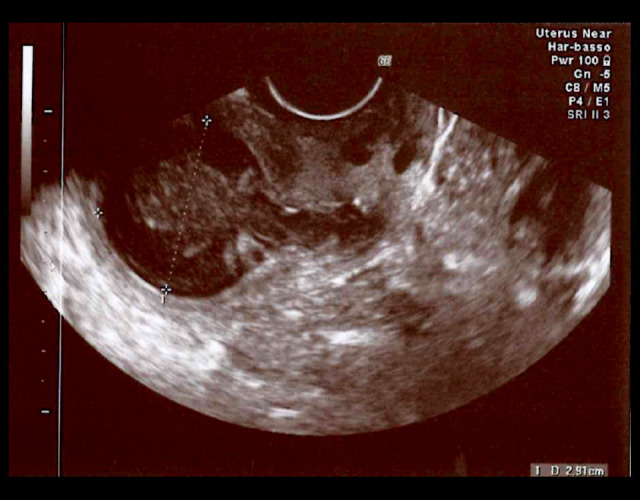
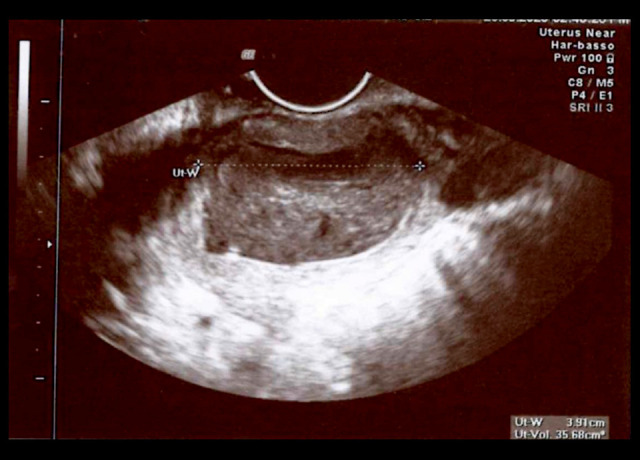
BACKGROUND Pyometra is an accumulation of pus in the uterine cavity. It is rare in the general population but more common in elderly women. If diagnosed in the early stage, life-threating conditions may be avoided. The most common etiological microorganisms of pyometra are Escherichia coli, Bacteroides species, Staphylococci (eg, epidermidis) and Streptococci. Occasionally, atypical bacteria may be the cause. CASE REPORT We present the case of a 75-year-old woman, with multiple risk factors, admitted to the Gynecology Department with a 15-day history of yellowish-brown vaginal discharge. Because of rapid enlargement of the uterine cavity, the patient underwent to endometrial curettage. Three hours after surgery, she developed a high-grade fever, and Streptococcus constellatus was isolated in her blood cultures. A specific antibiotic therapy was administered for a total of 14 days, resulting in complete resolution of the infection. CONCLUSIONS This case report describes a rare case of bacteremia caused by Streptococcus constellatus, that resulted from a pyometra. The classic triad of symptoms (postmenopausal bleeding, vaginal discharge, and lower abdominal pain) may be helpful for diagnosis; however, 50% of patients are asymptomatic. An early recognition of the condition is important to avoid rare but risky consequences, such as perforation of the uterus itself. Nevertheless, surgery can cause dangerous complications such as bacteremia. A different spectrum of bacteria may be involved in the development of pyometra, even in atypical cases, mostly when multiple comorbidities are present. A correct evaluation and management of the patient is essential to guarantee a good prognosis in this rare infection.
子宫积脓是子宫腔内脓液积聚。它在普通人群中很少见,但在老年妇女中更为常见。如果在早期诊断,可能避免危及生命的情况。子宫积脓最常见的病因微生物是大肠杆菌、拟杆菌属、葡萄球菌(如表皮葡萄球菌)和链球菌。偶尔,非典型细菌也可能是病因。
我们报告了一例 75 岁的女性病例,她有多种危险因素,因 15 天的黄棕色阴道分泌物而入住妇科。由于宫腔迅速增大,患者接受了子宫内膜刮宫术。术后 3 小时,她出现高热,血培养分离出星座链球菌。给予特定的抗生素治疗共 14 天,感染完全消退。
本病例报告描述了一例由星座链球菌引起的罕见子宫积脓导致菌血症的病例。典型三联征(绝经后出血、阴道分泌物和下腹痛)有助于诊断;然而,50%的患者无症状。早期识别病情对于避免罕见但危险的后果(如子宫穿孔)非常重要。然而,手术可能会引起危险的并发症,如菌血症。在子宫积脓的发展中,即使在非典型病例中,也可能涉及不同的细菌谱,尤其是在存在多种合并症时。正确评估和处理患者对于保证这种罕见感染的良好预后至关重要。