Instituto Gulbenkian de Ciência, 2780-156 Oeiras, Portugal.
i3S Instituto de Investigação e Inovação em Saúde, IBMC Instituto de Biologia Molecular e Celular, Universidade do Porto, 4200-135 Porto, Portugal.
Genes Dev. 2021 Jul 1;35(13-14):1020-1034. doi: 10.1101/gad.348174.120. Epub 2021 Jun 24.
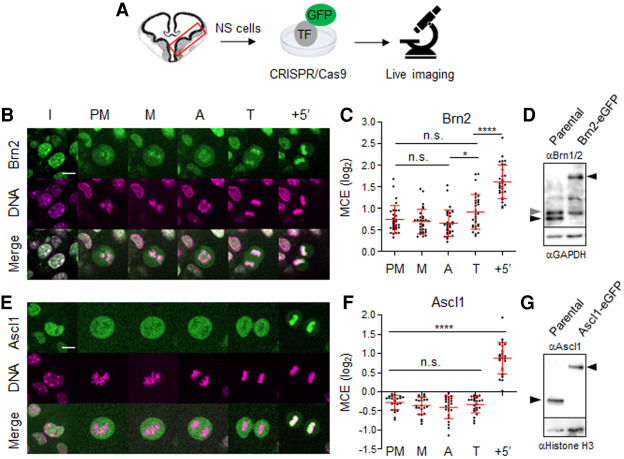
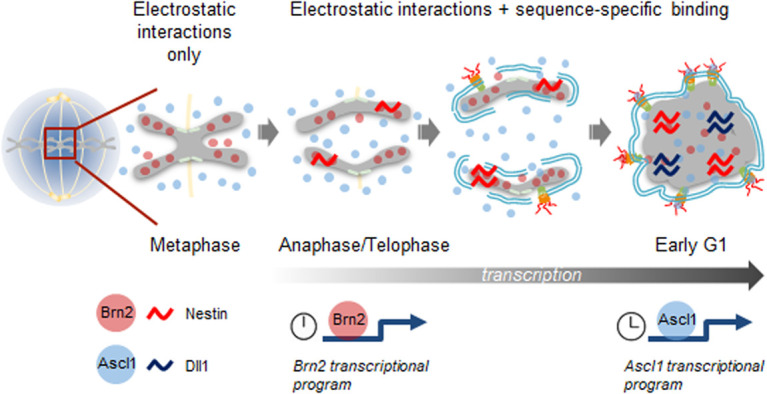
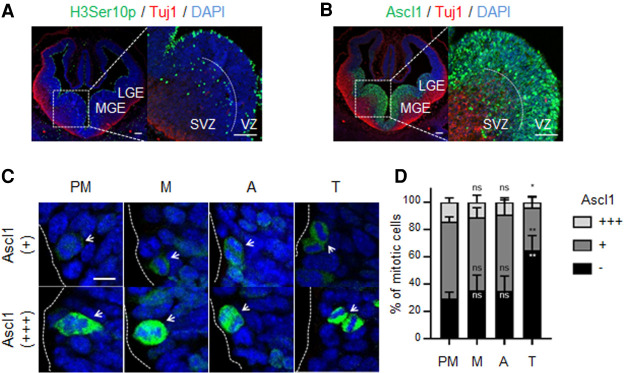
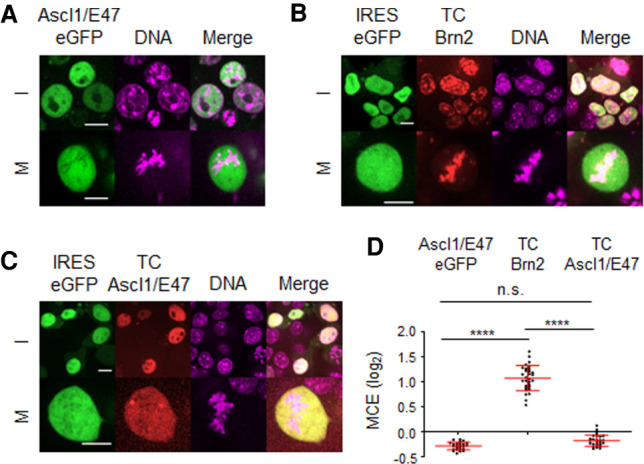
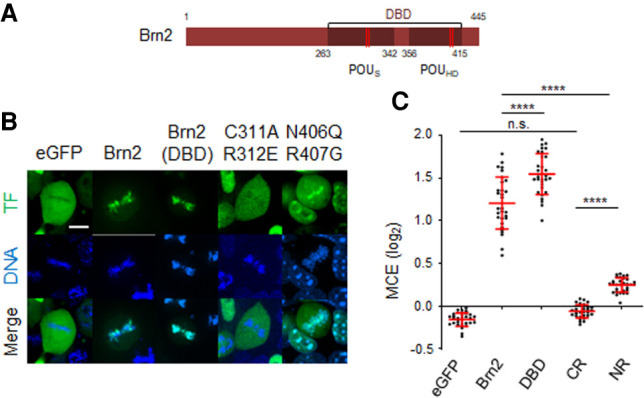
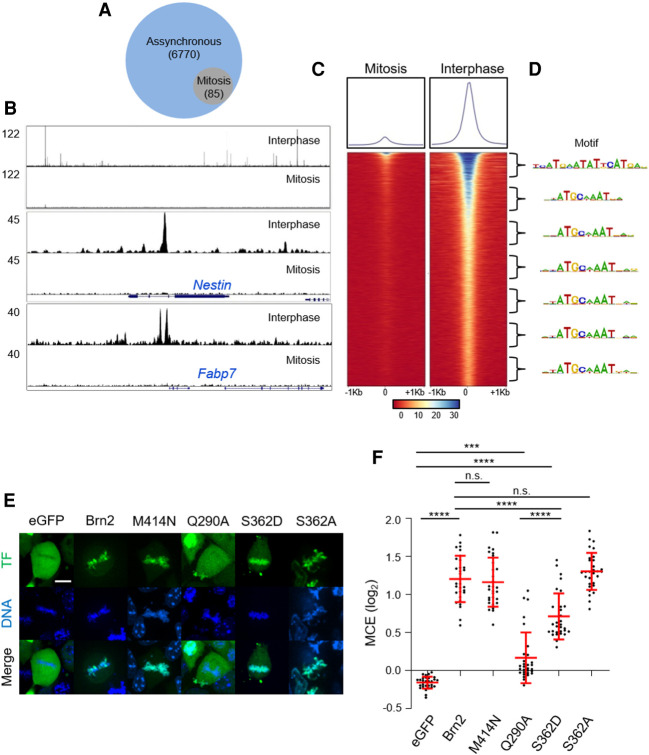
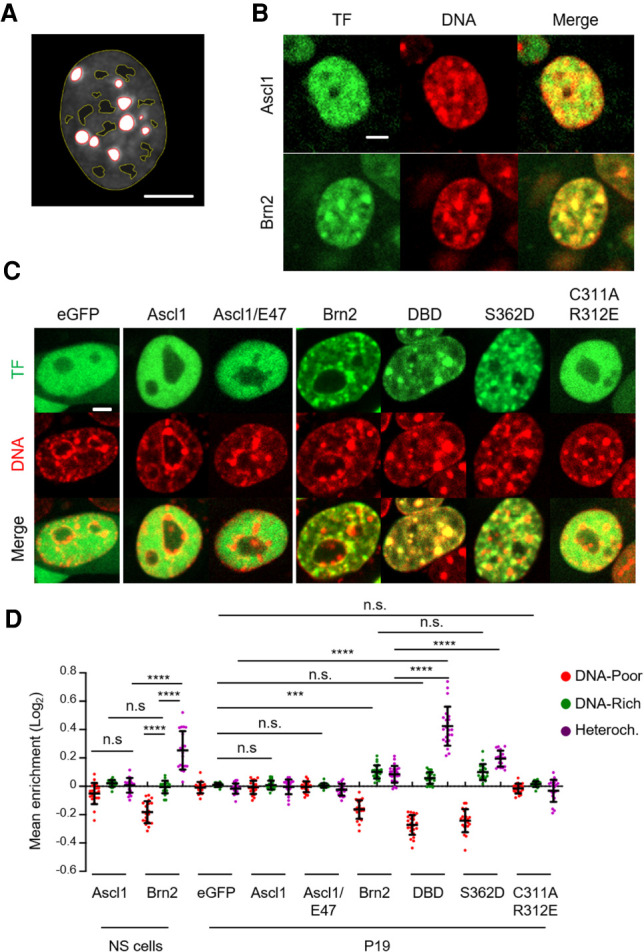
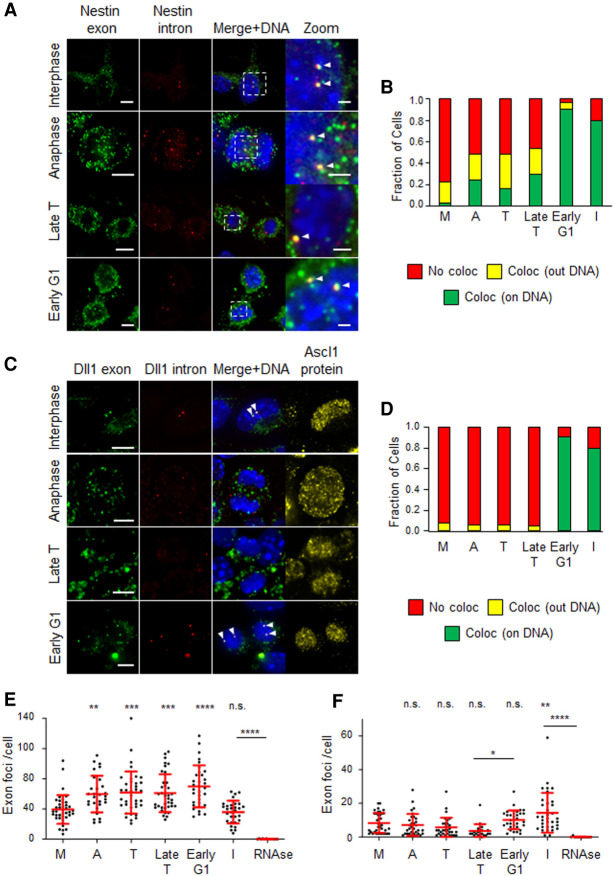
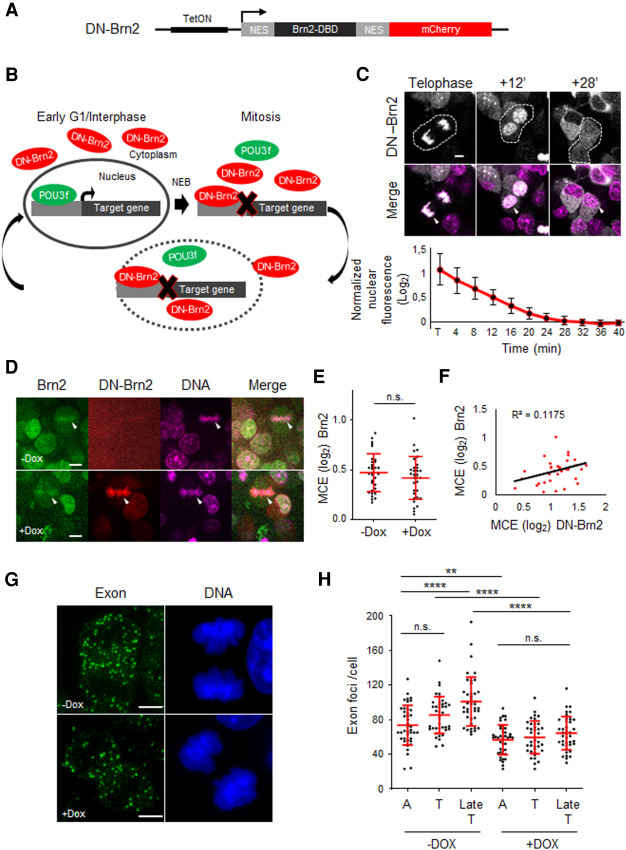
During mitosis, chromatin condensation is accompanied by a global arrest of transcription. Recent studies suggest transcriptional reactivation upon mitotic exit occurs in temporally coordinated waves, but the underlying regulatory principles have yet to be elucidated. In particular, the contribution of sequence-specific transcription factors (TFs) remains poorly understood. Here we report that Brn2, an important regulator of neural stem cell identity, associates with condensed chromatin throughout cell division, as assessed by live-cell imaging of proliferating neural stem cells. In contrast, the neuronal fate determinant Ascl1 dissociates from mitotic chromosomes. ChIP-seq analysis reveals that Brn2 mitotic chromosome binding does not result in sequence-specific interactions prior to mitotic exit, relying mostly on electrostatic forces. Nevertheless, surveying active transcription using single-molecule RNA-FISH against immature transcripts reveals differential reactivation kinetics for key targets of Brn2 and Ascl1, with transcription onset detected in early (anaphase) versus late (early G1) phases, respectively. Moreover, by using a mitotic-specific dominant-negative approach, we show that competing with Brn2 binding during mitotic exit reduces the transcription of its target gene Our study shows an important role for differential binding of TFs to mitotic chromosomes, governed by their electrostatic properties, in defining the temporal order of transcriptional reactivation during mitosis-to-G1 transition.
有丝分裂过程中,染色质凝聚伴随着转录的全局暂停。最近的研究表明,有丝分裂后转录会以时间协调的波的形式重新激活,但潜在的调控原则尚未阐明。特别是,序列特异性转录因子(TFs)的贡献仍然知之甚少。在这里,我们报告说,Brn2 是神经干细胞身份的重要调节因子,通过对增殖中的神经干细胞进行活细胞成像,可评估其在整个细胞分裂过程中与浓缩染色质相关联。相比之下,神经元命运决定因子 Ascl1 与有丝分裂染色体分离。ChIP-seq 分析显示,Brn2 在有丝分裂退出之前不会导致有丝分裂染色体上的序列特异性相互作用,主要依赖于静电力。尽管如此,使用针对不成熟转录物的单分子 RNA-FISH 对活性转录进行调查,揭示了 Brn2 和 Ascl1 的关键靶标之间的差异再激活动力学,转录起始分别在早期(后期)和晚期(早期 G1)检测到。此外,通过使用有丝分裂特异性显性失活方法,我们表明,在有丝分裂退出期间与 Brn2 竞争结合会降低其靶基因的转录。我们的研究表明,TF 对有丝分裂染色体的差异结合在决定有丝分裂到 G1 过渡期间转录重新激活的时间顺序方面起着重要作用,这由它们的静电特性决定。