Ren Haigang, Zhai Wanqing, Lu Xiaojun, Wang Guanghui
Department of Neurology, Center of Translational Medicine, Taicang Affiliated Hospital of Soochow University, The First People's Hospital of Taicang, Suzhou, China.
Jiangsu Key Laboratory of Translational Research and Therapy for Neuropsychiatric Disorders, Department of Pharmacology, College of Pharmaceutical Sciences, Soochow University, Suzhou, China.
Front Aging Neurosci. 2021 Jun 3;13:691881. doi: 10.3389/fnagi.2021.691881. eCollection 2021.
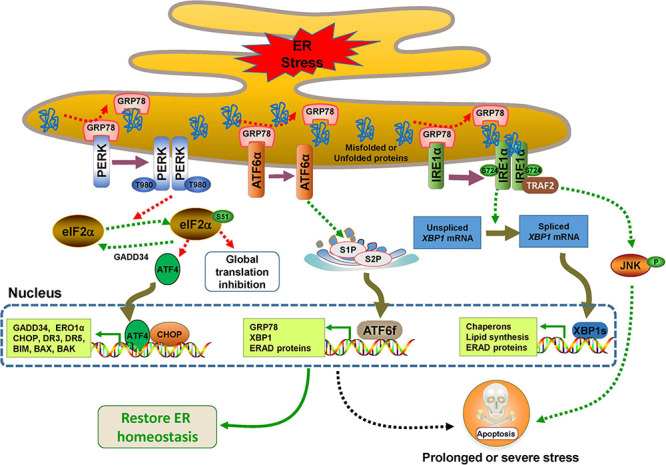
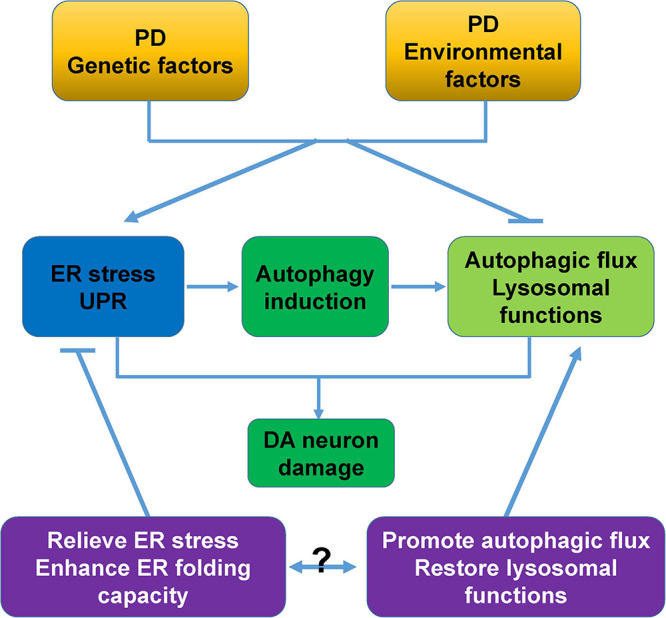
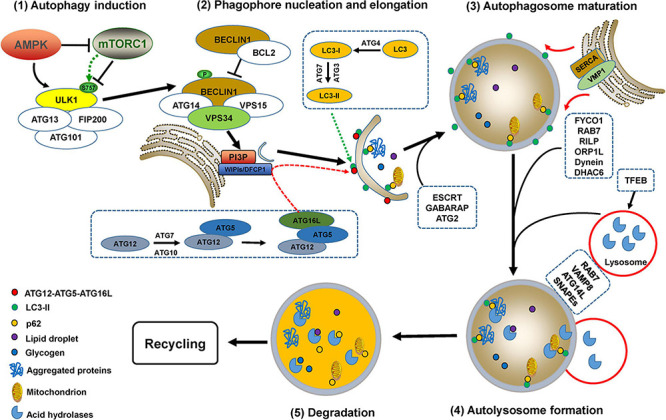
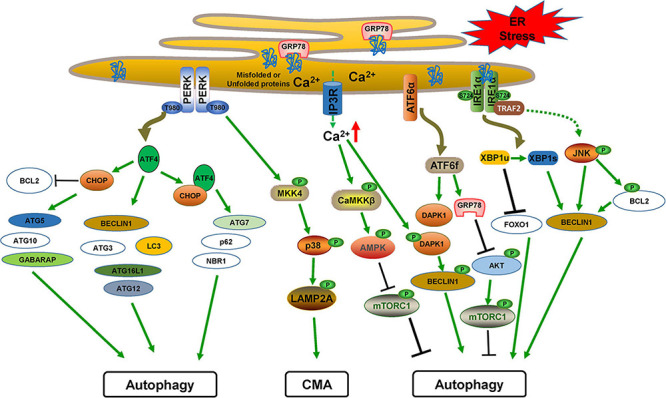
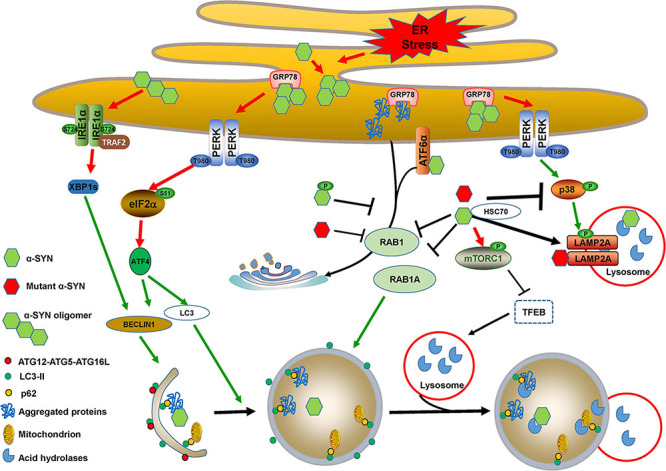
Parkinson's disease (PD) is the most common neurodegenerative movement disorder, and it is characterized by the selective loss of dopaminergic (DA) neurons in the substantia nigra pars compacta (SNpc), as well as the presence of intracellular inclusions with α-synuclein as the main component in surviving DA neurons. Emerging evidence suggests that the imbalance of proteostasis is a key pathogenic factor for PD. Endoplasmic reticulum (ER) stress-induced unfolded protein response (UPR) and autophagy, two major pathways for maintaining proteostasis, play important roles in PD pathology and are considered as attractive therapeutic targets for PD treatment. However, although ER stress/UPR and autophagy appear to be independent cellular processes, they are closely related to each other. In this review, we focused on the roles and molecular cross-links between ER stress/UPR and autophagy in PD pathology. We systematically reviewed and summarized the most recent advances in regulation of ER stress/UPR and autophagy, and their cross-linking mechanisms. We also reviewed and discussed the mechanisms of the coexisting ER stress/UPR activation and dysregulated autophagy in the lesion regions of PD patients, and the underlying roles and molecular crosslinks between ER stress/UPR activation and the dysregulated autophagy in DA neurodegeneration induced by PD-associated genetic factors and PD-related neurotoxins. Finally, we indicate that the combined regulation of ER stress/UPR and autophagy would be a more effective treatment for PD rather than regulating one of these conditions alone.
帕金森病(PD)是最常见的神经退行性运动障碍,其特征是黑质致密部(SNpc)中多巴胺能(DA)神经元选择性丧失,以及存活的DA神经元中存在以α-突触核蛋白为主要成分的细胞内包涵体。新出现的证据表明,蛋白质稳态失衡是PD的关键致病因素。内质网(ER)应激诱导的未折叠蛋白反应(UPR)和自噬是维持蛋白质稳态的两个主要途径,在PD病理过程中起重要作用,被认为是PD治疗有吸引力的治疗靶点。然而,尽管ER应激/UPR和自噬似乎是独立的细胞过程,但它们彼此密切相关。在本综述中,我们重点关注ER应激/UPR和自噬在PD病理中的作用及分子交联。我们系统地回顾和总结了ER应激/UPR和自噬调节及其交联机制的最新进展。我们还回顾和讨论了PD患者病变区域中ER应激/UPR激活和自噬失调共存的机制,以及ER应激/UPR激活与PD相关遗传因素和PD相关神经毒素诱导的DA神经变性中自噬失调之间的潜在作用和分子交联。最后,我们指出,联合调节ER应激/UPR和自噬对PD的治疗将比单独调节其中一种情况更有效。