Millett David, Pach Suzanne
Hoag Memorial Hospital Presbyterian, Newport Beach, CA, USA.
Epilepsy Behav Rep. 2021 May 31;16:100461. doi: 10.1016/j.ebr.2021.100461. eCollection 2021.
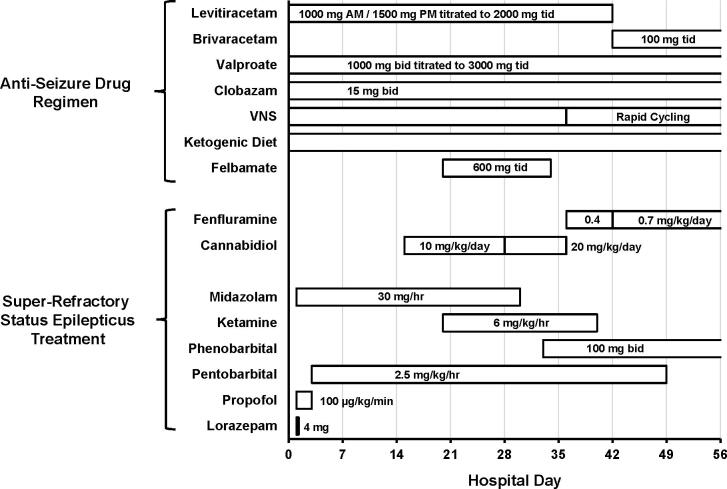
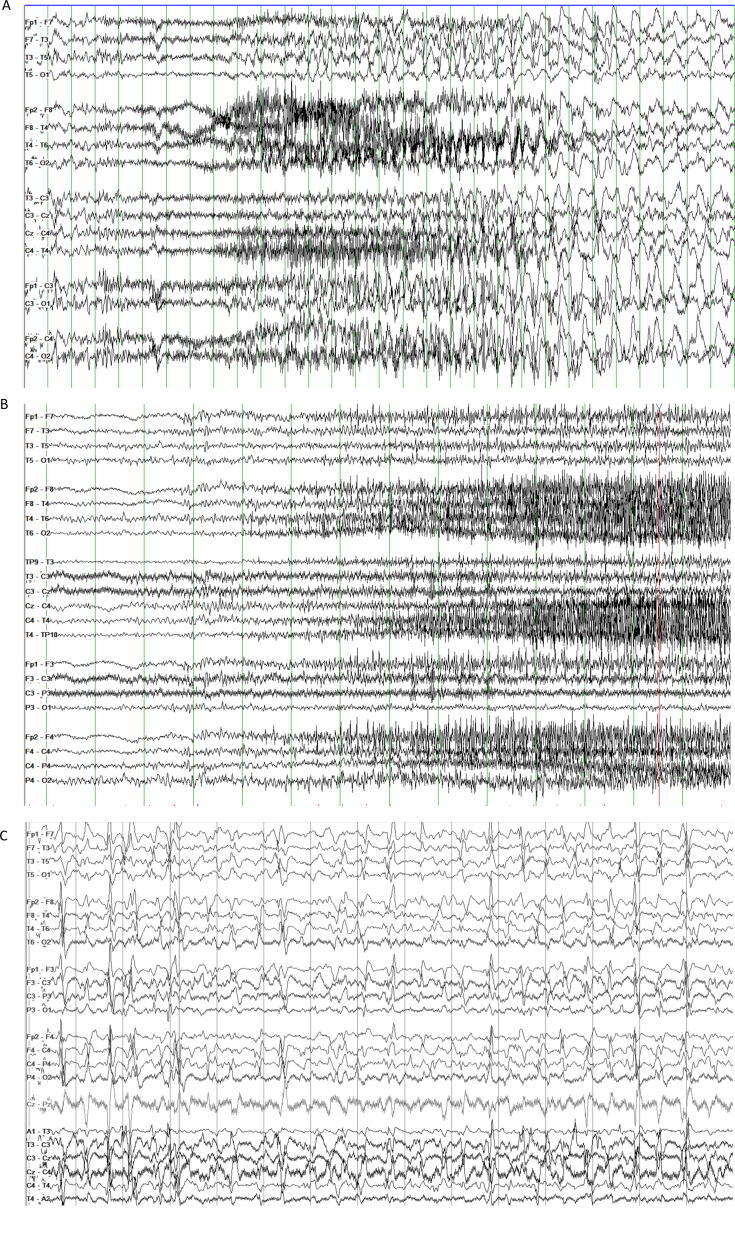
A 20-year-old woman with Dravet syndrome and multiple prior episodes of status epilepticus presented to our hospital in November 2018 in super-refractory status epilepticus. After 5 weeks of unsuccessful continuous treatment with anesthetics, including pentobarbital and ketamine, we sought and were granted an emergency approval by the United States Food and Drug Administration to administer fenfluramine, an investigational new drug, to this patient. One week of treatment with fenfluramine at 0.4 mg/kg/day was ineffective. The dose of fenfluramine was titrated to 0.7 mg/kg/day, and after 1 week, electrographic seizures ceased. One week later, the patient was seizure-free and off all anesthetic agents. Add-on treatment with fenfluramine was continued with no further episodes of status epilepticus and >90% reduction in tonic-clonic seizures. This case report illustrates the potential for fenfluramine to prevent reoccurrence of status epilepticus and to manage super-refractory status epilepticus in patients with Dravet syndrome.
一名患有德雷维特综合征且有多次癫痫持续状态发作史的20岁女性,于2018年11月因超级难治性癫痫持续状态入住我院。在使用包括戊巴比妥和氯胺酮在内的麻醉剂进行了5周的持续治疗但未成功后,我们寻求并获得了美国食品药品监督管理局的紧急批准,对该患者使用一种研究性新药芬氟拉明进行治疗。以0.4毫克/千克/天的剂量使用芬氟拉明治疗1周无效。芬氟拉明的剂量滴定至0.7毫克/千克/天,1周后,脑电图癫痫发作停止。1周后,患者无癫痫发作且停用了所有麻醉剂。继续使用芬氟拉明进行附加治疗,未再出现癫痫持续状态发作,强直阵挛性发作减少了90%以上。本病例报告说明了芬氟拉明在预防德雷维特综合征患者癫痫持续状态复发和治疗超级难治性癫痫持续状态方面的潜力。