Department of Biological Chemistry, Johns Hopkins University School of Medicine, Baltimore, Maryland, United States of America.
PLoS Genet. 2021 Jun 28;17(6):e1009655. doi: 10.1371/journal.pgen.1009655. eCollection 2021 Jun.
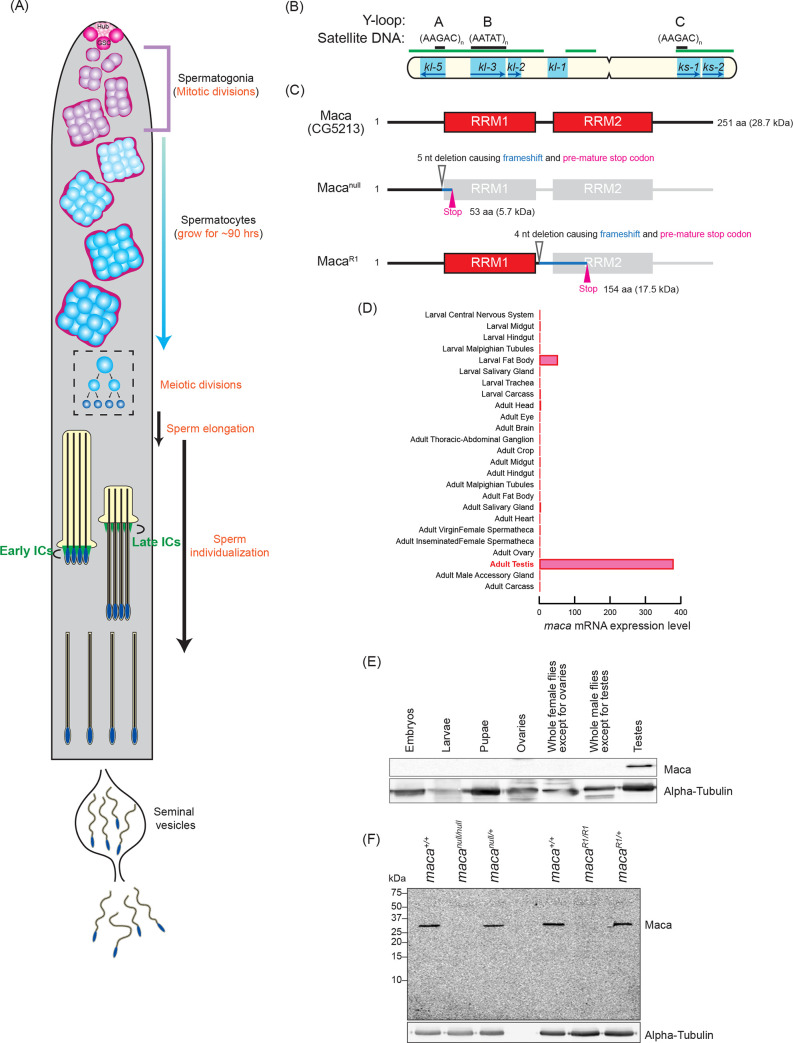
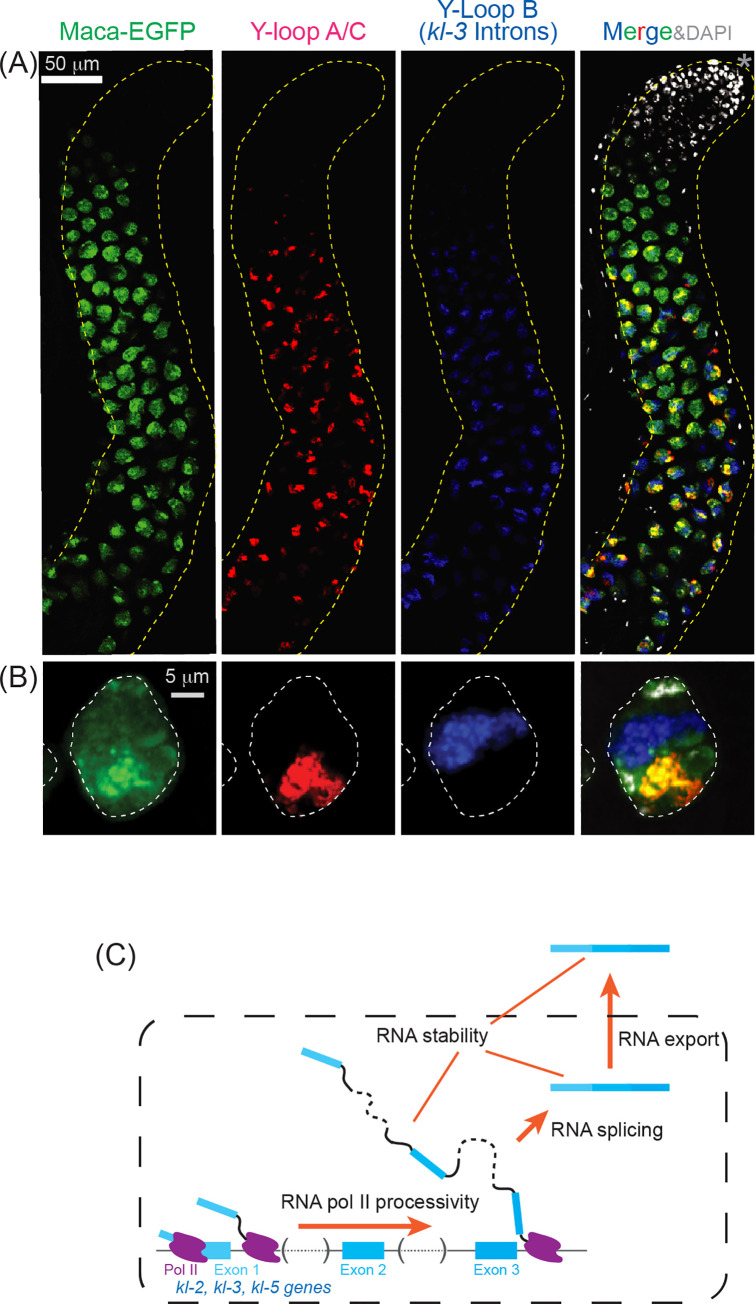
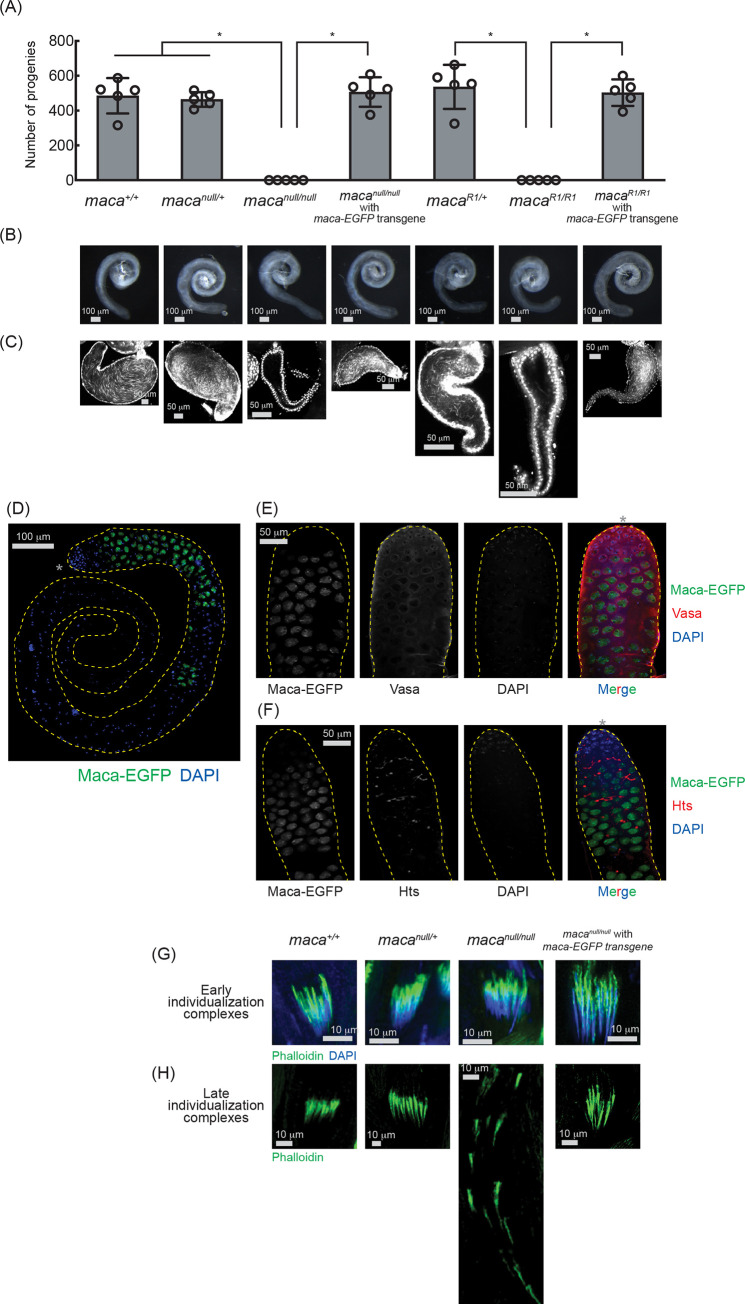
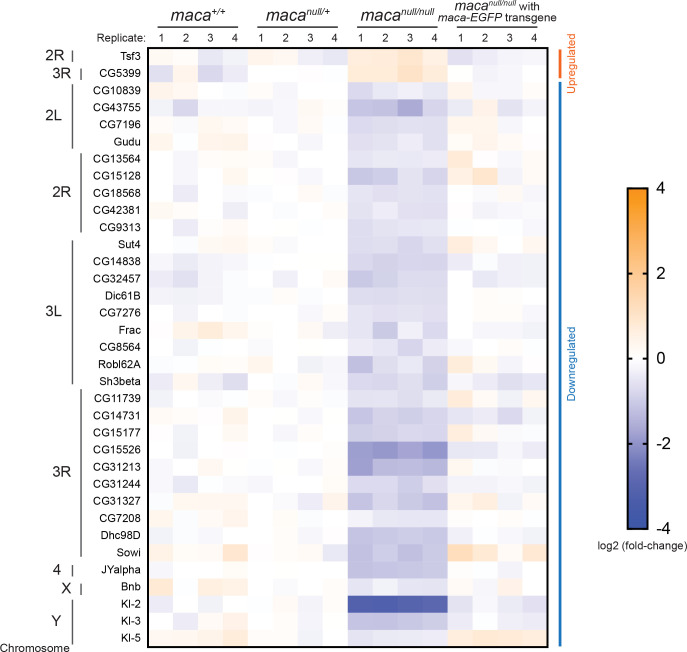
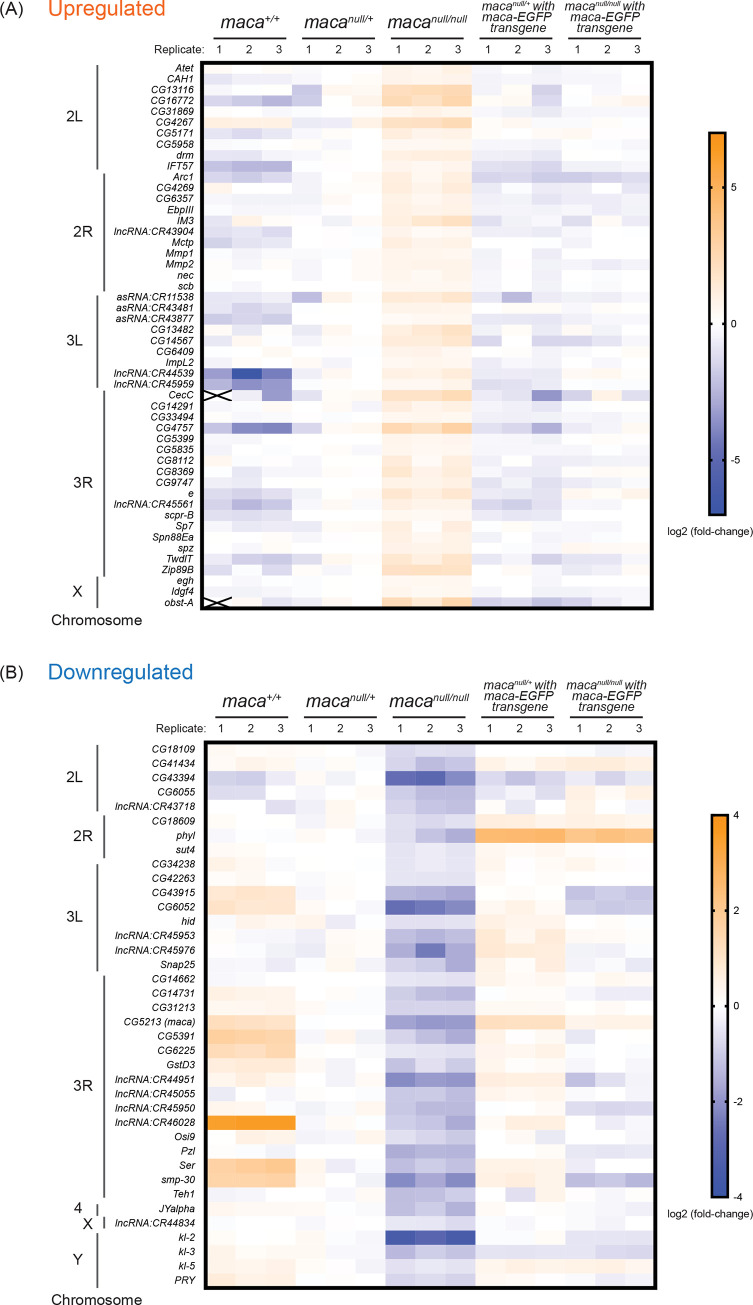
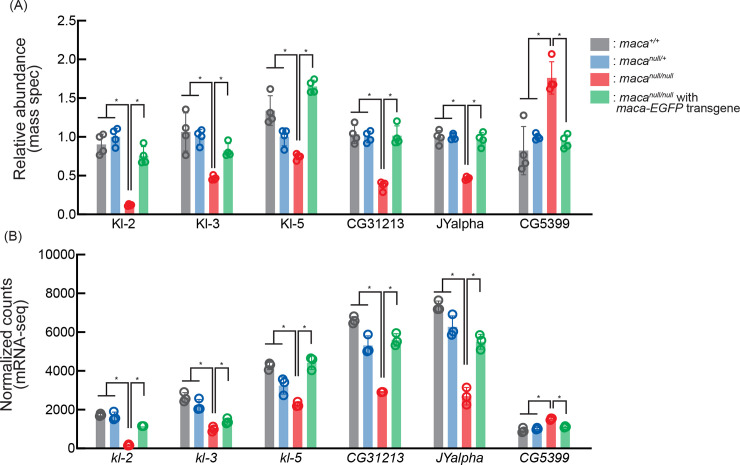
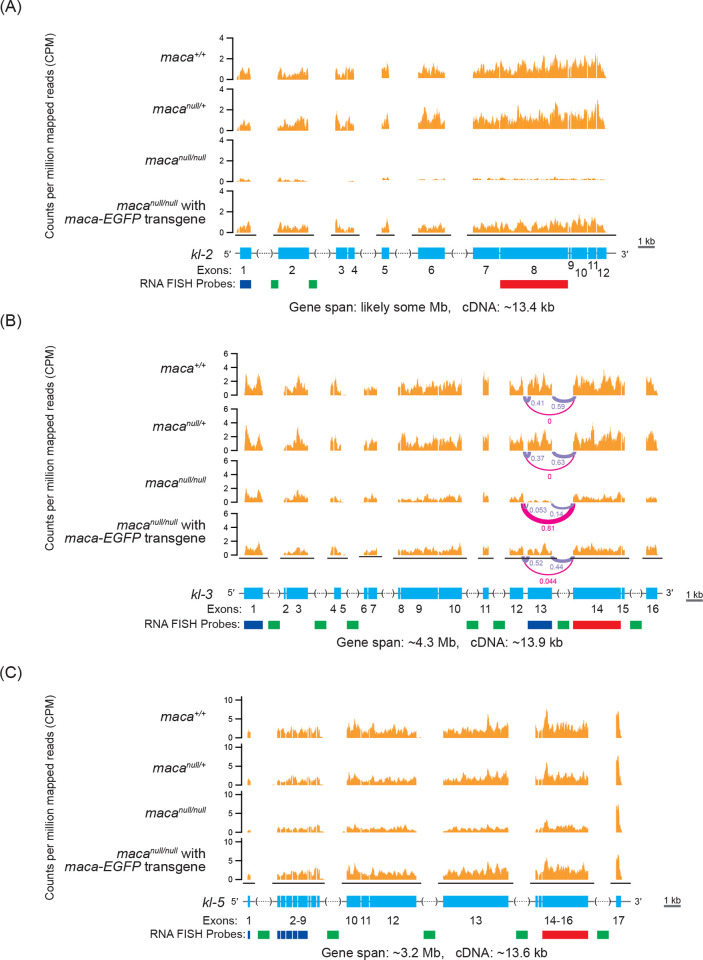
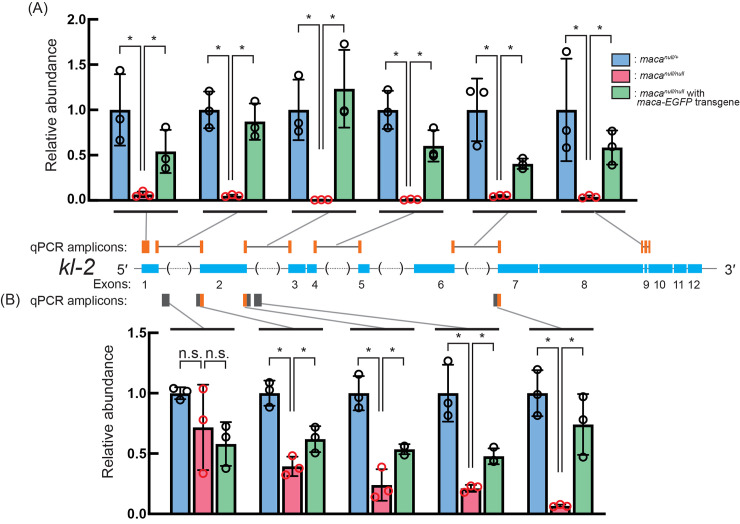
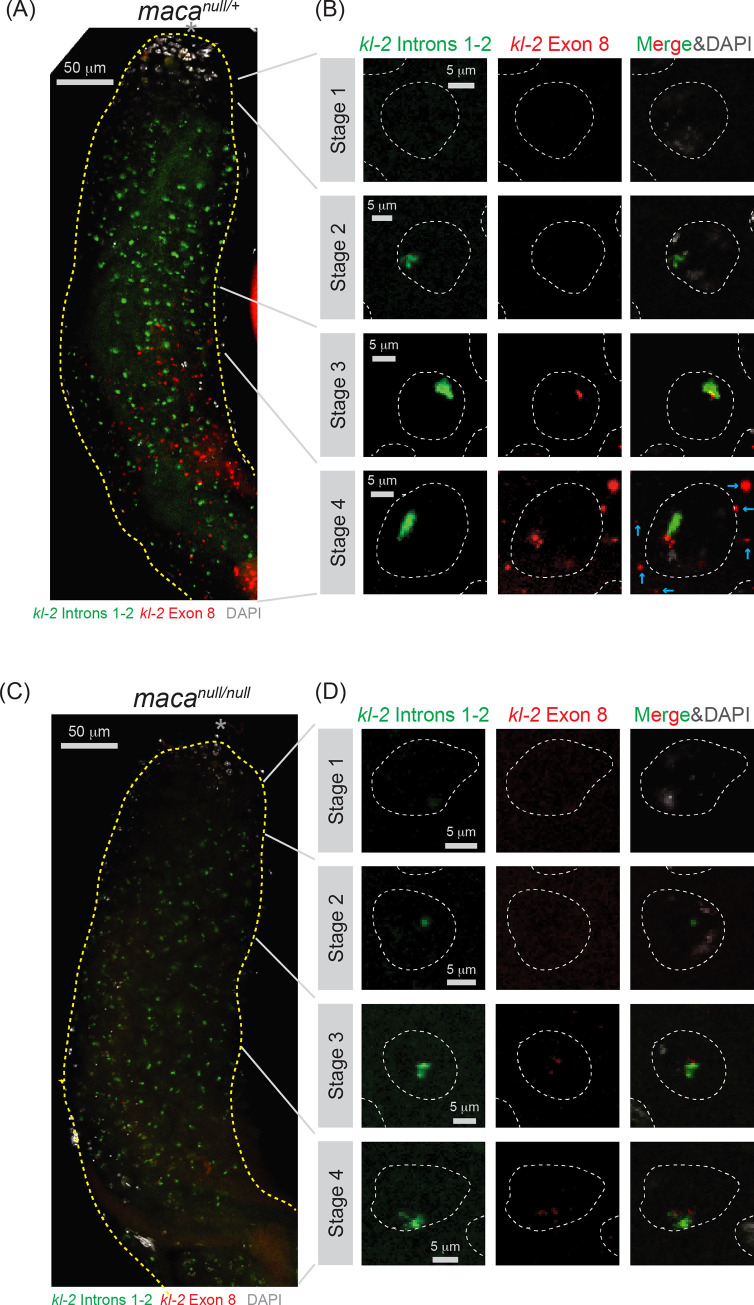
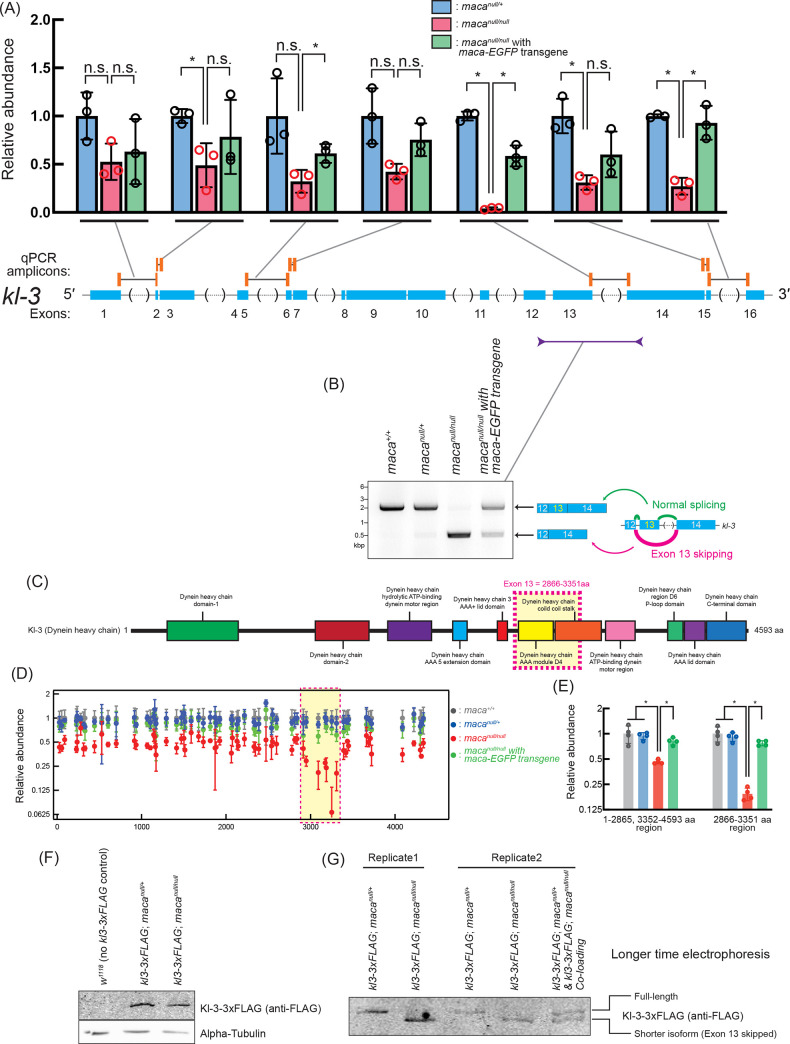
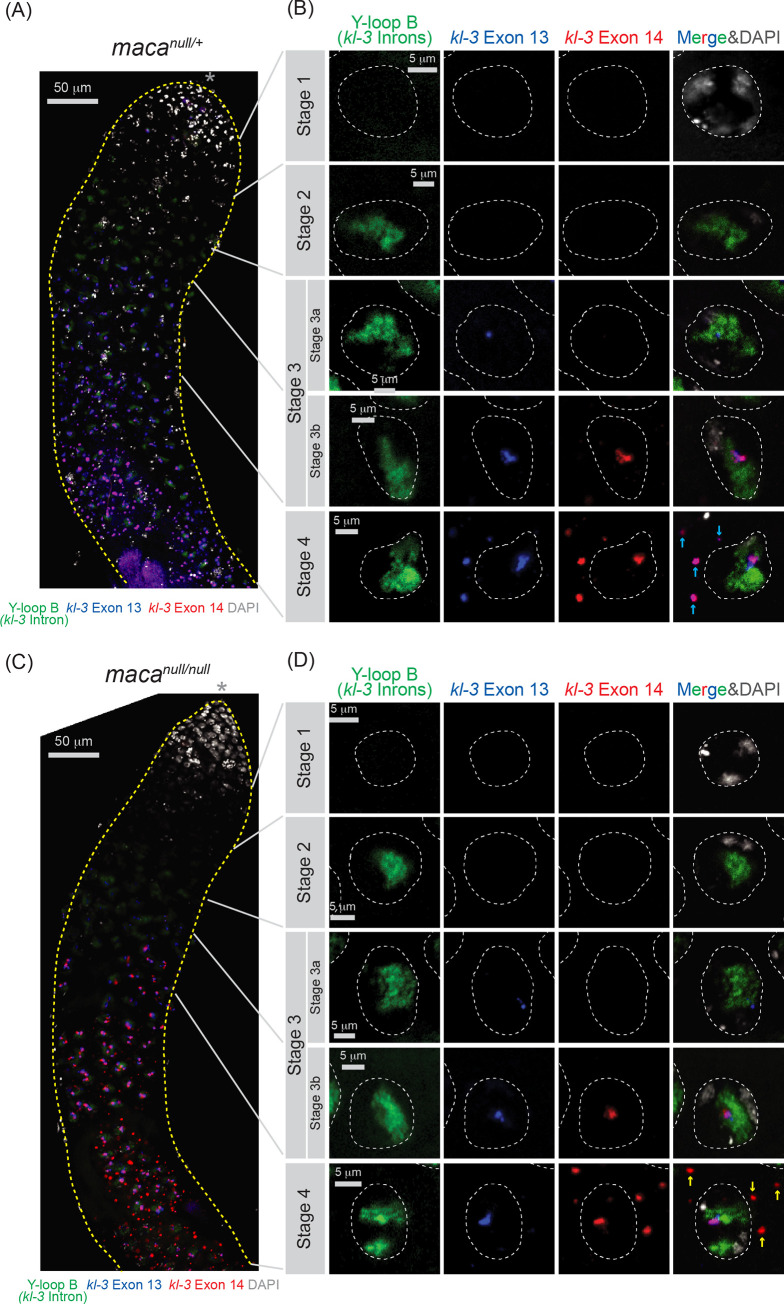
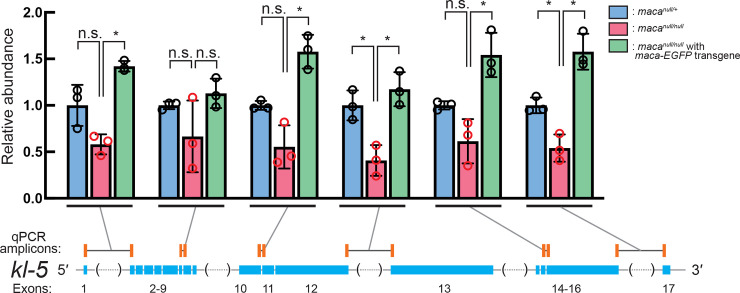
During spermatogenesis, the process in which sperm for fertilization are produced from germline cells, gene expression is spatiotemporally highly regulated. In Drosophila, successful expression of extremely large male fertility factor genes on Y-chromosome spanning some megabases due to their gigantic intron sizes is crucial for spermatogenesis. Expression of such extremely large genes must be challenging, but the molecular mechanism that allows it remains unknown. Here we report that a novel RNA-binding protein Maca, which contains two RNA-recognition motifs, is crucial for this process. maca null mutant male flies exhibited a failure in the spermatid individualization process during spermatogenesis, lacked mature sperm, and were completely sterile, while maca mutant female flies were fully fertile. Proteomics and transcriptome analyses revealed that both protein and mRNA abundance of the gigantic male fertility factor genes kl-2, kl-3, and kl-5 (kl genes) are significantly decreased, where the decreases of kl-2 are particularly dramatic, in maca mutant testes. Splicing of the kl-3 transcripts was also dysregulated in maca mutant testes. All these physiological and molecular phenotypes were rescued by a maca transgene in the maca mutant background. Furthermore, we found that in the control genetic background, Maca is exclusively expressed in spermatocytes in testes and enriched at Y-loop A/C in the nucleus, where the kl-5 primary transcripts are localized. Our data suggest that Maca increases transcription processivity, promotes successful splicing of gigantic introns, and/or protects transcripts from premature degradation, of the kl genes. Our study identified a novel RNA-binding protein Maca that is crucial for successful expression of the gigantic male fertility factor genes, spermatogenesis, and male fertility.
在精子发生过程中,即从生殖细胞产生受精用精子的过程中,基因表达受到时空的高度调控。在果蝇中,由于其巨大的内含子大小,Y 染色体上跨越几个兆碱基的极其大型的雄性生育因子基因的成功表达对于精子发生至关重要。这种极其大型基因的表达必须具有挑战性,但允许这种表达的分子机制尚不清楚。在这里,我们报告说,一种新型的 RNA 结合蛋白 Maca,它包含两个 RNA 识别基序,对于这个过程至关重要。maca 缺失突变雄性果蝇在精子发生过程中表现出精子细胞个体化过程失败,缺乏成熟精子,完全不育,而 maca 突变雌性果蝇则完全可育。蛋白质组学和转录组分析显示,巨大的雄性生育因子基因 kl-2、kl-3 和 kl-5(kl 基因)的蛋白质和 mRNA 丰度都显著降低,其中 kl-2 的降低尤为显著,在 maca 突变睾丸中。kl-3 转录物的剪接也在 maca 突变睾丸中失调。在 maca 突变背景下,maca 转基因可挽救所有这些生理和分子表型。此外,我们发现,在对照遗传背景下,Maca 仅在睾丸的精母细胞中表达,并在核中富集于 Y 环 A/C 处,kl-5 初级转录物定位于此处。我们的数据表明,Maca 增加转录过程的连续性,促进巨大内含子的成功剪接,和/或保护转录物免受过早降解,kl 基因。我们的研究确定了一种新型的 RNA 结合蛋白 Maca,它对于巨大的雄性生育因子基因、精子发生和雄性生育的成功表达至关重要。