Department of Molecular Biology, Princeton University, Princeton, NJ, USA.
Lewis-Sigler Institute for Integrative Genomics, Princeton University, Princeton, NJ, USA.
Nat Microbiol. 2021 Jul;6(7):910-920. doi: 10.1038/s41564-021-00924-w. Epub 2021 Jun 28.
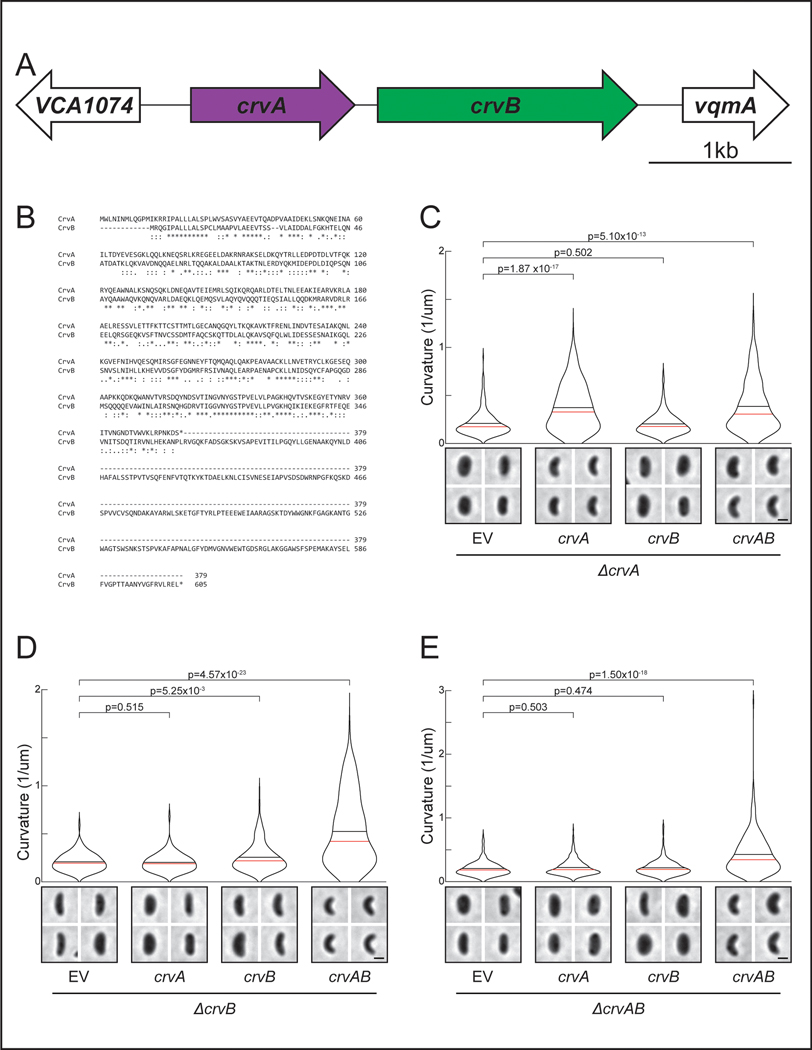
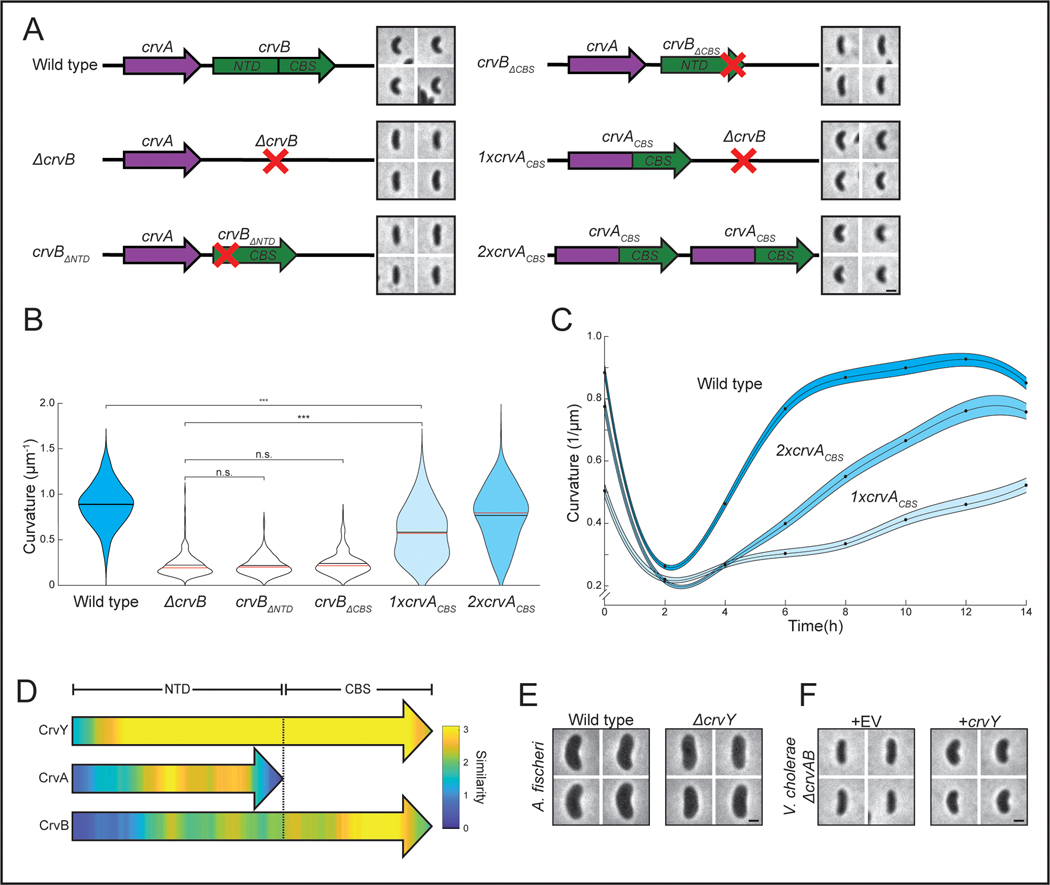
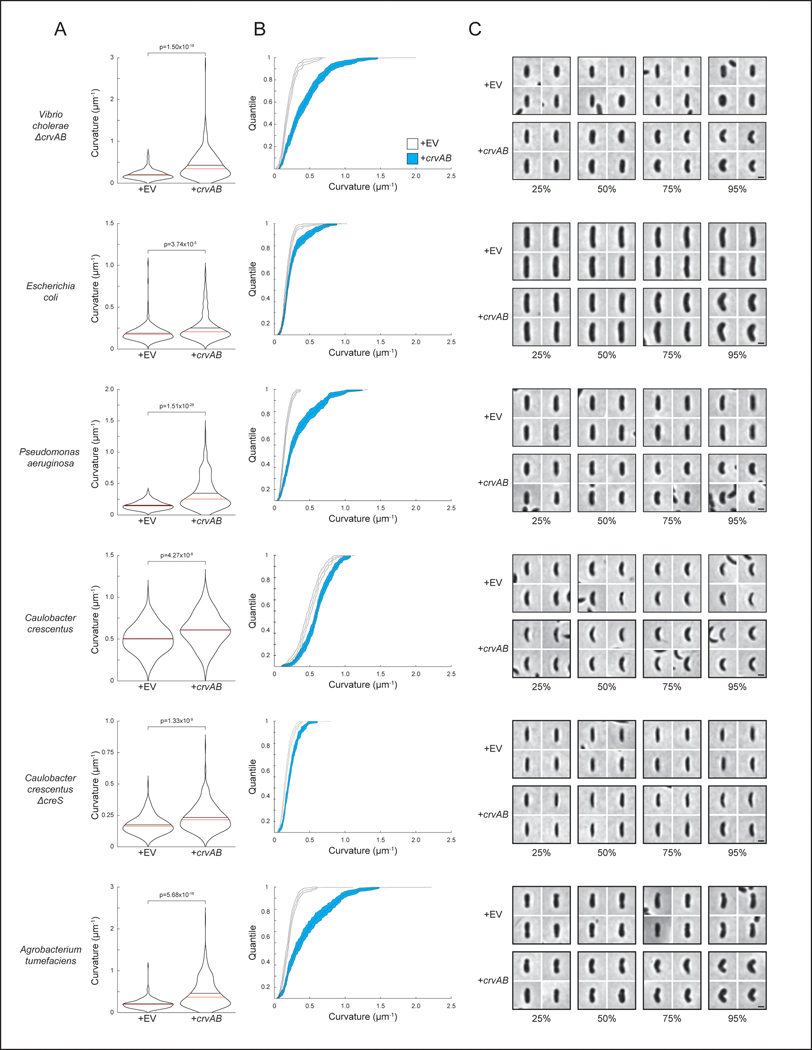
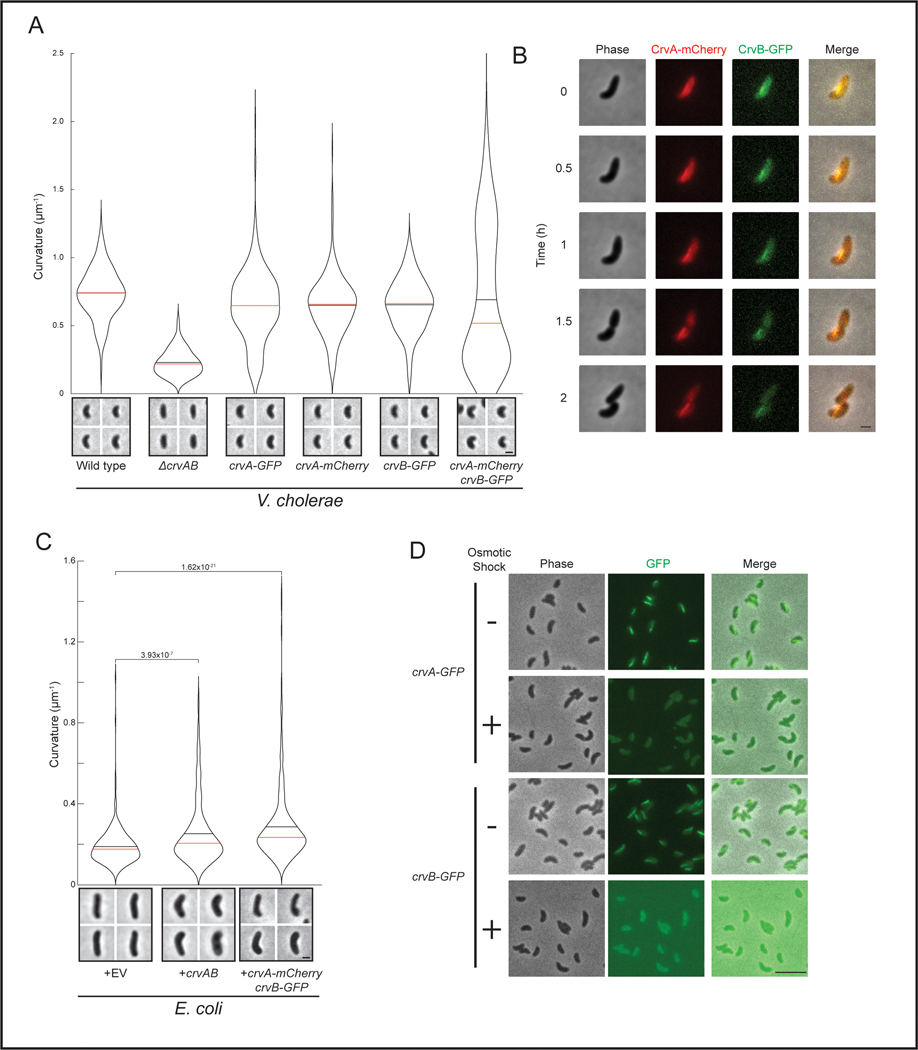
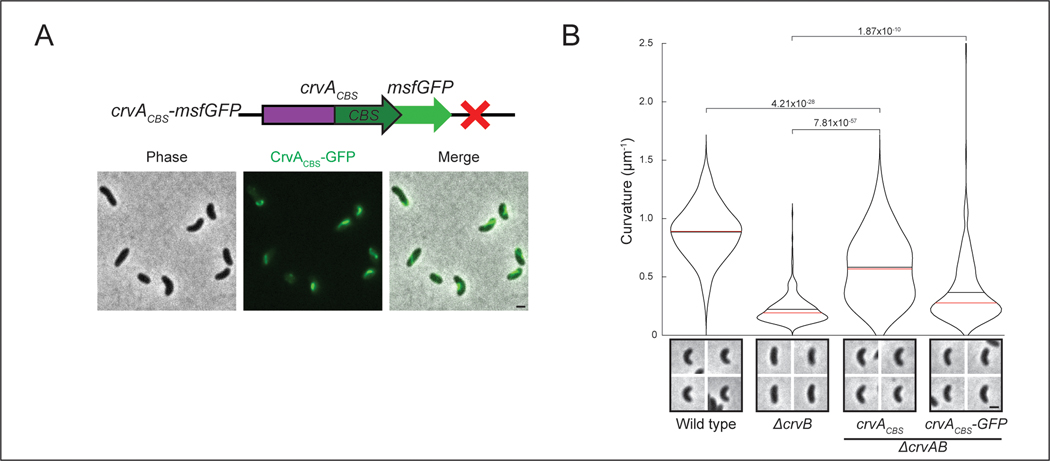
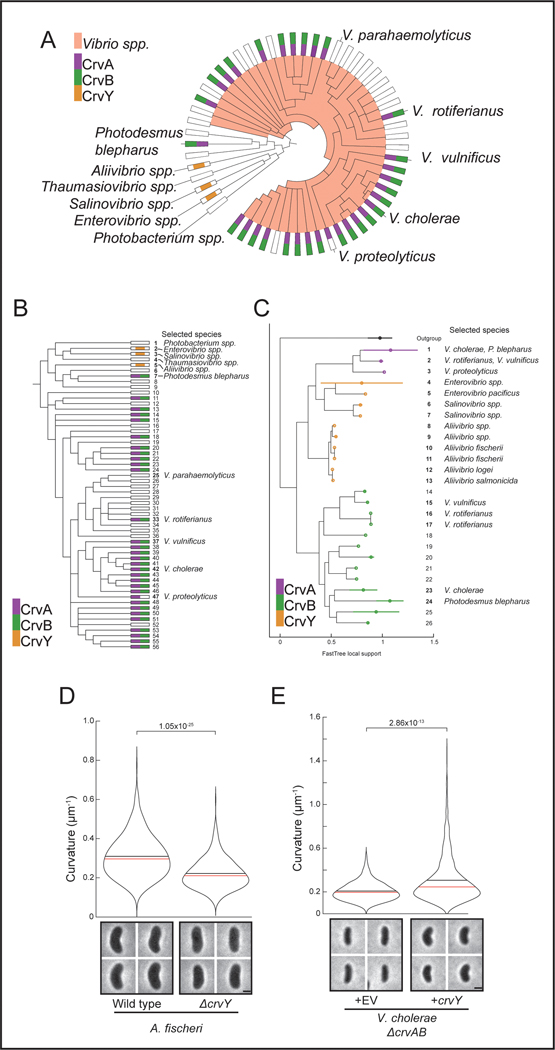
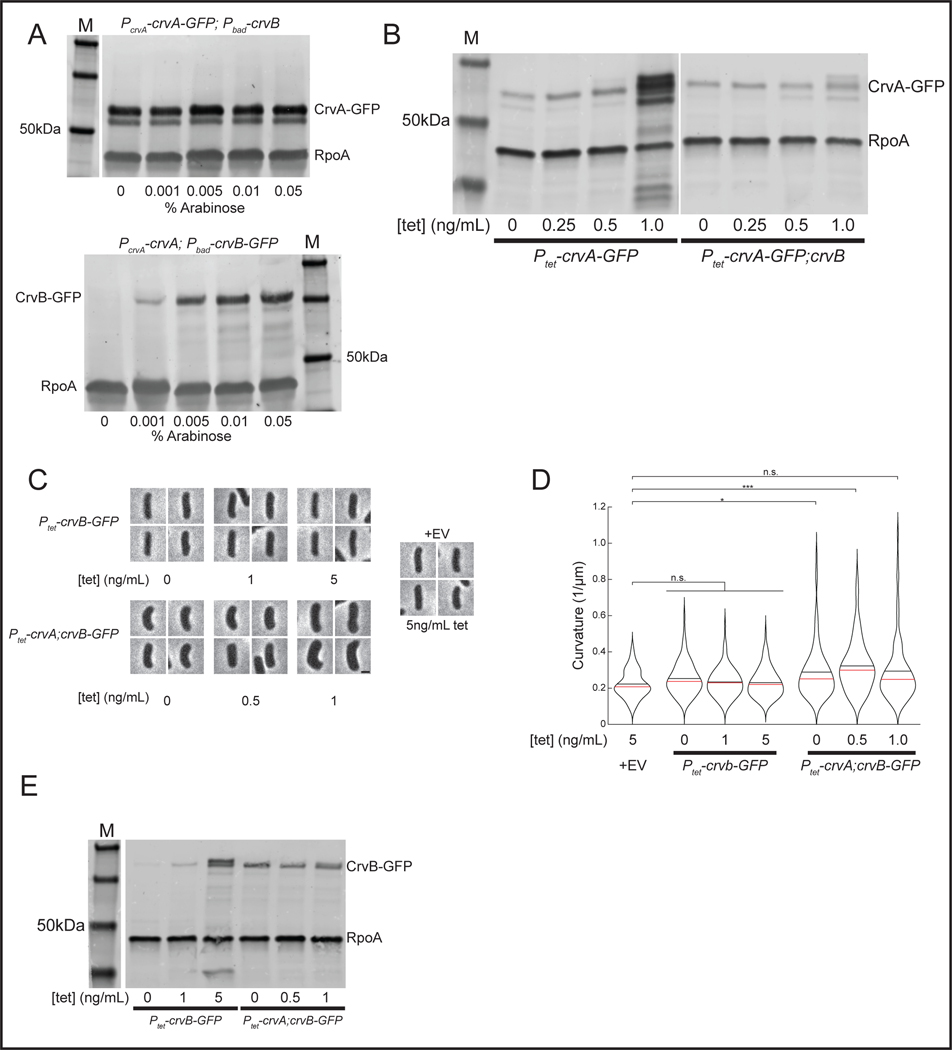
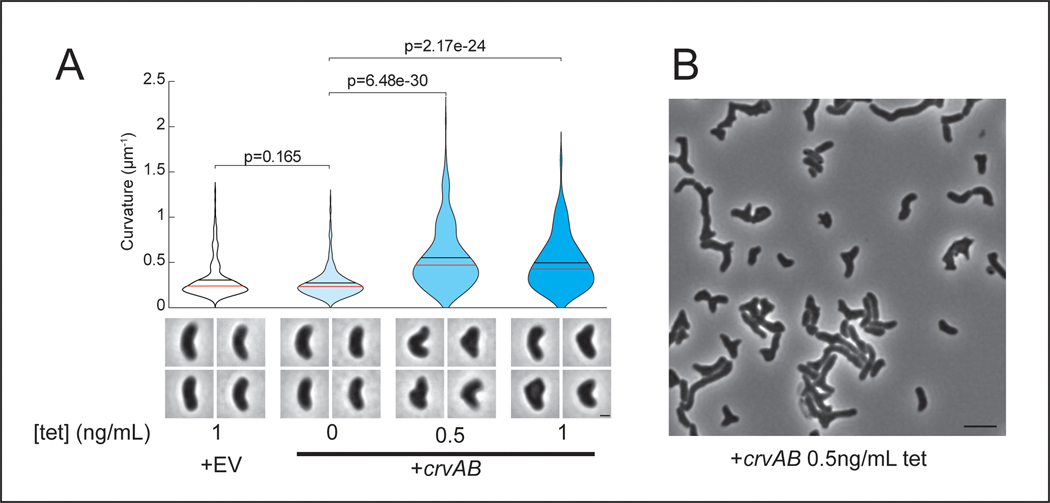
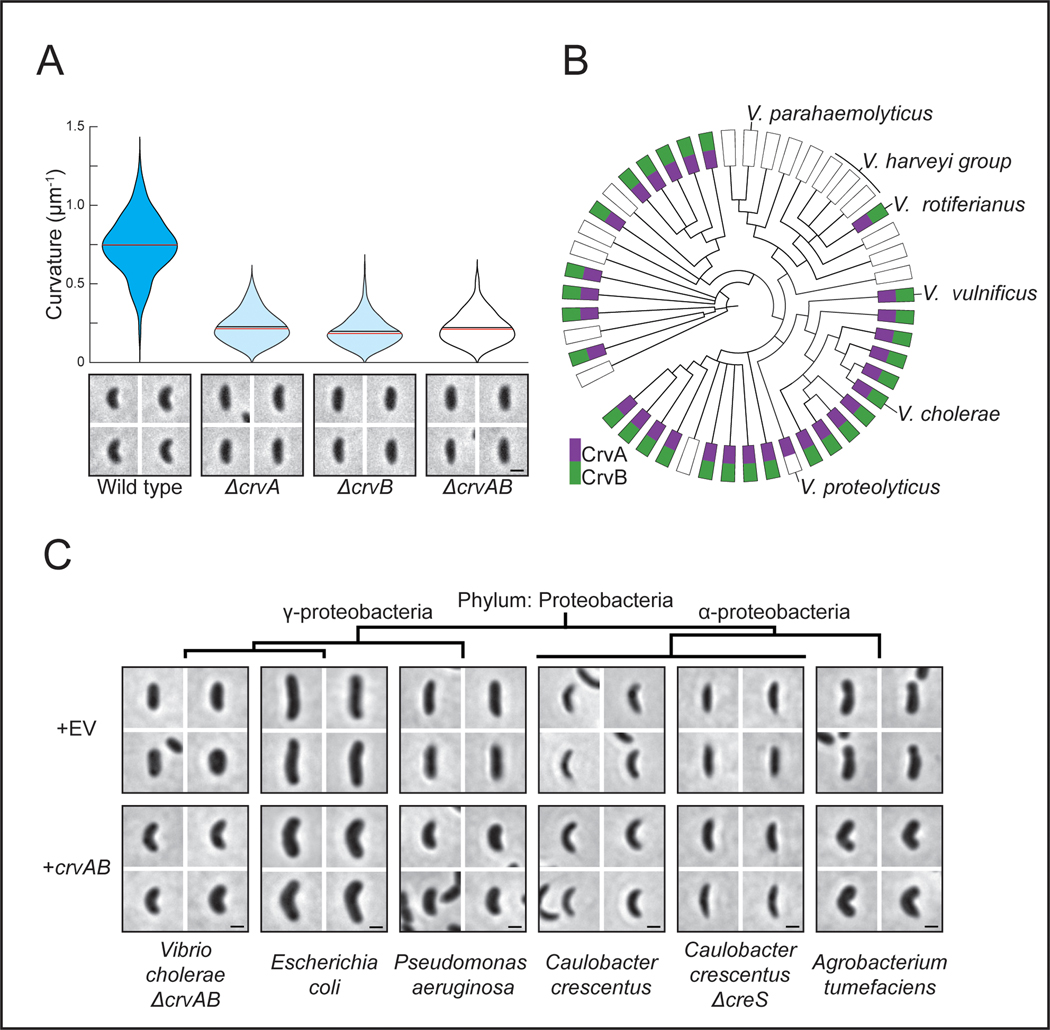
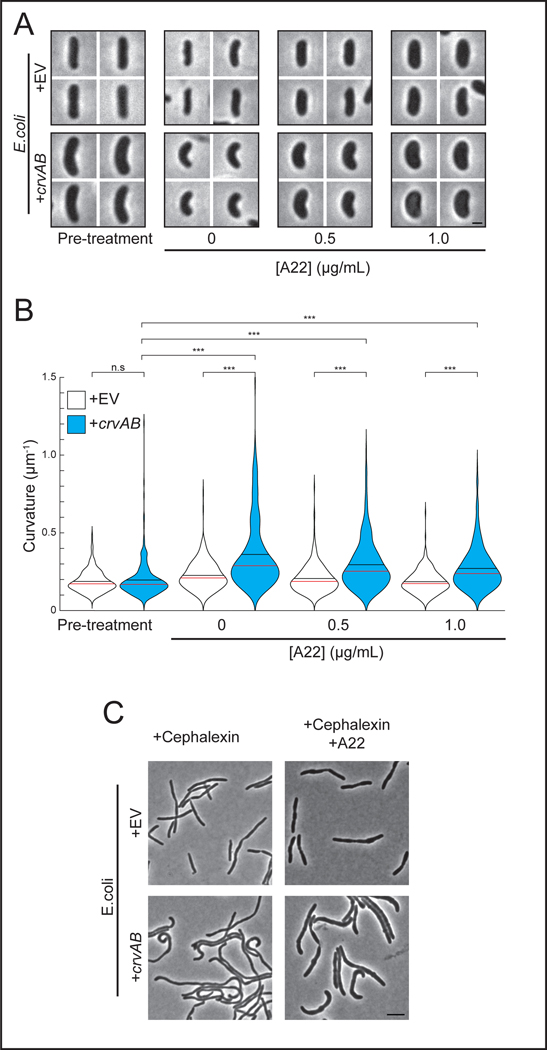
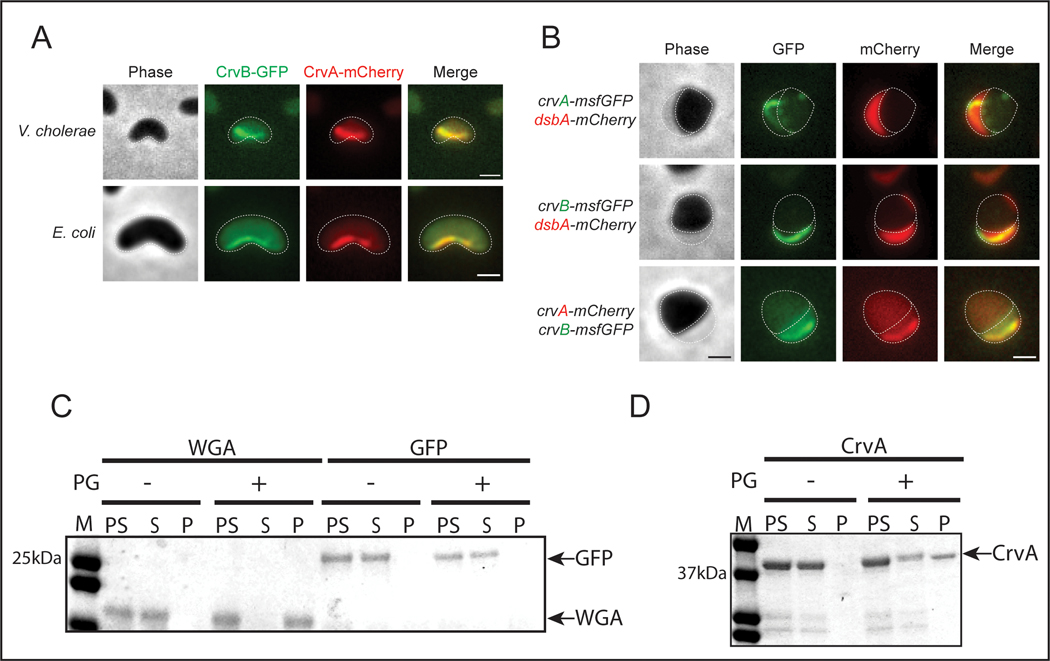
Bacterial species have diverse cell shapes that enable motility, colonization and virulence. The cell wall defines bacterial shape and is primarily built by two cytoskeleton-guided synthesis machines, the elongasome and the divisome. However, the mechanisms producing complex shapes, like the curved-rod shape of Vibrio cholerae, are incompletely defined. Previous studies have reported that species-specific regulation of cytoskeleton-guided machines enables formation of complex bacterial shapes such as cell curvature and cellular appendages. In contrast, we report that CrvA and CrvB are sufficient to induce complex cell shape autonomously of the cytoskeleton in V. cholerae. The autonomy of the CrvAB module also enables it to induce curvature in the Gram-negative species Escherichia coli, Pseudomonas aeruginosa, Caulobacter crescentus and Agrobacterium tumefaciens. Using inducible gene expression, quantitative microscopy and biochemistry, we show that CrvA and CrvB circumvent the need for patterning via cytoskeletal elements by regulating each other to form an asymmetrically localized, periplasmic structure that binds directly to the cell wall. The assembly and disassembly of this periplasmic structure enables dynamic changes in cell shape. Bioinformatics indicate that CrvA and CrvB may have diverged from a single ancestral hybrid protein. Using fusion experiments in V. cholerae, we find that a synthetic CrvA/B hybrid protein is sufficient to induce curvature on its own, but that expression of two distinct proteins, CrvA and CrvB, promotes more rapid curvature induction. We conclude that morphological complexity can arise independently of cell-shape specification by the core cytoskeleton-guided synthesis machines.
细菌具有多种细胞形状,这些形状使它们能够运动、定殖和产生毒性。细胞壁定义了细菌的形状,主要由两个细胞骨架引导的合成机器——伸长体和分裂体构建而成。然而,产生复杂形状的机制,如霍乱弧菌的弯曲杆状形状,尚未完全定义。先前的研究报告称,细胞骨架引导机器的物种特异性调节能够形成复杂的细菌形状,如细胞曲率和细胞附属物。相比之下,我们报告称,CrvA 和 CrvB 足以在霍乱弧菌中独立于细胞骨架自主诱导复杂的细胞形状。CrvAB 模块的自主性还使其能够在革兰氏阴性菌大肠杆菌、铜绿假单胞菌、新月柄杆菌和根癌农杆菌中诱导曲率。通过诱导基因表达、定量显微镜和生物化学,我们表明 CrvA 和 CrvB 通过相互调节绕过了对细胞骨架元件进行模式化的需求,形成了一种不对称定位的、周质的结构,该结构直接与细胞壁结合。这种周质结构的组装和拆卸使细胞形状能够发生动态变化。生物信息学表明,CrvA 和 CrvB 可能是从单个祖先杂合蛋白中分化而来的。在霍乱弧菌中进行融合实验,我们发现合成的 CrvA/B 杂合蛋白本身足以诱导曲率,但表达两个不同的蛋白 CrvA 和 CrvB 可以促进更快的曲率诱导。我们得出结论,形态复杂性可以独立于核心细胞骨架引导的合成机器的细胞形状规范而出现。