Błaszczyk Ilona, Iciek Jan
Faculty of Biotechnology and Food Sciences, Institute of Food Technology and Analysis, Lodz University of Technology, Lodz, Poland.
J Food Sci Technol. 2021 Jul;58(7):2842-2846. doi: 10.1007/s13197-021-04971-3. Epub 2021 Jan 20.
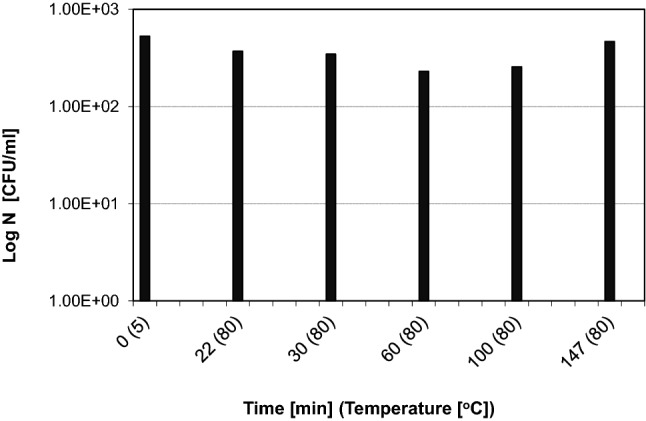
The purpose of the paper is to provide practical information on the selection of heat treatment conditions and the prevention of secondary microbial contamination of liquid sugar. The guidelines included in the paper were formulated on the basis of practical experience gained. The most important aspect often refers to the unnoticed cause of secondary contamination of liquid sugar after heat treatment, during its cooling in diaphragm heat exchangers along with the indication of the possibility of elimination of this cause. The article also presents the results of microbiological analysis in the field of heat resistance of microorganisms present in raw juice, obtained from the extractor. The data indicate the difficulty of thermal inactivation of mesophilic and thermophilic spores present in the studied environment. The cited results of microbiological analysis prove the usefulness of the measures to prevent secondary microbial contamination of the finished product.
本文的目的是提供有关液体糖热处理条件选择及防止二次微生物污染的实用信息。本文所包含的指南是根据实际经验制定的。最重要的方面通常指的是液体糖在热处理后,于板式换热器冷却过程中二次污染的未被注意到的原因,同时还指出了消除这一原因的可能性。本文还展示了从榨汁机获得的原汁中存在的微生物耐热性领域的微生物分析结果。数据表明在所研究环境中存在的嗜温菌和嗜热菌孢子热灭活的难度。所引用的微生物分析结果证明了防止成品二次微生物污染措施的有效性。