Clinical Pharmacology & Quantitative Pharmacology, Clinical Pharmacology and Safety Science, BioPharmaceuticals R&D, AstraZeneca, Cambridge, UK.
Clinical Pharmacology & Quantitative Pharmacology, Clinical Pharmacology and Safety Science, BioPharmaceuticals R&D, AstraZeneca, Boston, Massachusetts, USA.
J Clin Pharmacol. 2021 Nov;61(11):1493-1504. doi: 10.1002/jcph.1935. Epub 2021 Jul 22.
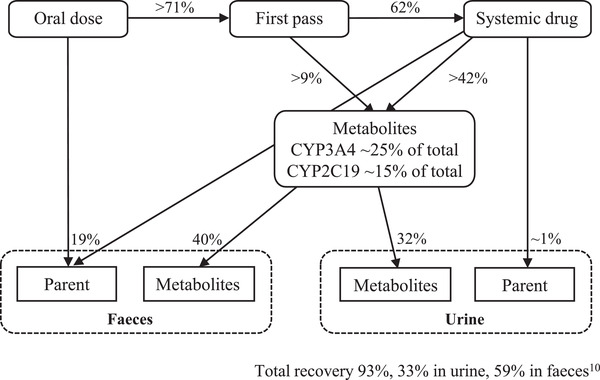
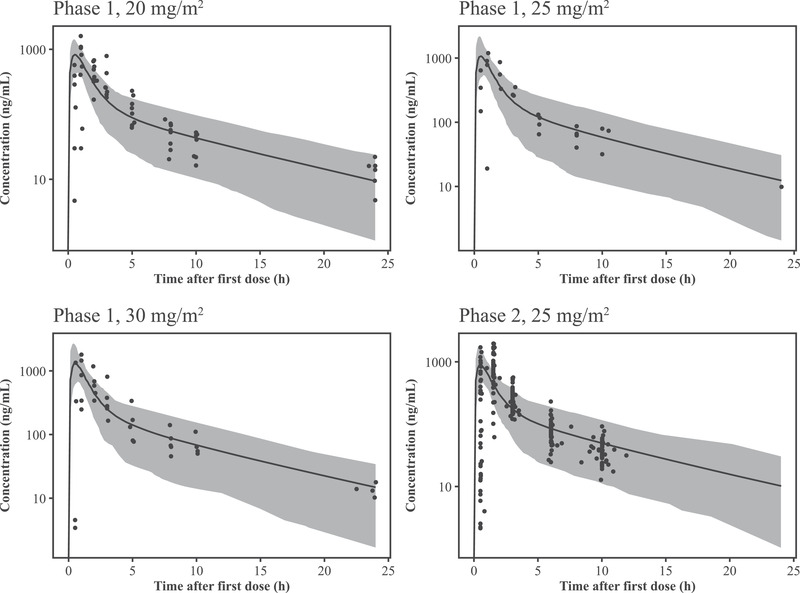
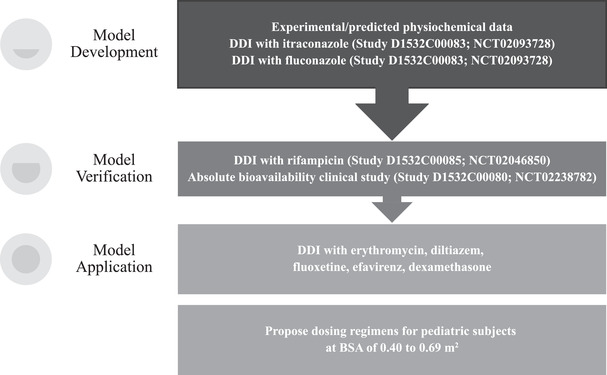
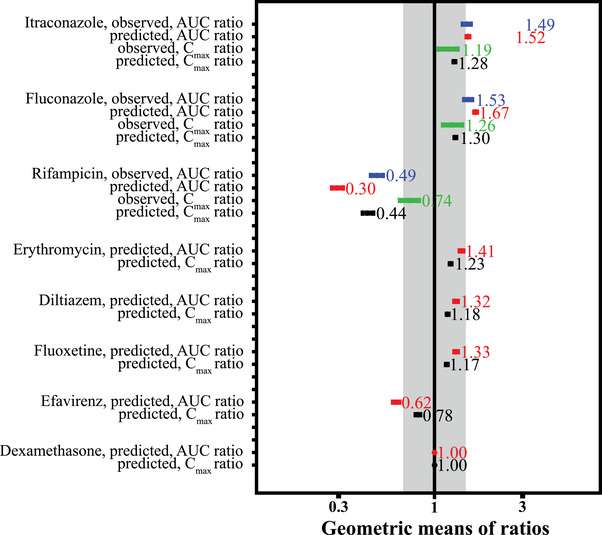
Selumetinib (ARRY-142886), an oral, potent and highly selective allosteric mitogen-activated protein kinase kinase 1/2 inhibitor, is approved by the US Food and Drug Administration for the treatment of pediatric patients aged ≥2 years with neurofibromatosis type 1 with symptomatic, inoperable plexiform neurofibromas. A physiologically based pharmacokinetic (PBPK) model was constructed to predict plasma concentration-time profiles of selumetinib, and to evaluate the impact of coadministering moderate cytochrome P450 (CYP) 3A4/2C19 inhibitors/inducers. The model was also used to extrapolate pharmacokinetic exposures from older children with different body surface area to guide dosing in younger children. This model was built based on physiochemical data and clinical in vivo drug-drug interaction (DDI) studies with itraconazole and fluconazole, and verified against data from an in vivo rifampicin DDI study and an absolute bioavailability study. The pediatric model was updated by changing system-specific input parameters using the Simcyp pediatric module. The model captured the observed selumetinib pharmacokinetic profiles and the interactions with CYP inhibitors/inducers. The predictions from the PBPK model showed a DDI effect of 30% to 40% increase or decrease in selumetinib exposure when coadministered with moderate CYP inhibitors or inducers, respectively, which was used to inform dose management and adjustments. The pediatric PBPK model was applied to simulate exposures in specific body surface area brackets that matched those achieved with a 25 mg/m dose in SPRINT clinical trials. The pediatric PBPK model was used to guide the dose for younger patients in a planned pediatric clinical study.
司美替尼(ARRY-142886)是一种口服的、强效且高度选择性的丝裂原活化蛋白激酶激酶 1/2 抑制剂,已被美国食品和药物管理局批准用于治疗 2 岁及以上患有 1 型神经纤维瘤病的儿科患者,这些患者患有症状性、不可手术的丛状神经纤维瘤。构建了一个基于生理学的药代动力学(PBPK)模型,以预测司美替尼的血浆浓度-时间曲线,并评估同时使用中度细胞色素 P450(CYP)3A4/2C19 抑制剂/诱导剂的影响。该模型还用于从具有不同体表面积的较大儿童 extrapolate 药代动力学暴露情况,以指导较小儿童的给药。该模型是基于理化数据和与酮康唑和氟康唑的临床药物相互作用(DDI)研究构建的,并通过与利福平 DDI 研究和绝对生物利用度研究的数据进行验证。通过使用 Simcyp 儿科模块更改特定于系统的输入参数,对儿科模型进行了更新。该模型捕获了观察到的司美替尼药代动力学特征和与 CYP 抑制剂/诱导剂的相互作用。PBPK 模型的预测表明,当与中度 CYP 抑制剂或诱导剂同时使用时,司美替尼暴露量会增加或减少 30%至 40%,这用于告知剂量管理和调整。儿科 PBPK 模型用于模拟特定体表面积范围内的暴露情况,这些暴露情况与 SPRINT 临床试验中 25mg/m 剂量所达到的暴露情况相匹配。儿科 PBPK 模型用于指导计划中的儿科临床研究中较年轻患者的剂量。