Kozior Tomasz, Kundera Czesław
Department of Manufacturing Technology and Metrology, Kielce University of Technology, Al. Tysiąclecia Państwa Polskiego 7, 25-314 Kielce, Poland.
Polymers (Basel). 2021 Jun 7;13(11):1895. doi: 10.3390/polym13111895.
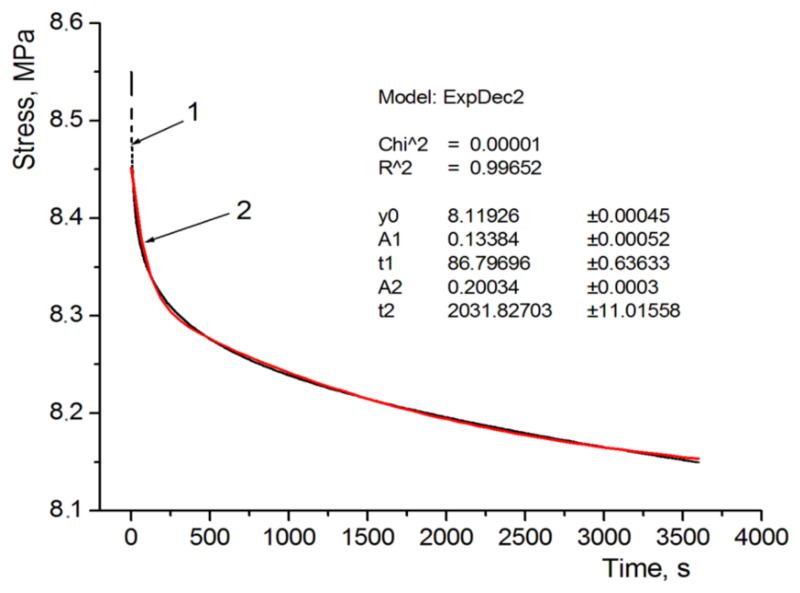
This research paper reviews the test results involving viscoelastic properties of cellular structure models made with the PolyJet Matrix-PJM additive technology. The designed test specimens were of complex cellular structure and made of three various photo-curable polymer resin types. Materials were selected taking into account the so-called "soft" and "tough" material groups. Compressive stress relaxation tests were conducted in accordance with the recommendations of standard ISO 3384, and the impact of the geometric structure shape and material selection on viscoelastic properties, as well as the most favorable geometric variants of the tested cellular structure models were determined. Mathematica and Origin software was used to conduct a statistical analysis of the test results and determine five-parameter functions approximating relaxation curves. The most favorable rheological was adopted and its mean parameters determined, which enables to match both printed model materials and their geometry in the future, to make a component with a specific rheological response. Furthermore, the test results indicated that there was a possibility of modelling cellular structures within the PJM technology, using support material as well.
本研究论文回顾了采用PolyJet Matrix-PJM添加剂技术制作的细胞结构模型的粘弹性特性测试结果。所设计的测试样本具有复杂的细胞结构,由三种不同的光固化聚合物树脂类型制成。材料的选择考虑了所谓的“软”材料组和“硬”材料组。压缩应力松弛测试按照标准ISO 3384的建议进行,确定了几何结构形状和材料选择对粘弹性特性的影响,以及测试的细胞结构模型的最有利几何变体。使用Mathematica和Origin软件对测试结果进行统计分析,并确定近似松弛曲线的五参数函数。采用了最有利的流变学方法并确定了其平均参数,这使得未来能够匹配打印模型材料及其几何形状,以制造具有特定流变学响应的部件。此外,测试结果表明,在PJM技术中使用支撑材料也有可能对细胞结构进行建模。