Webster Julie A, Wuethrich Alain, Shanmugasundaram Karthik B, Richards Renee S, Zelek Wioleta M, Shah Alok K, Gordon Louisa G, Kendall Bradley J, Hartel Gunter, Morgan B Paul, Trau Matt, Hill Michelle M
QIMR Berghofer Medical Research Institute, Herston, QLD 4006, Australia.
Centre for Personalised Nanomedicine, Australian Institute for Bioengineering and Nanotechnology (AIBN), The University of Queensland, Brisbane City, QLD 4072, Australia.
Cancers (Basel). 2021 Jun 8;13(12):2865. doi: 10.3390/cancers13122865.
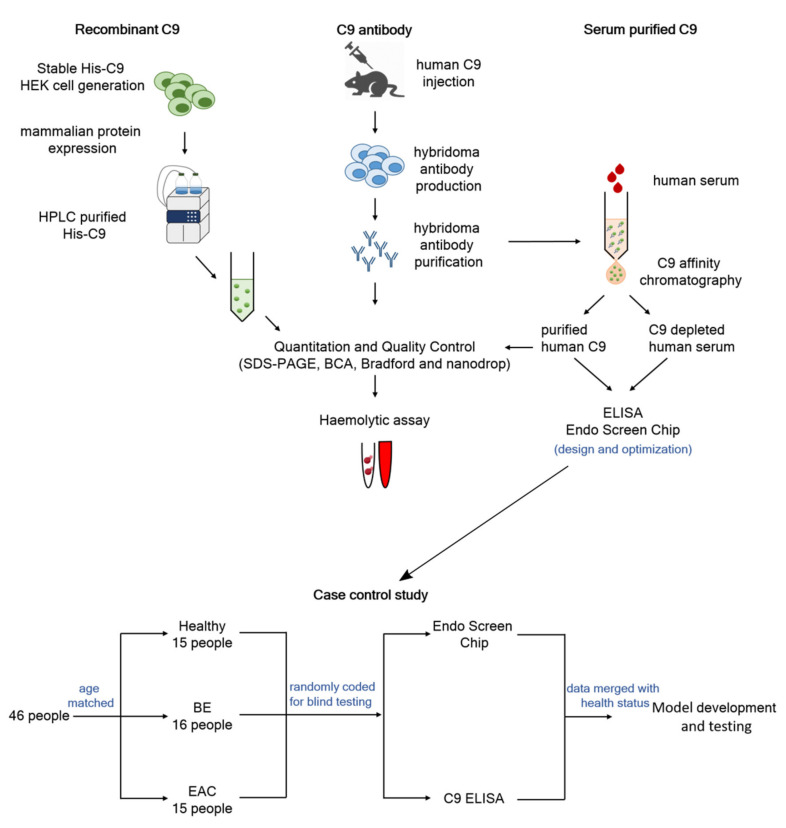
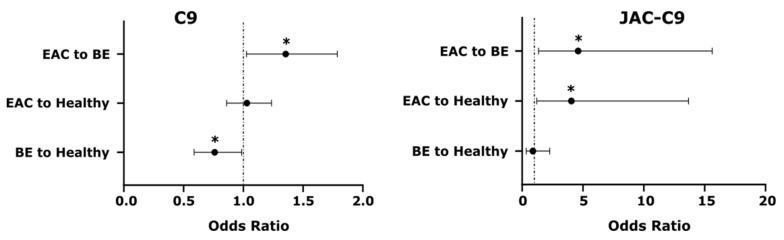
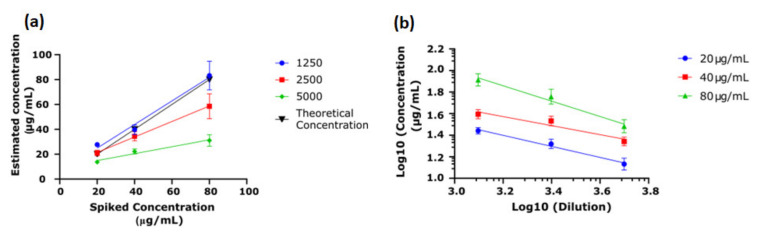
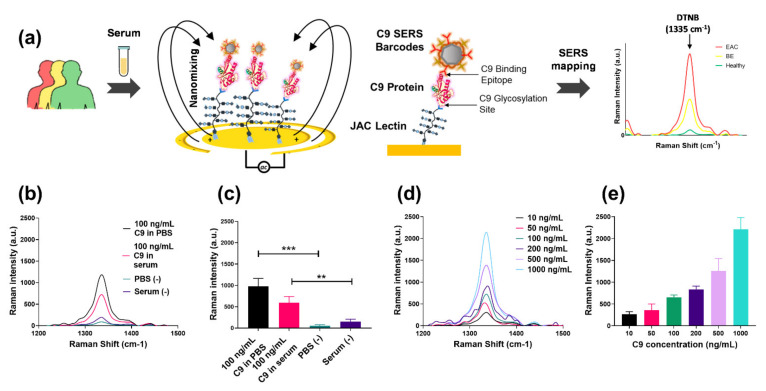
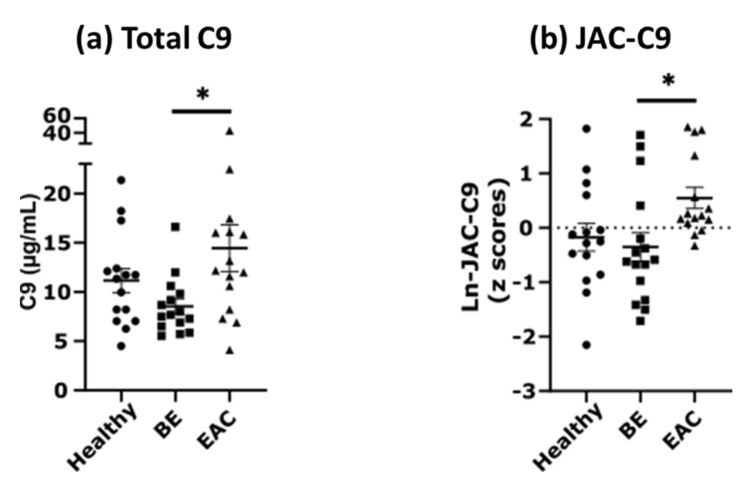
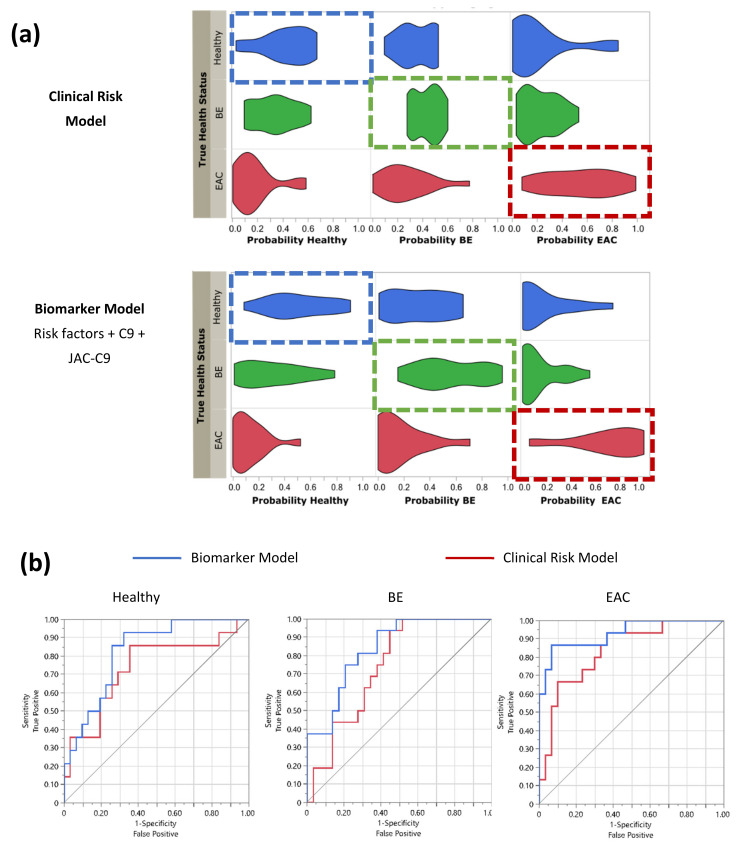
The current endoscopy and biopsy diagnosis of esophageal adenocarcinoma (EAC) and its premalignant condition Barrett's esophagus (BE) is not cost-effective. To enable EAC screening and patient triaging for endoscopy, we developed a microfluidic lectin immunoassay, the EndoScreen Chip, which allows sensitive multiplex serum biomarker measurements. Here, we report the proof-of-concept deployment for the EAC biomarker Jacalin lectin binding complement C9 (JAC-C9), which we previously discovered and validated by mass spectrometry. A monoclonal C9 antibody (m26 3C9) was generated and validated in microplate ELISA, and then deployed for JAC-C9 measurement on EndoScreen Chip. Cohort evaluation ( = 46) confirmed the expected elevation of serum JAC-C9 in EAC, along with elevated total serum C9 level. Next, we asked if the small panel of serum biomarkers improves detection of EAC in this cohort when used in conjunction with patient risk factors (age, body mass index and heartburn history). Using logistic regression modeling, we found that serum C9 and JAC-C9 significantly improved EAC prediction from AUROC of 0.838 to 0.931, with JAC-C9 strongly predictive of EAC (vs. BE OR = 4.6, 95% CI: 1.6-15.6, = 0.014; vs. Healthy OR = 4.1, 95% CI: 1.2-13.7, = 0.024). This proof-of-concept study confirms the microfluidic EndoScreen Chip technology and supports the potential utility of blood biomarkers in improving triaging for diagnostic endoscopy. Future work will expand the number of markers on EndoScreen Chip from our list of validated EAC biomarkers.
目前,食管腺癌(EAC)及其癌前病变巴雷特食管(BE)的内镜检查和活检诊断并不具有成本效益。为了实现EAC筛查和患者内镜检查分流,我们开发了一种微流控凝集素免疫测定法,即EndoScreen芯片,它可以进行灵敏的多重血清生物标志物检测。在此,我们报告了EAC生物标志物红豆凝集素结合补体C9(JAC-C9)的概念验证应用,该标志物是我们之前通过质谱法发现并验证的。我们制备了一种单克隆C9抗体(m26 3C9),并在微孔板酶联免疫吸附测定中进行了验证,然后将其用于EndoScreen芯片上的JAC-C9检测。队列评估(n = 46)证实了EAC患者血清JAC-C9的预期升高,同时总血清C9水平也升高。接下来,我们研究了这一小套血清生物标志物与患者风险因素(年龄、体重指数和烧心病史)联合使用时,是否能提高该队列中EAC的检测率。使用逻辑回归模型,我们发现血清C9和JAC-C9显著提高了EAC预测能力,受试者工作特征曲线下面积从0.838提高到0.931,其中JAC-C9对EAC具有很强的预测性(与BE相比,比值比=4.6,95%置信区间:1.6 - 15.6,P = 0.014;与健康对照相比,比值比=4.1,95%置信区间:1.2 - 13.7,P = 0.024)。这项概念验证研究证实了微流控EndoScreen芯片技术,并支持血液生物标志物在改善诊断性内镜检查分流方面的潜在效用。未来的工作将从我们已验证的EAC生物标志物列表中增加EndoScreen芯片上的标志物数量。