Centre for Personalised Nanomedicine, Australian Institute for Bioengineering and Nanotechnology (AIBN), The University of Queensland, Brisbane, QLD, Australia.
Centre for Microscopy and Microanalysis, The University of Queensland, Brisbane, QLD, Australia.
Nat Commun. 2021 Feb 17;12(1):1087. doi: 10.1038/s41467-021-21431-w.
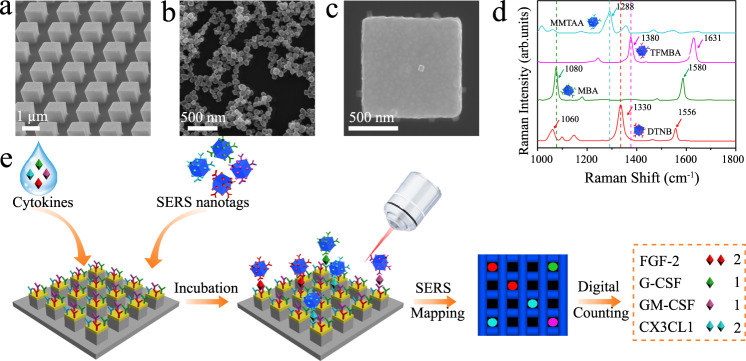
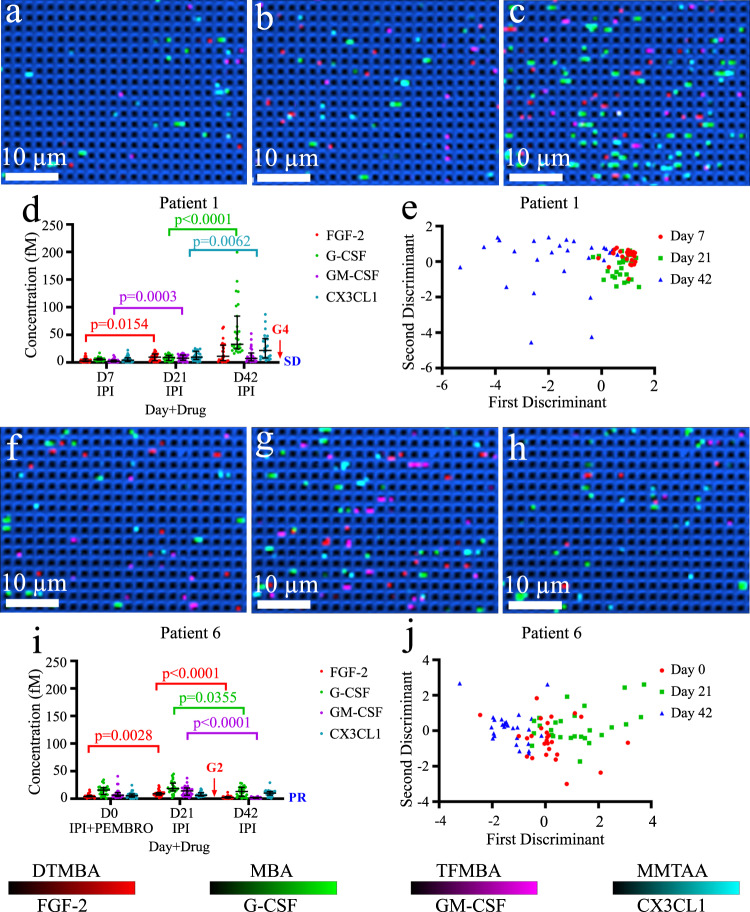
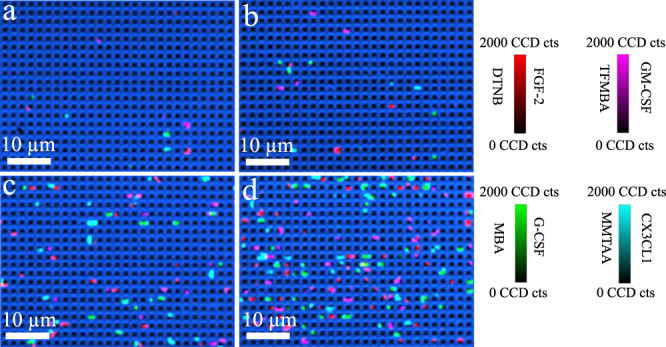
The introduction of immune checkpoint inhibitors has demonstrated significant improvements in survival for subsets of cancer patients. However, they carry significant and sometimes life-threatening toxicities. Prompt prediction and monitoring of immune toxicities have the potential to maximise the benefits of immune checkpoint therapy. Herein, we develop a digital nanopillar SERS platform that achieves real-time single cytokine counting and enables dynamic tracking of immune toxicities in cancer patients receiving immune checkpoint inhibitor treatment - broader applications are anticipated in other disease indications. By analysing four prospective cytokine biomarkers that initiate inflammatory responses, the digital nanopillar SERS assay achieves both highly specific and highly sensitive cytokine detection down to attomolar level. Significantly, we report the capability of the assay to longitudinally monitor 10 melanoma patients during immune inhibitor blockade treatment. Here, we show that elevated cytokine concentrations predict for higher risk of developing severe immune toxicities in our pilot cohort of patients.
免疫检查点抑制剂的引入已经证明了它们在某些癌症患者的生存方面有显著的改善。然而,它们也伴随着显著的、有时甚至危及生命的毒性。及时预测和监测免疫毒性有可能使免疫检查点治疗的获益最大化。在此,我们开发了一种数字化纳米柱 SERS 平台,可实现实时单个细胞因子计数,并能动态追踪接受免疫检查点抑制剂治疗的癌症患者的免疫毒性——预计该平台还将在其他疾病领域有更广泛的应用。通过分析四个起始炎症反应的前瞻性细胞因子生物标志物,数字化纳米柱 SERS 检测法实现了对细胞因子的高特异性和高灵敏度检测,灵敏度可达飞摩尔级。值得注意的是,我们报告了该检测法在 10 名黑色素瘤患者接受免疫抑制剂阻断治疗期间进行纵向监测的能力。在这里,我们发现,细胞因子浓度的升高预示着患者发生严重免疫毒性的风险更高。