Preclinical Research Department, Labo'Life France, 1 Rue François Bruneau, 44000 Nantes, France.
Int J Mol Sci. 2021 Jun 23;22(13):6717. doi: 10.3390/ijms22136717.
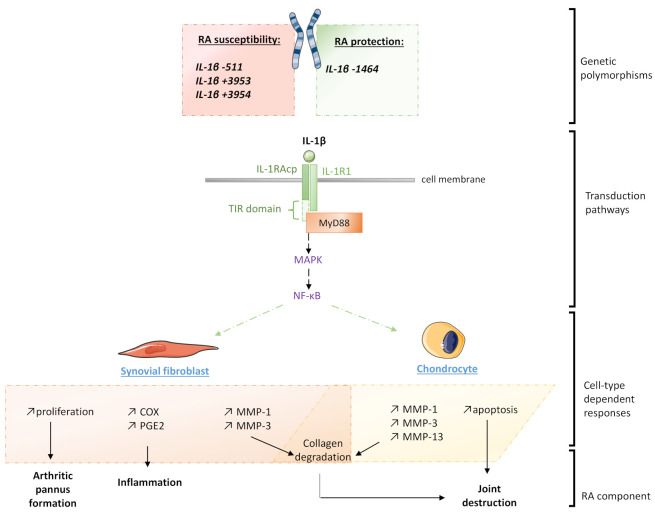
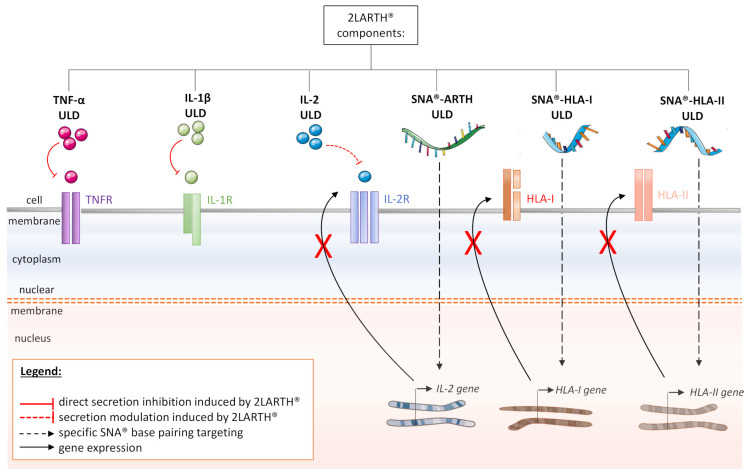
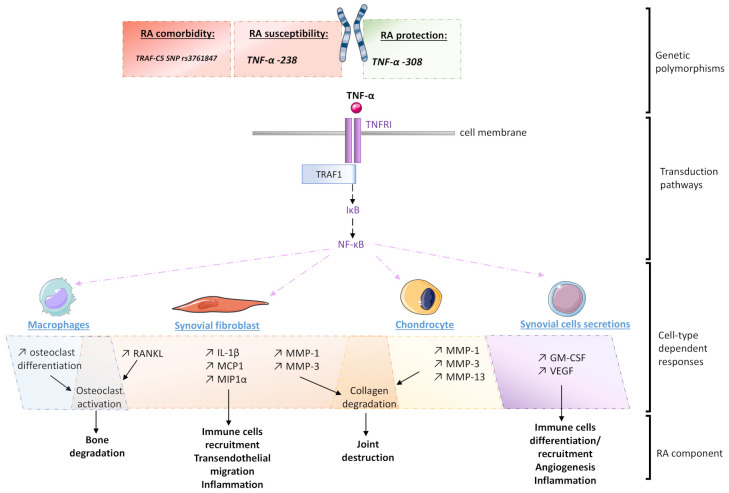
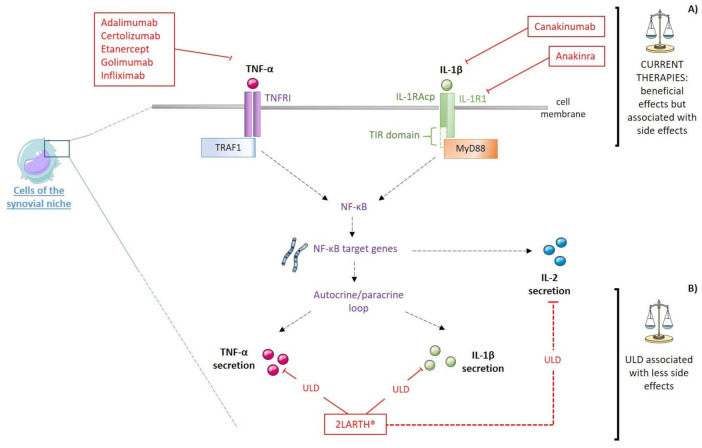
Tumor necrosis factor-α (TNF-α) and interleukin-1β (IL-1β) are two cytokines involved in the perpetuation of the chronic inflammation state characterizing rheumatoid arthritis (RA). Significant advances in the treatment of this pathology have been made over the past ten years, partially through the development of anti-TNF and anti-IL-1 therapies. However, major side effects still persist and new alternative therapies should be considered. The formulation of the micro-immunotherapy medicine (MIM) 2LARTH uses ultra-low doses (ULD) of TNF-α, IL-1β, and IL-2, in association with other immune factors, to gently restore the body's homeostasis. The first part of this review aims at delineating the pivotal roles played by IL-1β and TNF-α in RA physiopathology, leading to the development of anti-TNF and anti-IL-1 therapeutic agents. In a second part, an emphasis will be made on explaining the rationale of using multiple therapeutic targets, including both IL-1β and TNF-α in 2LARTH medicine. Particular attention will be paid to the ULD of those two main pro-inflammatory factors in order to counteract their overexpression through the lens of their molecular implication in RA pathogenesis.
肿瘤坏死因子-α(TNF-α)和白细胞介素-1β(IL-1β)是两种参与类风湿关节炎(RA)慢性炎症状态持续的细胞因子。在过去十年中,通过开发抗 TNF 和抗 IL-1 疗法,在治疗这种疾病方面取得了重大进展。然而,仍存在严重的副作用,应考虑新的替代疗法。微免疫疗法药物(MIM)2LARTH 的配方使用 TNF-α、IL-1β 和 IL-2 的超低剂量(ULD),以及其他免疫因子,以温和地恢复身体的内稳态。这篇综述的第一部分旨在阐述 IL-1β 和 TNF-α在 RA 病理生理学中的关键作用,导致抗 TNF 和抗 IL-1 治疗药物的开发。在第二部分,将重点解释使用多种治疗靶点的原理,包括 2LARTH 药物中的 IL-1β 和 TNF-α。特别注意这两个主要促炎因子的 ULD,以通过它们在 RA 发病机制中的分子作用来对抗它们的过度表达。