Chen Jeng-Chang, Chan Cheng-Chi, Ting Nai-Chun, Kuo Ming-Ling
Department of Surgery, Chang Gung Children's Hospital, College of Medicine, Chang Gung University, Taoyuan 333, Taiwan.
Department of Medicine, College of Medicine, Chang Gung University, Taoyuan 333, Taiwan.
Biomedicines. 2021 Jun 18;9(6):688. doi: 10.3390/biomedicines9060688.
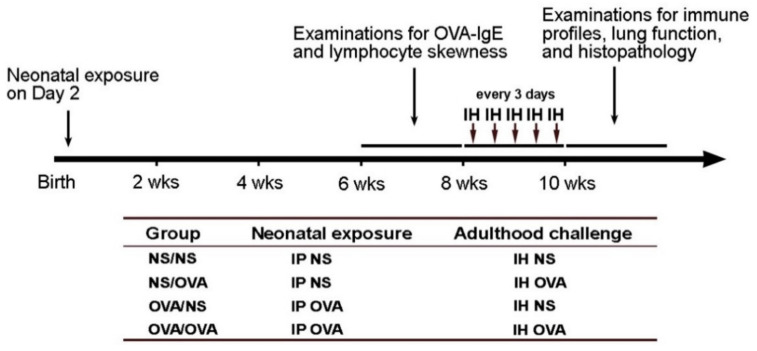
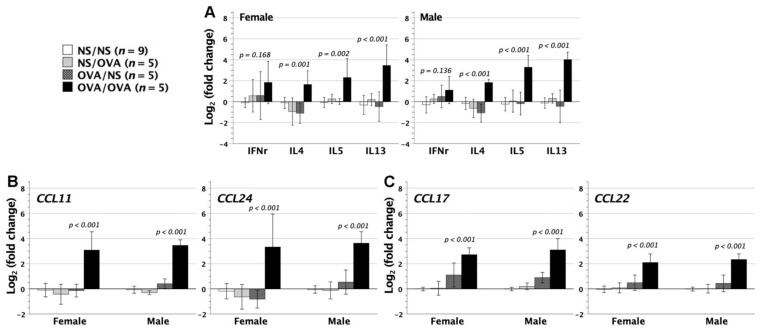
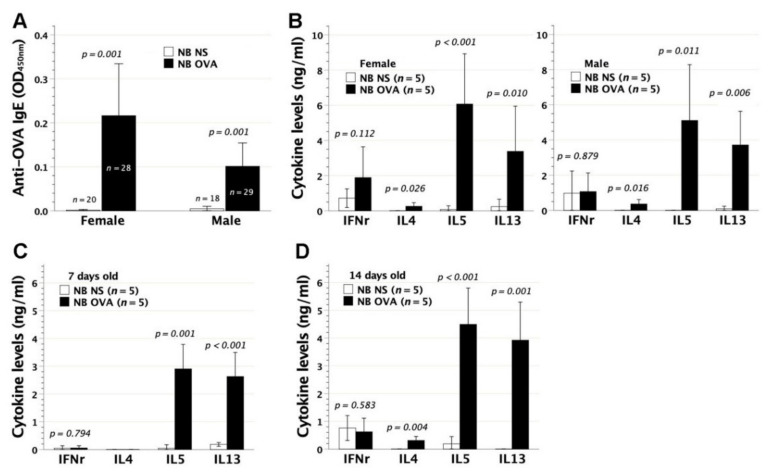
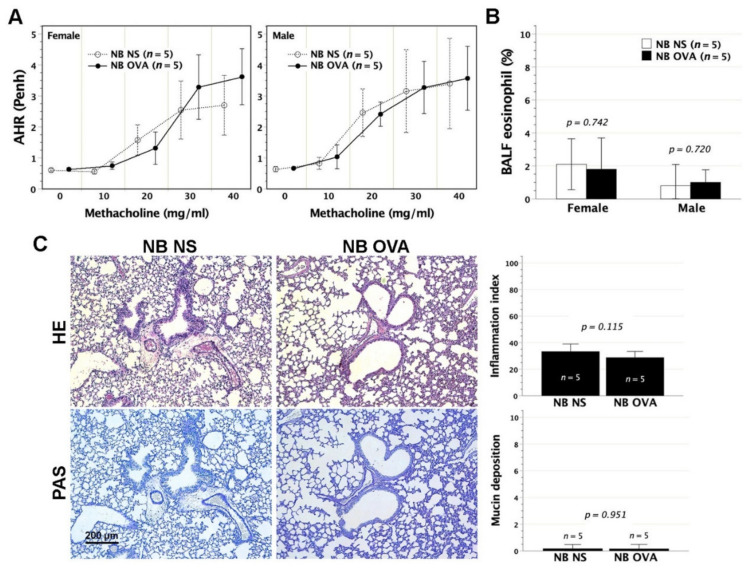
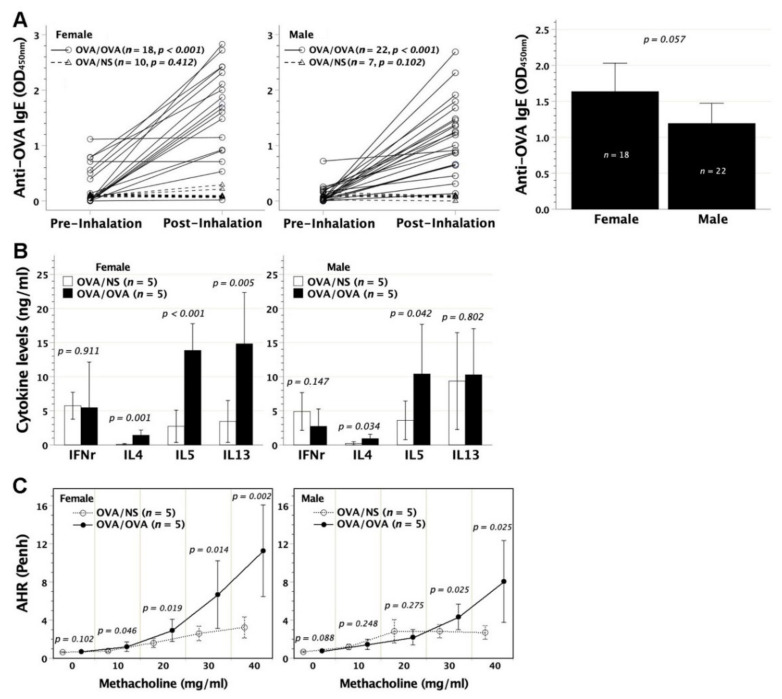
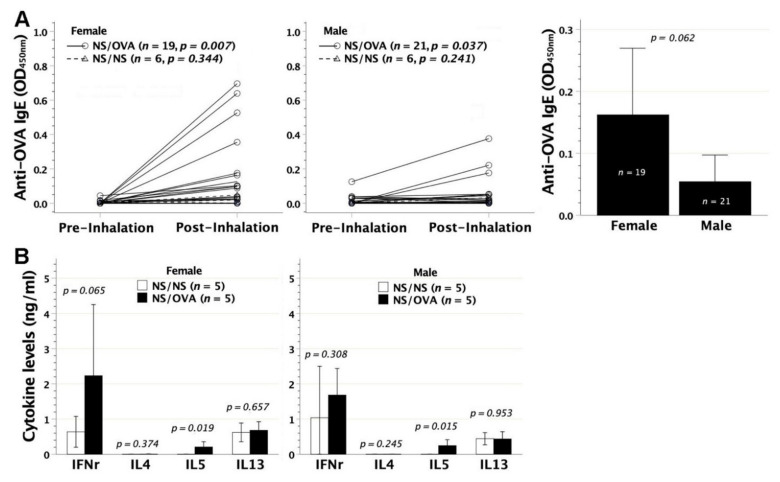
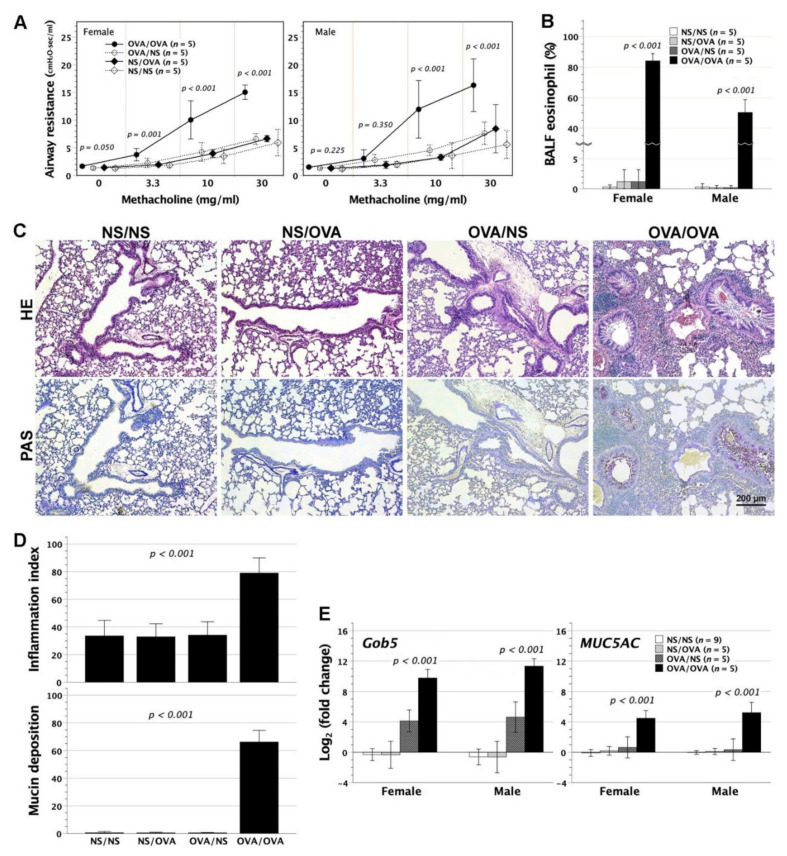
We previously demonstrated that fetal allergen exposure caused T-helper 2 (Th2) cell sensitization. Although neonates are immunologically more mature than fetuses, asthmatic lungs were reportedly mitigated by neonatal allergen administration, mechanically referring to regulatory T-cells and TGF- signaling but lacking the immunological profiles after neonatal exposure. To reappraise the immunological outcome of neonatal allergen exposure, we injected adjuvant-free ovalbumin intraperitoneally into 2-day-old BALB/c neonates, followed by aerosolized ovalbumin inhalation in adulthood. Mice were examined for the immunological profiles specifically after neonatal exposures, lung function and histology (hematoxylin-eosin or periodic acid Schiff staining), and gene expressions of intrapulmonary cytokines (IL-4, IL-5, IL-13 and IFN-γ) and chemokines (CCL17, CCL22, CCL11 and CCL24). Neonatal ovalbumin exposure triggered Th2-skewed sensitization and ovalbumin-specific IgE production. Subsequent ovalbumin inhalation in adulthood boosted Th2 immunity and caused asthmatic lungs with structural and functional alterations of airways. Gender difference mainly involved airway hyperresponsiveness and resistance with greater female susceptibility to methacholine bronchospastic stimulation. In lungs, heightened chemoattractant gene expressions were only granted to neonatally ovalbumin-sensitized mice with aerosolized ovalbumin stress in adulthood, and paralleled by upregulated Th2 cytokine genes. Thus, aeroallergen stress in atopic individuals might upregulate the expression of intrapulmonary chemoattractants to recruit Th2 cells and eosinophils into the lungs, pathogenically linked to asthma development. Conclusively, murine neonates were sensitive to allergen exposures. Exposure events during neonatal stages were crucial to asthma predisposition in later life. These findings from a murine model point to allergen avoidance in neonatal life, possibly even very early in utero, as the best prospect of primary asthma prevention.
我们之前证明,胎儿期暴露于变应原会导致辅助性T细胞2(Th2)细胞致敏。尽管新生儿在免疫方面比胎儿更成熟,但据报道,新生儿给予变应原可减轻哮喘肺部症状,这在机制上涉及调节性T细胞和转化生长因子信号传导,但缺乏新生儿暴露后的免疫特征描述。为了重新评估新生儿暴露于变应原后的免疫结果,我们给2日龄的BALB/c新生儿腹腔内注射无佐剂卵清蛋白,随后在成年期进行雾化卵清蛋白吸入。特别在新生儿暴露后,对小鼠进行免疫特征、肺功能和组织学(苏木精-伊红或过碘酸希夫染色)检查,以及肺内细胞因子(白细胞介素-4、白细胞介素-5、白细胞介素-13和干扰素-γ)和趋化因子(CCL17、CCL22、CCL11和CCL24)的基因表达检测。新生儿暴露于卵清蛋白引发了Th2偏向性致敏和卵清蛋白特异性IgE产生。成年期随后进行的卵清蛋白吸入增强了Th2免疫,并导致哮喘肺部出现气道结构和功能改变。性别差异主要涉及气道高反应性和阻力,女性对乙酰甲胆碱支气管痉挛刺激更敏感。在肺部,只有成年期接受雾化卵清蛋白应激的新生儿期卵清蛋白致敏小鼠,其趋化因子基因表达才会升高,同时Th2细胞因子基因也会上调。因此,特应性个体的气传变应原应激可能会上调肺内趋化因子的表达,以将Th2细胞和嗜酸性粒细胞募集到肺部,这在发病机制上与哮喘的发展有关。总之,小鼠新生儿对变应原暴露敏感。新生儿期的暴露事件对后期生活中的哮喘易感性至关重要。来自小鼠模型的这些发现表明,在新生儿期甚至可能在子宫内很早阶段避免接触变应原,是原发性哮喘预防的最佳前景。