Santamaria Flavia, Barlow Christopher K, Schlagloth Rolf, Schittenhelm Ralf B, Palme Rupert, Henning Joerg
Flora, Fauna and Freshwater Research and Koala Research Central Queensland, School of Health, Medical and Applied Sciences, Central Queensland University, North Rockhampton, QLD 4702, Australia.
Monash Proteomics and Metabolomics Facility, Department of Biochemistry and Molecular Biology, Monash University, Clayton, VIC 3800, Australia.
Metabolites. 2021 Jun 16;11(6):393. doi: 10.3390/metabo11060393.
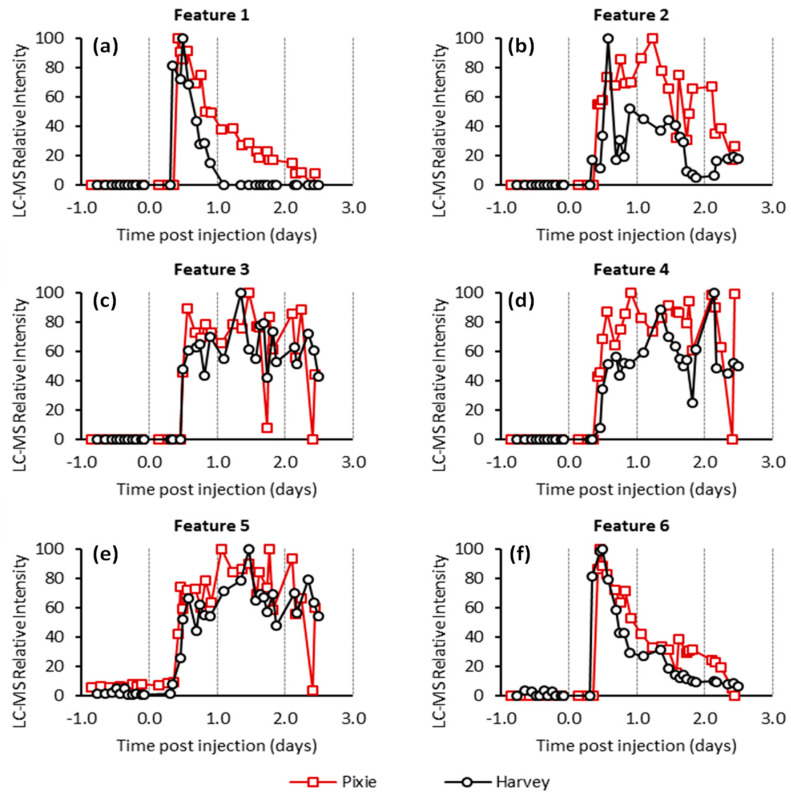
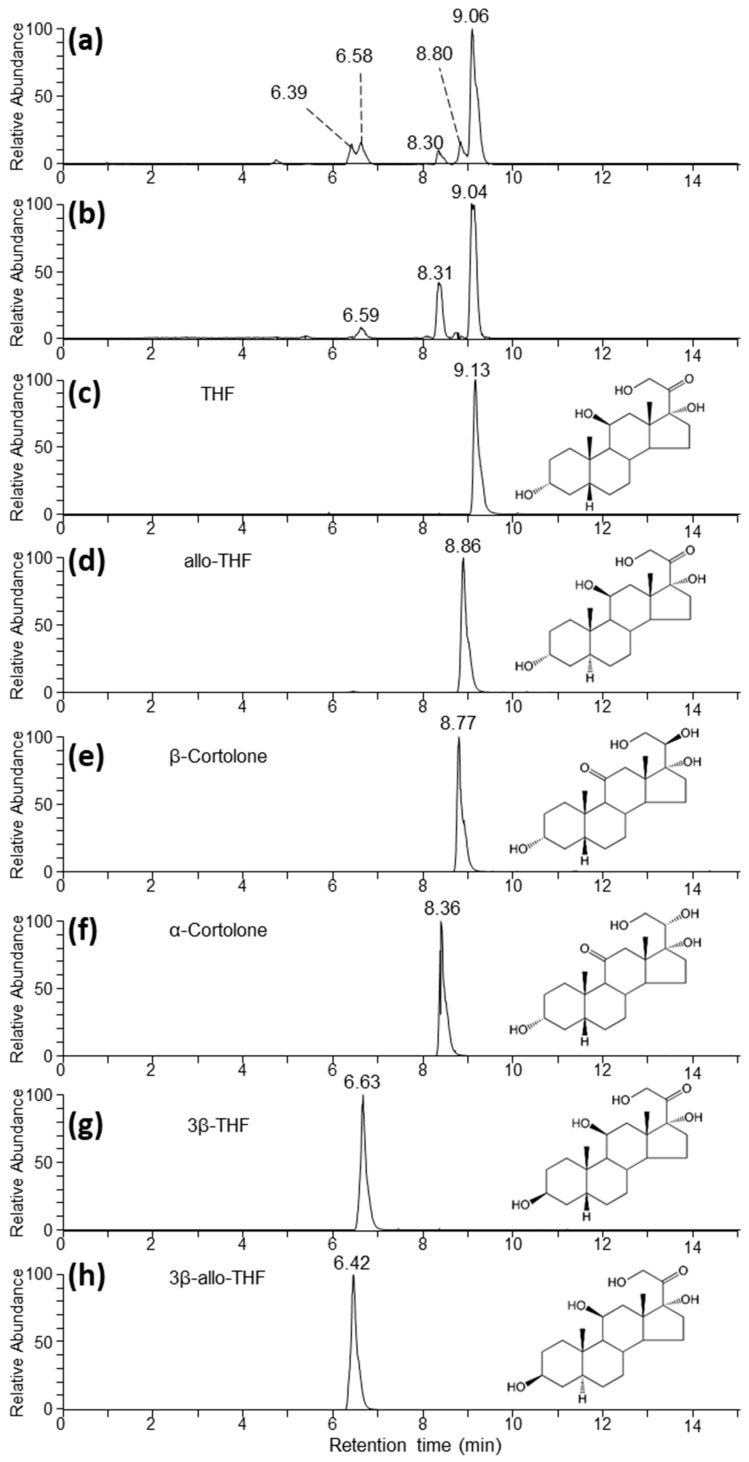
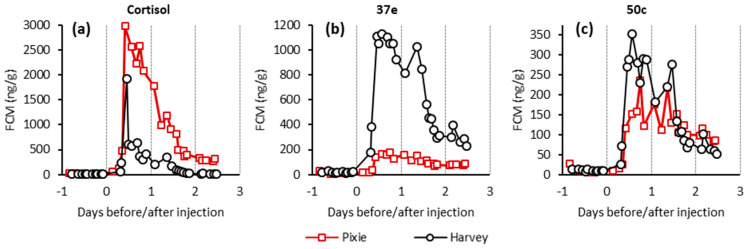
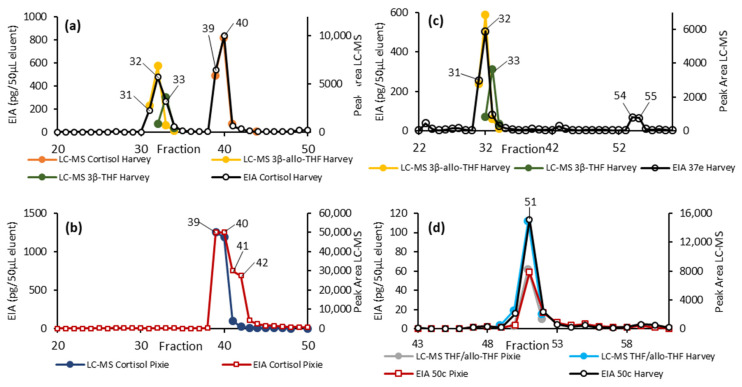
The koala () is an arboreal folivorous marsupial endemic to Australia. Anthropogenic activities and climate change are threats to this species' survival and are potential stressors. A suitable non-invasive method is needed to objectively detect stress in koalas. Under conditions of stress, the concentration of the hormone cortisol in plasma or in saliva is elevated, and this would provide a convenient measure; however, collecting blood or saliva from wild animals is both practically difficult and stressful, and so likely to confound any measurement. In contrast, measurement of cortisol metabolites in faeces provides a practical and non-invasive method to objectively measure stress in koalas. Unfortunately, the identity of the main faecal cortisol metabolites of koalas is unknown. In this study, we have used both untargeted liquid chromatography-mass spectrometry (LC-MS) and enzyme immunoassays (EIAs) to identify several faecal cortisol metabolites in two koalas, one female (18 months old, 4.1 kg) and one male (4 years old, 6.95 kg) upon administration of hydrocortisone (cortisol) sodium succinate. The LC-MS analysis identified tetrahydrocortisol along with several other isomers as cortisol metabolites. After a survey of five enzyme immunoassays, we found that two metabolites, tetrahydrocortisol and 3β-allotetrahydrocortisol, could be detected by EIAs that used antibodies that were raised against their structurally similar corticosterone counterparts, tetrahydrocorticosterone and 3β-allotetrahydrocorticosterone, respectively. While the 3β-allotetrahydrocortisol metabolite was detected in the faeces of only one of the two animals studied, tetrahydrocortisol was detected in both. These results ultimately indicate that tetrahydrocortisol is likely the main faecal cortisol metabolite in koalas, and we demonstrate that it can be measured by an EIA (50c) that was originally developed to measure tetrahydrocorticosterone.
考拉()是澳大利亚特有的树栖食叶有袋动物。人为活动和气候变化对该物种的生存构成威胁,是潜在的应激源。需要一种合适的非侵入性方法来客观检测考拉的应激状态。在应激状态下,血浆或唾液中皮质醇激素的浓度会升高,这将提供一种便捷的测量方法;然而,从野生动物身上采集血液或唾液在实际操作中既困难又会给动物带来压力,因此可能会干扰任何测量结果。相比之下,测量粪便中皮质醇代谢物提供了一种实用且非侵入性的方法来客观测量考拉的应激状态。不幸的是,考拉粪便中主要皮质醇代谢物的身份尚不清楚。在本研究中,我们使用非靶向液相色谱 - 质谱联用(LC - MS)和酶免疫测定(EIA)来鉴定两只考拉(一只雌性,18个月大,4.1千克;一只雄性,4岁,6.95千克)在注射氢化可的松(皮质醇)琥珀酸钠后粪便中的几种皮质醇代谢物。LC - MS分析确定四氢皮质醇以及其他几种异构体为皮质醇代谢物。在对五种酶免疫测定进行调查后,我们发现两种代谢物,四氢皮质醇和3β - 表四氢皮质醇,可以通过分别使用针对其结构相似的皮质酮对应物四氢皮质酮和3β - 表四氢皮质酮产生的抗体的酶免疫测定法检测到。虽然在研究的两只动物中只有一只的粪便中检测到了3β - 表四氢皮质醇代谢物,但两只动物的粪便中都检测到了四氢皮质醇。这些结果最终表明,四氢皮质醇可能是考拉粪便中主要的皮质醇代谢物,并且我们证明它可以通过最初开发用于测量四氢皮质酮的酶免疫测定法(50c)进行测量。