Center for Childhood Cancer Research, Children's Hospital of Philadelphia, Philadelphia, Pennsylvania.
Department of Pediatrics, University of Pennsylvania, Philadelphia, Pennsylvania.
Clin Cancer Res. 2021 Sep 15;27(18):5109-5122. doi: 10.1158/1078-0432.CCR-21-0553. Epub 2021 Jul 1.
Systems biology approaches can identify critical targets in complex cancer signaling networks to inform new therapy combinations that may overcome conventional treatment resistance.
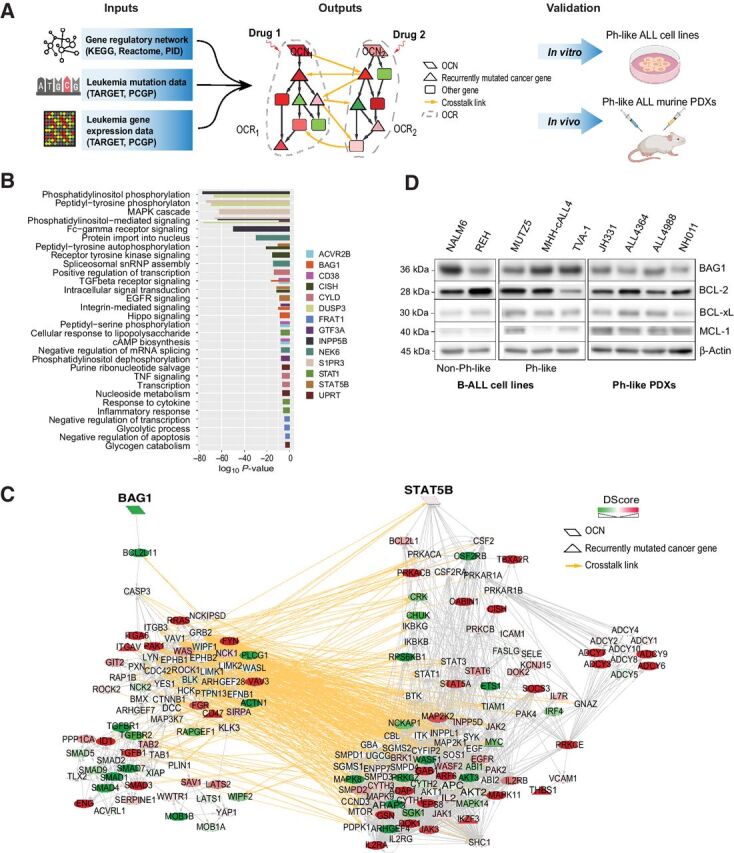
We performed integrated analysis of 1,046 childhood B-ALL cases and developed a data-driven network controllability-based approach to identify synergistic key regulator targets in Philadelphia chromosome-like B-acute lymphoblastic leukemia (Ph-like B-ALL), a common high-risk leukemia subtype associated with hyperactive signal transduction and chemoresistance.
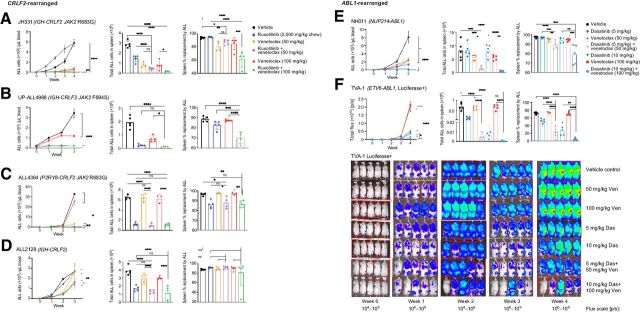
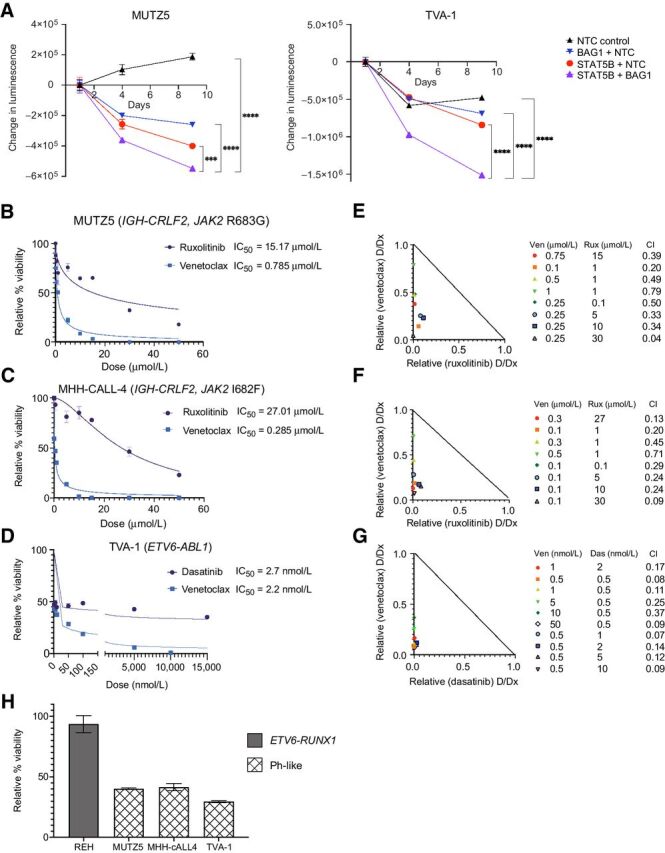
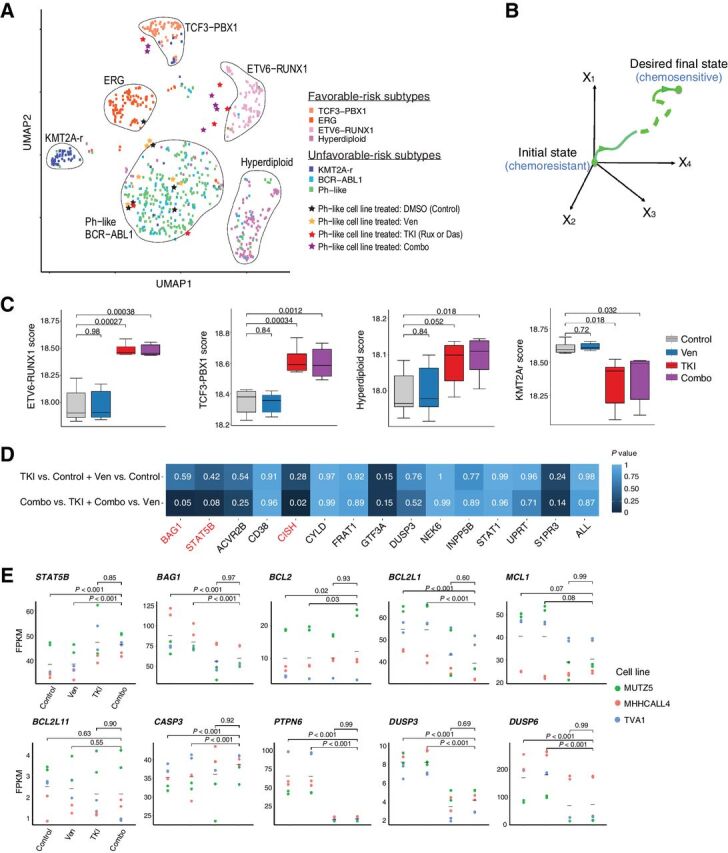
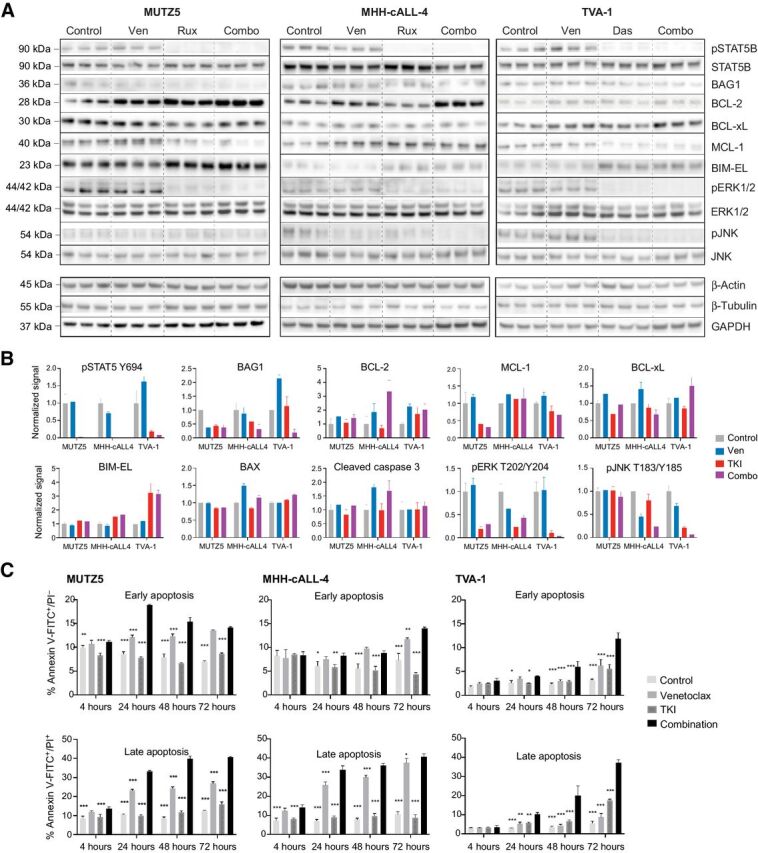
We identified 14 dysregulated network nodes in Ph-like ALL involved in aberrant JAK/STAT, Ras/MAPK, and apoptosis pathways and other critical processes. Genetic cotargeting of the synergistic key regulator pair and associated athanogene 1 () significantly reduced leukemia cell viability . Pharmacologic inhibition with dual small molecule inhibitor therapy targeting this pair of key nodes further demonstrated enhanced antileukemia efficacy of combining the BCL-2 inhibitor venetoclax with the tyrosine kinase inhibitors ruxolitinib or dasatinib in human Ph-like ALL cell lines and in multiple childhood Ph-like ALL patient-derived xenograft models. Consistent with network controllability theory, co-inhibitor treatment also shifted the transcriptomic state of Ph-like ALL cells to become less like kinase-activated -rearranged (Ph+) B-ALL and more similar to prognostically favorable childhood B-ALL subtypes.
Our study represents a powerful conceptual framework for combinatorial drug discovery based on systematic interrogation of synergistic vulnerability pathways with pharmacologic inhibitor validation in preclinical human leukemia models.
系统生物学方法可以识别复杂癌症信号网络中的关键靶点,为新的联合治疗方案提供信息,这些方案可能克服传统治疗的耐药性。
我们对 1046 例儿童 B 细胞急性淋巴细胞白血病(B-ALL)病例进行了综合分析,并开发了一种基于数据驱动的网络可控性方法,以鉴定费城染色体样 B-急性淋巴细胞白血病(Ph 样 B-ALL)中的协同关键调控靶点,Ph 样 B-ALL 是一种常见的高风险白血病亚型,与过度活跃的信号转导和化疗耐药有关。
我们在 Ph 样 ALL 中鉴定出 14 个失调的网络节点,这些节点涉及异常的 JAK/STAT、Ras/MAPK 和凋亡途径以及其他关键过程。协同关键调控对的遗传共靶向作用和相关的 Athanogene 1 ()显著降低了白血病细胞的活力。针对这对关键节点的双重小分子抑制剂治疗的药理学抑制进一步证明了联合 BCL-2 抑制剂 venetoclax 与酪氨酸激酶抑制剂 ruxolitinib 或 dasatinib 在人 Ph 样 ALL 细胞系和多个儿童 Ph 样 ALL 患者来源异种移植模型中的增强抗白血病疗效。与网络可控性理论一致,共同抑制剂治疗还使 Ph 样 ALL 细胞的转录组状态发生转变,使其变得不太像激酶激活的-Ph+ B-ALL,而更类似于预后良好的儿童 B-ALL 亚型。
我们的研究代表了一种基于系统分析协同脆弱性途径并在临床前人类白血病模型中进行药理学抑制剂验证的组合药物发现的强大概念框架。