Hu Yujie, Nguyen Scott V, Wang Wei, Gan Xin, Dong Yinping, Liu Chang, Cui Xinnan, Xu Jin, Li Fengqin, Fanning Séamus
NHC Key Laboratory of Food Safety Risk Assessment, Food Safety Research Unit (2019RU014) of Chinese Academy of Medical Science, China National Center for Food Safety Risk Assessment, Beijing, China.
UCD-Centre for Food Safety, School of Public Health, Physiotherapy and Population Science, University College Dublin, Dublin, Ireland.
Front Microbiol. 2021 Jun 15;12:636284. doi: 10.3389/fmicb.2021.636284. eCollection 2021.
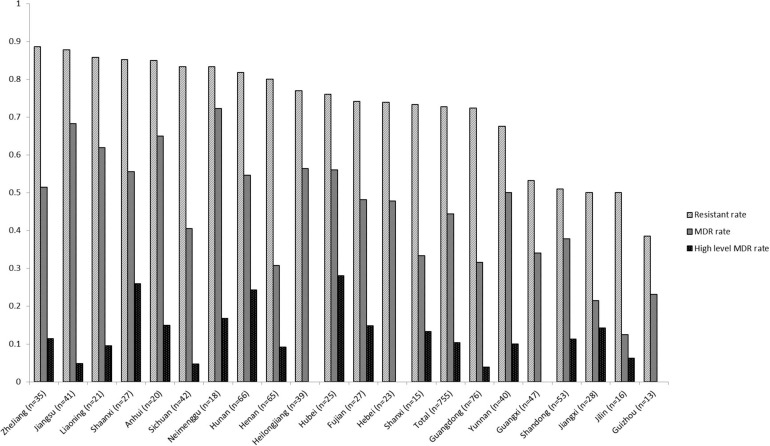
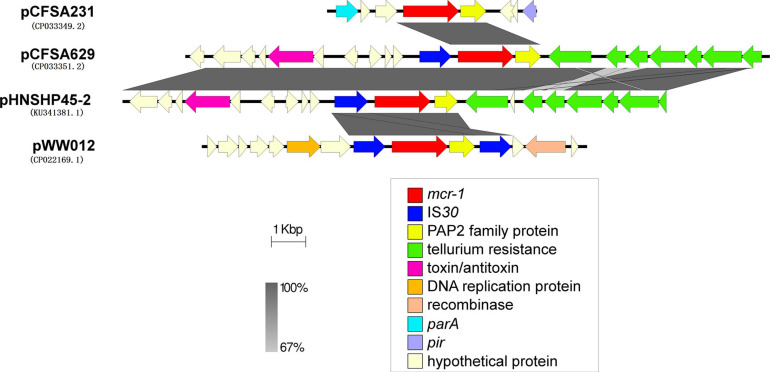
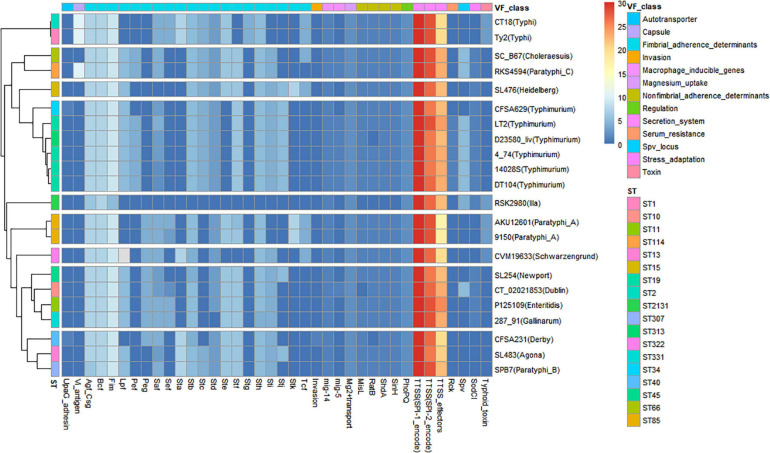
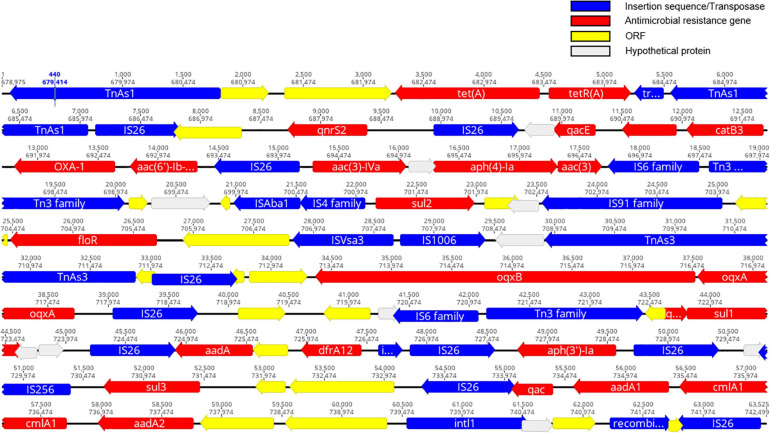
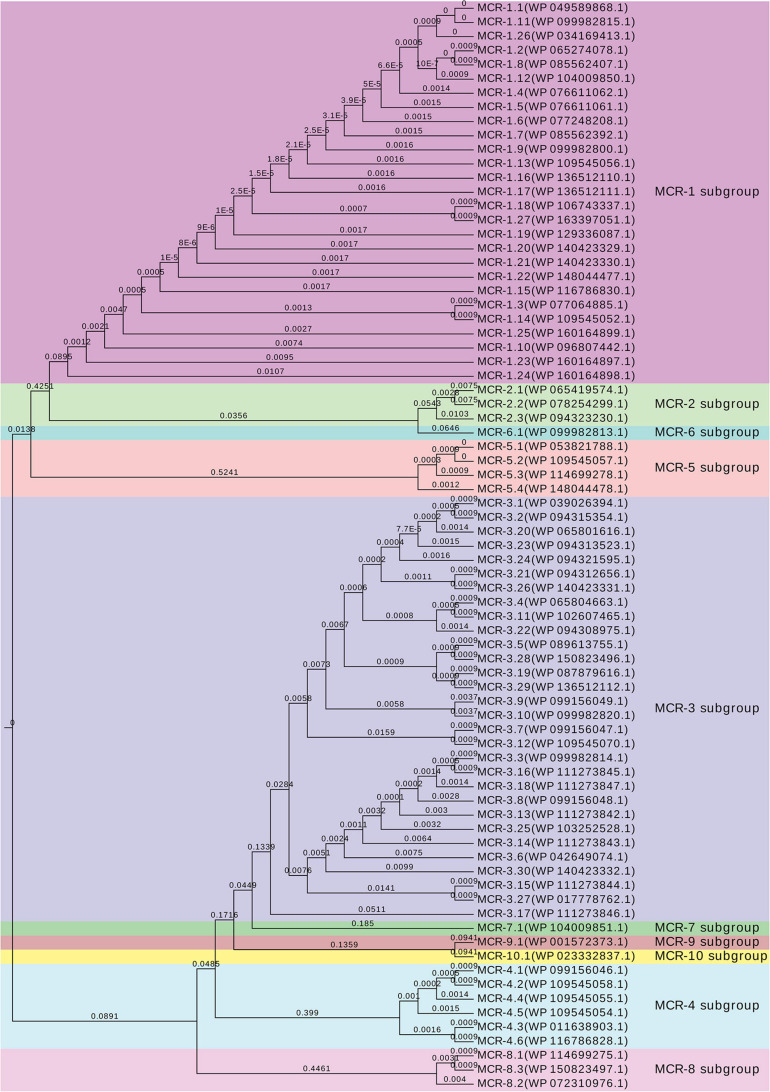
The gene mediating mobile colistin resistance in was first reported in China in 2016 followed by reports among different species worldwide, especially in and . However, data on its transmission in are still lacking. This study analyzed the antimicrobial resistance (AMR) profiles and the gene presence in 755 foodborne from 26 provinces of mainland, China in 2016. Genomic features of two carrying isolates, genome sequencing, serotypes and further resistance profiles were studied. Among the 755 tested, 72.6% were found to be resistant to at least one antimicrobial agent and 10% were defined as multi-drug resistant (MDR). Derby CFSA231 and Typhimurium CFSA629 were -harboring isolates. Both expressed an MDR phenotype and included a single circular chromosome and one plasmid. Among the 22 AMR genes identified in . Derby CFSA231, only the gene was localized on the IncX4 type plasmid pCFSA231 while 20 chromosomal AMR genes, including four plasmid-mediated quinolone resistance (PMQR) genes, were mapped within a 64 kb genomic island (SGI) like region. . Typhimurium CFSA629 possessed 11 resistance genes including an variant and two ESBL genes. Two IS-flanked composite-like transposons were identified. Additionally, 153 and 152 virulence factors were separately identified in these two isolates with secretion system and fimbrial adherence determinants as the dominant virulence classes. Our study extends our concern on -carrying in regards to antimicrobial resistance and virulence factors, and highlight the importance of surveillance to mitigate dissemination of -encoding genes among foodborne .
介导可移动黏菌素耐药性的基因于2016年在中国首次报道,随后在全球不同物种中出现报道,尤其是在[具体物种1]和[具体物种2]中。然而,关于其在[目标物种]中的传播数据仍然缺乏。本研究分析了2016年从中国内地26个省份采集的755株食源性[目标物种]的抗菌药物耐药性(AMR)概况以及该基因的存在情况。对两个携带该基因的分离株的基因组特征、基因组测序、血清型及进一步的耐药性概况进行了研究。在检测的755株[目标物种]中,发现72.6%对至少一种抗菌药物耐药,10%被定义为多重耐药(MDR)。德比沙门氏菌CFSA231和鼠伤寒沙门氏菌CFSA629是携带该基因的分离株。二者均表现出MDR表型,包含一条单一的环状染色体和一个质粒。在德比沙门氏菌CFSA231中鉴定出的22个AMR基因中,只有该基因位于IncX4型质粒pCFSA231上,而20个染色体AMR基因,包括4个质粒介导的喹诺酮耐药(PMQR)基因,定位在一个64 kb的类似基因组岛(SGI)区域内。鼠伤寒沙门氏菌CFSA629拥有11个耐药基因,包括一个该基因变体和两个ESBL基因。鉴定出两个由插入序列(IS)侧翼的类复合转座子。此外,在这两个分离株中分别鉴定出153个和152个毒力因子,分泌系统和菌毛黏附决定簇为主要的毒力类别。我们的研究扩展了我们对携带该基因的[目标物种]在抗菌药物耐药性和毒力因子方面的关注,并强调了监测对于减少食源性[目标物种]中该基因编码基因传播的重要性。