Health Economics Unit, Faculty of Health Sciences, School of Public Health and Family Medicine, University of Cape Town, Cape Town, South Africa.
Division of Paediatric Cardiology, Department of Paediatrics, Faculty of Health Sciences, Red Cross War Memorial Children's Hospital, University of Cape Town, Cape Town, South Africa.
BMC Public Health. 2021 Jul 3;21(1):1303. doi: 10.1186/s12889-021-11314-6.
Rheumatic Heart Disease (RHD) is a disease of poverty that is neglected in developing countries, including South Africa. Lack of adequate evidence regarding the cost of RHD care has hindered national and international actions to prevent RHD related deaths. The objective of this study was to estimate the cost of RHD-related health services in a tertiary hospital in the Western Cape, South Africa.
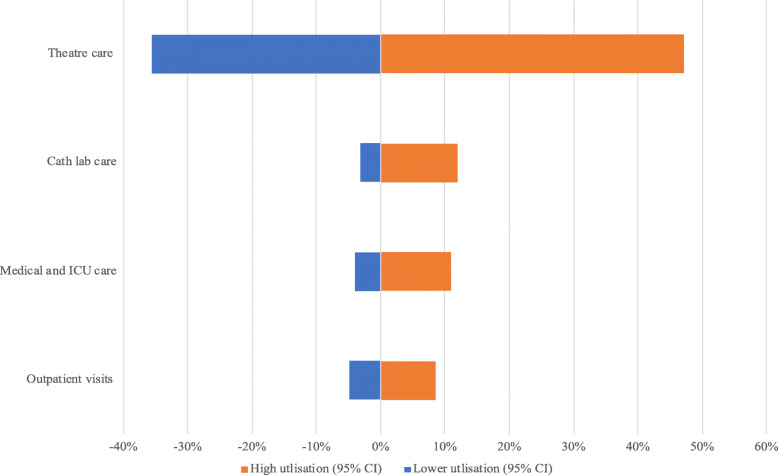
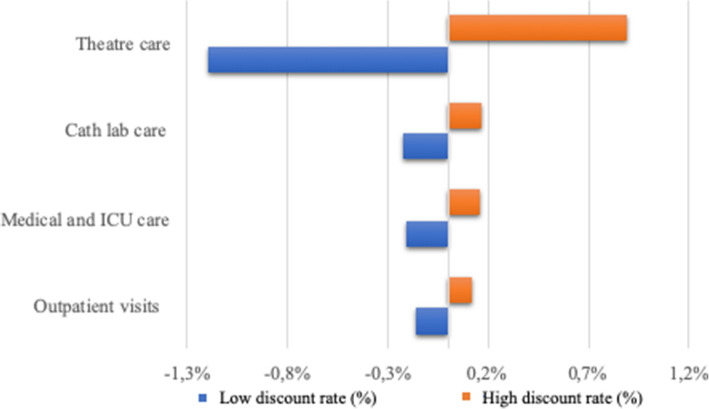
The primary data on service utilisation were collected from a randomly selected sample of 100 patient medical records from the Global Rheumatic Heart Disease Registry (the REMEDY study) - a registry of individuals living with RHD. Patient-level clinical data, including, prices and quantities of medications and laboratory tests, were collected from the main tertiary hospital providing RHD care. All annual costs from a health system perspective were estimated in 2017 (base year) in South African Rand (ZAR) using a combination of ingredients and step-down costing approaches and later converted to United States dollars (USD). Step-down costing was used to estimate provider time costs and all other facility costs such as overheads. A 3% discount rate was also employed in order to allow depreciation and opportunity cost. We aggregated data to estimate the total annual costs and the average annual per-patient cost of RHD and conducted a one-way sensitivity analysis.
The estimated total cost of RHD care at the tertiary hospital was USD 2 million (in 2017 USD) for the year 2017, with surgery costs accounting for 65%. Per-patient, average annual costs were USD 3900. For the subset of costs estimated using the ingredients approach, outpatient medications, and consumables related to cardiac catheterisation and heart valve surgery were the main cost drivers.
RHD-related healthcare consumes significant tertiary hospital resources in South Africa, with annual per-patient costs higher than many other non-communicable and infectious diseases. This analysis supports the scaling up of primary and secondary prevention programmes at primary health centers in order to reduce future tertiary care costs. The study could also inform resource allocation efforts and provide cost estimates for future studies of intervention cost-effectiveness.
风湿性心脏病(Rheumatic Heart Disease,RHD)是一种在发展中国家被忽视的贫困病,包括南非。由于缺乏关于 RHD 护理成本的充分证据,阻碍了国家和国际行动,以防止 RHD 相关死亡。本研究的目的是估计南非西开普省一家三级医院 RHD 相关卫生服务的成本。
从全球风湿性心脏病登记处(REMEDEY 研究)中随机选择的 100 名患者病历中收集了服务利用的主要数据 - 该登记处记录了患有 RHD 的个体。从提供 RHD 护理的主要三级医院收集了患者的临床数据,包括药物和实验室检查的价格和数量。从卫生系统的角度,在 2017 年(基年)用成分法和逐步降阶成本法来估计年度总成本,随后转换为美元。逐步降阶成本法用于估计供应商的时间成本和所有其他设施成本,如间接费用。还采用了 3%的贴现率,以便允许折旧和机会成本。我们汇总数据以估计 RHD 的年度总成本和每位患者的平均年度费用,并进行了单向敏感性分析。
2017 年,该三级医院 RHD 护理的总估计成本为 200 万美元(按 2017 年美元计算),手术费用占 65%。每位患者的年平均费用为 3900 美元。使用成分法估计的成本中,门诊药物和与心导管检查及心脏瓣膜手术相关的消耗品是主要成本驱动因素。
RHD 相关的医疗保健在南非消耗了大量的三级医院资源,每年每位患者的费用高于许多其他非传染性和传染病。本分析支持在初级保健中心扩大初级和二级预防方案,以减少未来的三级保健费用。该研究还可以为资源分配工作提供信息,并为干预成本效益的未来研究提供成本估计。