Neuroscience Program, Central Michigan University, Mount Pleasant, MI, USA.
Department of Neurocognitive Science, Institute of Brain Science, Nagoya City University Graduate School of Medical Sciences, Nagoya, Aichi, Japan.
J Alzheimers Dis. 2021;82(4):1683-1702. doi: 10.3233/JAD-210091.
Aberrant cell cycle re-entry is a well-documented process occurring early in Alzheimer's disease (AD). This is an early feature of the disease and may contribute to disease pathogenesis.
To assess the effect of forced neuronal cell cycle re-entry in mice expressing humanized Aβ, we crossed our neuronal cell cycle re-entry mouse model with AppNLF knock-in (KI) mice.
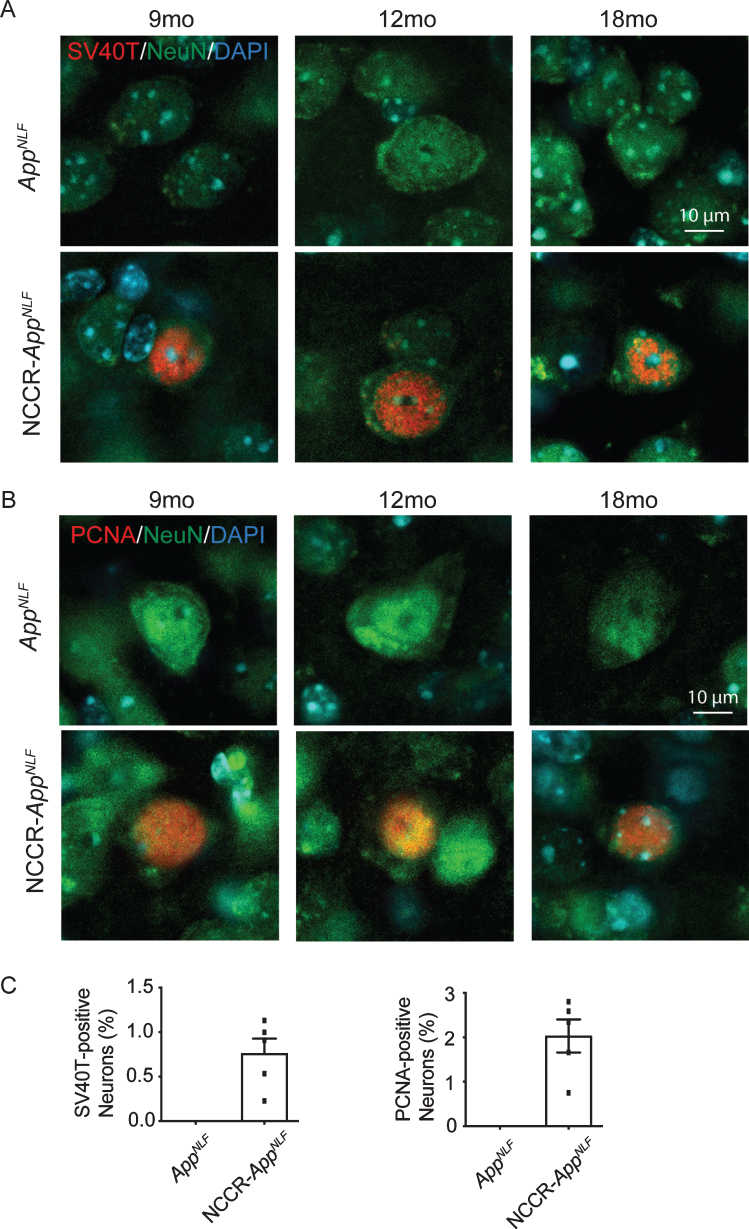
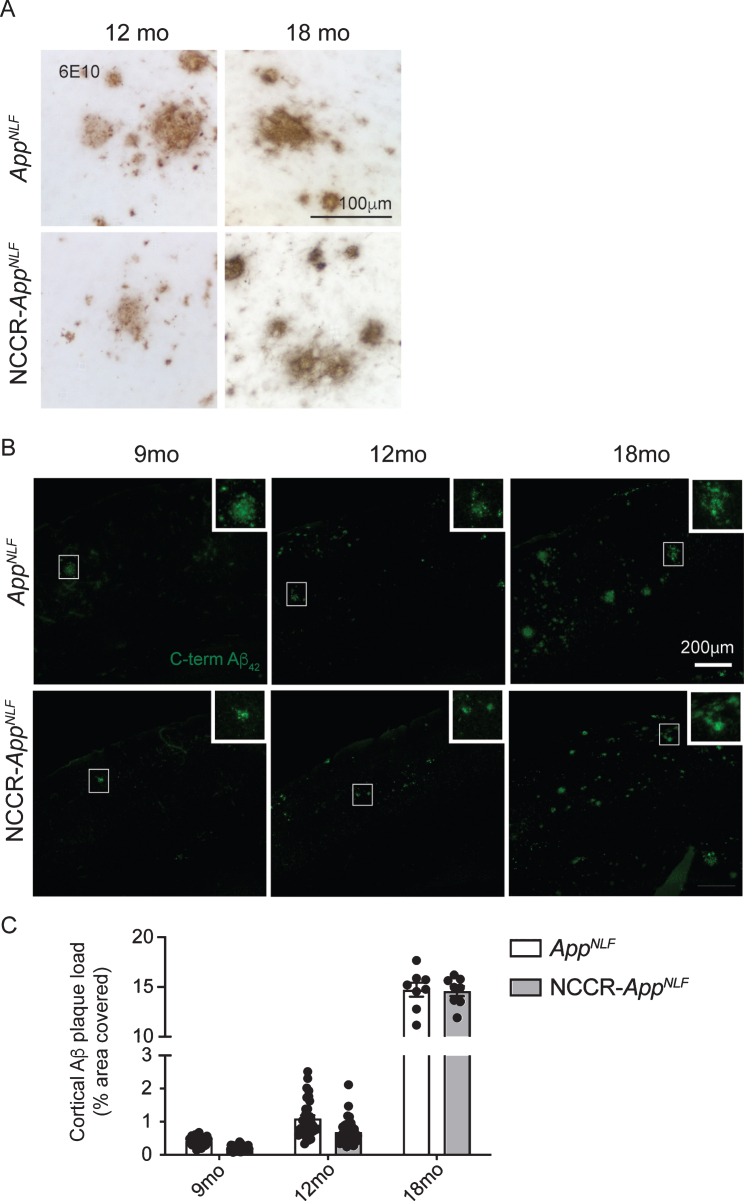
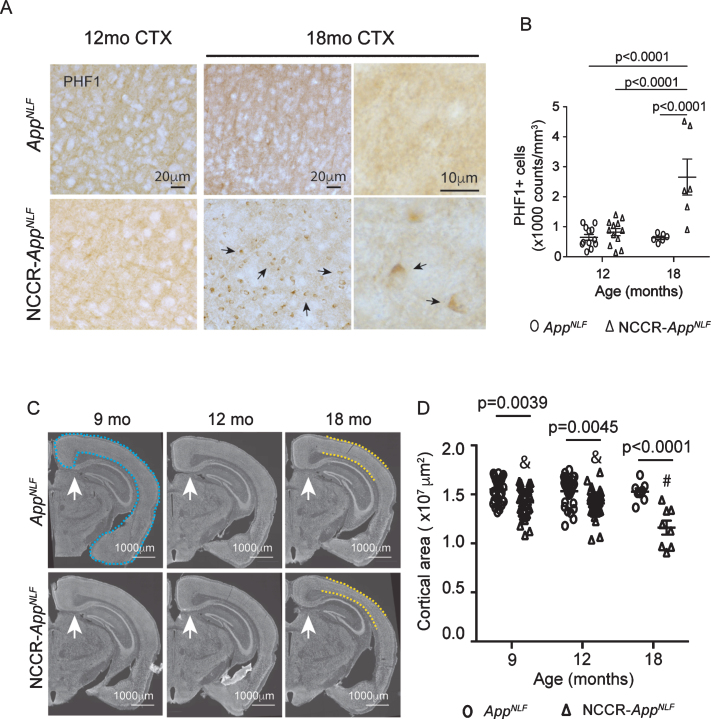
Our neuronal cell cycle re-entry (NCCR) mouse model is bitransgenic mice heterozygous for both Camk2a-tTA and TRE-SV40T. The NCCR mice were crossed with AppNLF KI mice to generate NCCR-AppNLF animals. Using this tet-off system, we triggered NCCR in our animals via neuronal expression of SV40T starting at 1 month of age. The animals were examined at the following time points: 9, 12, and 18 months of age. Various neuropathological features in our mice were evaluated by image analysis and stereology on brain sections stained using either immunofluorescence or immunohistochemistry.
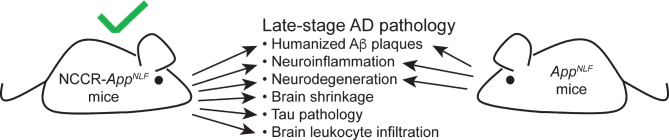
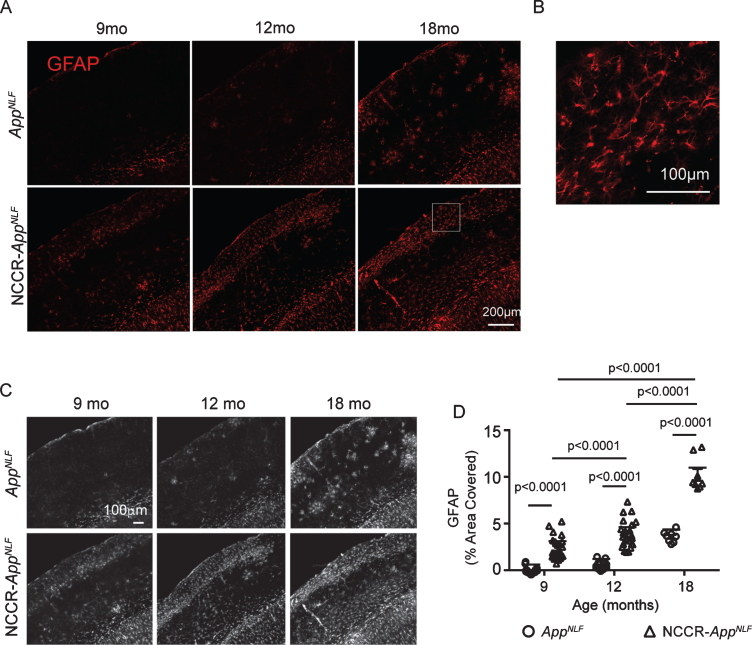
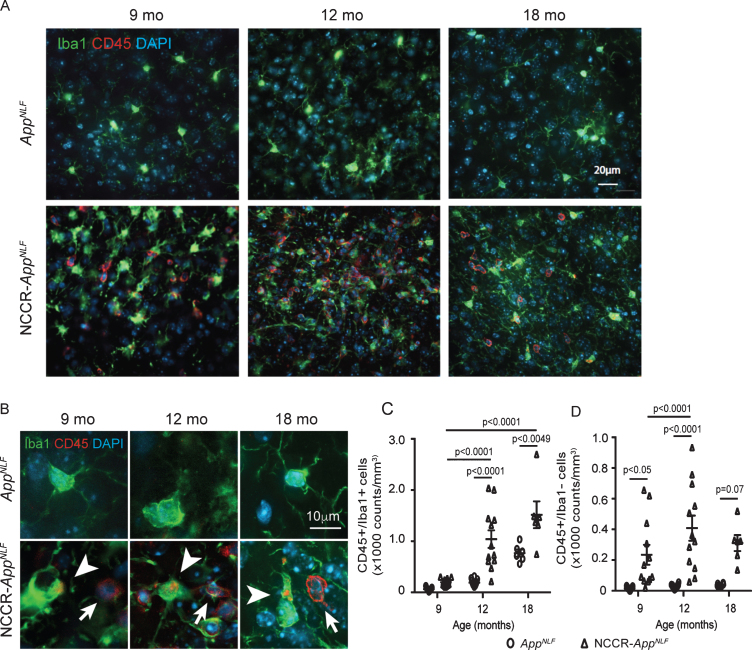
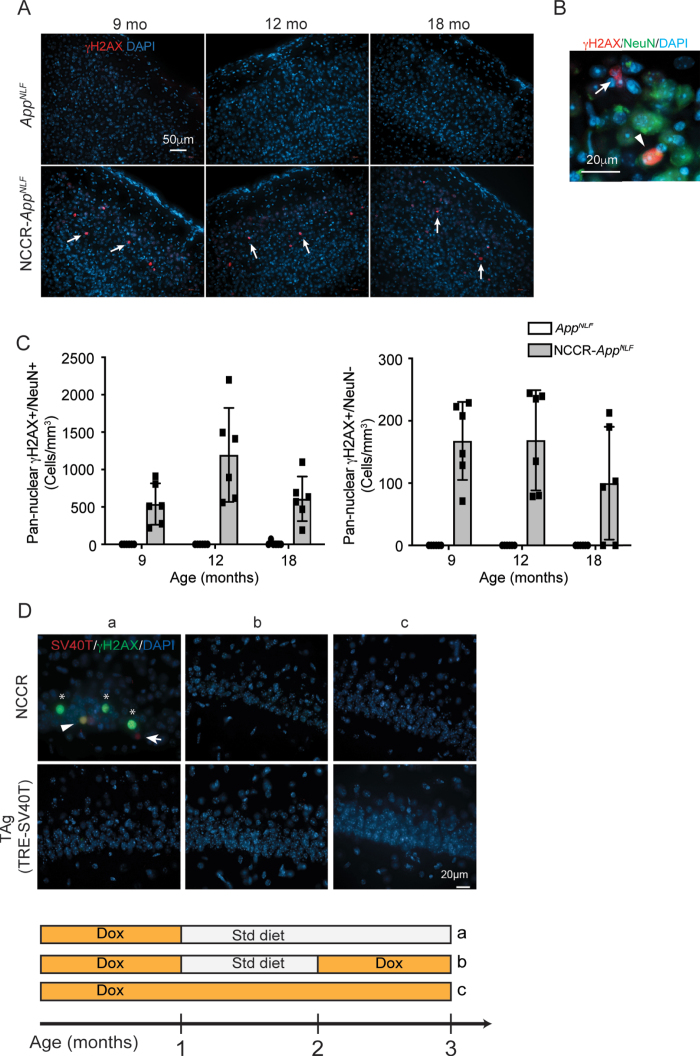
We show that neuronal cell cycle re-entry in humanized Aβ plaque producing AppNLF KI mice results in the development of additional AD-related pathologies, namely, pathological tau, neuroinflammation, brain leukocyte infiltration, DNA damage response, and neurodegeneration.
Our findings show that neuronal cell cycle re-entry enhances AD-related neuropathological features in AppNLF mice and highlight our unique AD mouse model for studying the pathogenic role of aberrant cell cycle re-entry in AD.
细胞周期异常重新进入是阿尔茨海默病(AD)早期有充分文献记录的过程。这是疾病的早期特征,可能导致疾病发病机制。
评估在表达人源化 Aβ 的小鼠中强制神经元细胞周期重新进入的效果,我们将我们的神经元细胞周期重新进入(NCCR)小鼠模型与 AppNLF 敲入(KI)小鼠进行了杂交。
我们的神经元细胞周期重新进入(NCCR)小鼠模型是 Camk2a-tTA 和 TRE-SV40T 双转基因杂合小鼠。NCCR 小鼠与 AppNLF KI 小鼠杂交,生成 NCCR-AppNLF 动物。使用这种 tet-off 系统,我们通过 SV40T 在神经元中的表达在 1 个月大时触发我们动物的 NCCR。在以下时间点检查动物:9、12 和 18 个月大。通过对使用免疫荧光或免疫组织化学染色的脑切片进行图像分析和立体学评估,评估我们小鼠中的各种神经病理学特征。
我们表明,在产生人源化 Aβ 斑块的 AppNLF KI 小鼠中,神经元细胞周期重新进入导致 AD 相关病理学的进一步发展,即病理性 tau、神经炎症、脑白细胞浸润、DNA 损伤反应和神经退行性变。
我们的发现表明,神经元细胞周期重新进入增强了 AppNLF 小鼠中与 AD 相关的神经病理学特征,并强调了我们用于研究异常细胞周期重新进入在 AD 中的致病作用的独特 AD 小鼠模型。