Hu Qian, Lyon Christopher J, Fletcher Jesse K, Tang Wenfu, Wan Meihua, Hu Tony Y
Department of Integrated Traditional Chinese and Western Medicine, West China Hospital, Sichuan University, Chengdu 610041, China.
Center of Cellular and Molecular Diagnosis, Tulane University School of Medicine, New Orleans, LA 70112, USA.
Acta Pharm Sin B. 2021 Jun;11(6):1493-1512. doi: 10.1016/j.apsb.2020.12.014. Epub 2020 Dec 19.
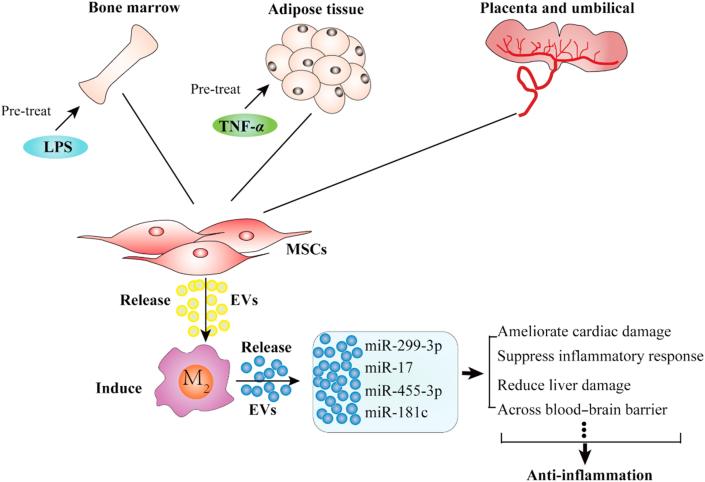
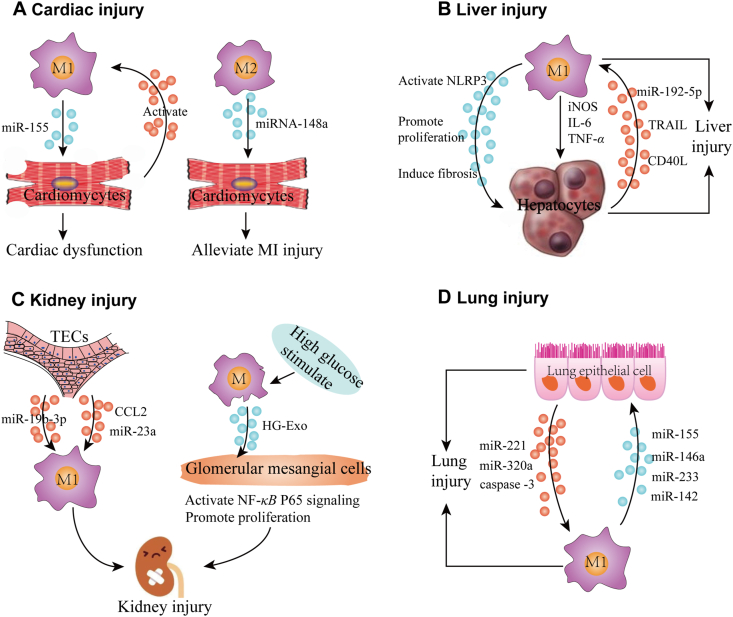
Macrophages are typically identified as classically activated (M1) macrophages and alternatively activated (M2) macrophages, which respectively exhibit pro- and anti-inflammatory phenotypes, and the balance between these two subtypes plays a critical role in the regulation of tissue inflammation, injury, and repair processes. Recent studies indicate that tissue cells and macrophages interact the release of small extracellular vesicles (EVs) in processes where EVs released by stressed tissue cells can promote the activation and polarization of adjacent macrophages which can in turn release EVs and factors that can promote cell stress and tissue inflammation and injury, and . This review discusses the roles of such EVs in regulating such interactions to influence tissue inflammation and injury in a number of acute and chronic inflammatory disease conditions, and the potential applications, advantage and concerns for using EV-based therapeutic approaches to treat such conditions, including their potential role of drug carriers for the treatment of infectious diseases.
巨噬细胞通常被分为经典活化的(M1)巨噬细胞和交替活化的(M2)巨噬细胞,它们分别表现出促炎和抗炎表型,这两种亚型之间的平衡在组织炎症、损伤和修复过程的调节中起着关键作用。最近的研究表明,组织细胞和巨噬细胞在小细胞外囊泡(EVs)释放过程中相互作用,应激组织细胞释放的EVs可促进相邻巨噬细胞的活化和极化,进而释放EVs和可促进细胞应激、组织炎症和损伤的因子。本文综述了此类EVs在多种急慢性炎症性疾病中调节这种相互作用以影响组织炎症和损伤方面的作用,以及使用基于EVs的治疗方法治疗此类疾病的潜在应用、优势和问题,包括其作为治疗传染病药物载体的潜在作用。