Tadic Marijana, Nita Nicoleta, Schneider Leonhard, Kersten Johannes, Buckert Dominik, Gonska Birgid, Scharnbeck Dominik, Reichart Christine, Belyavskiy Evgeny, Cuspidi Cesare, Rottbauer Wolfang
Klinik für Innere Medizin II, Universitätsklinikum Ulm, Ulm, Germany.
Department of Cardiology, Charité-University-Medicine (Campus Virchow - Klinikum), Berlin, Germany.
Front Cardiovasc Med. 2021 Jun 17;8:698158. doi: 10.3389/fcvm.2021.698158. eCollection 2021.
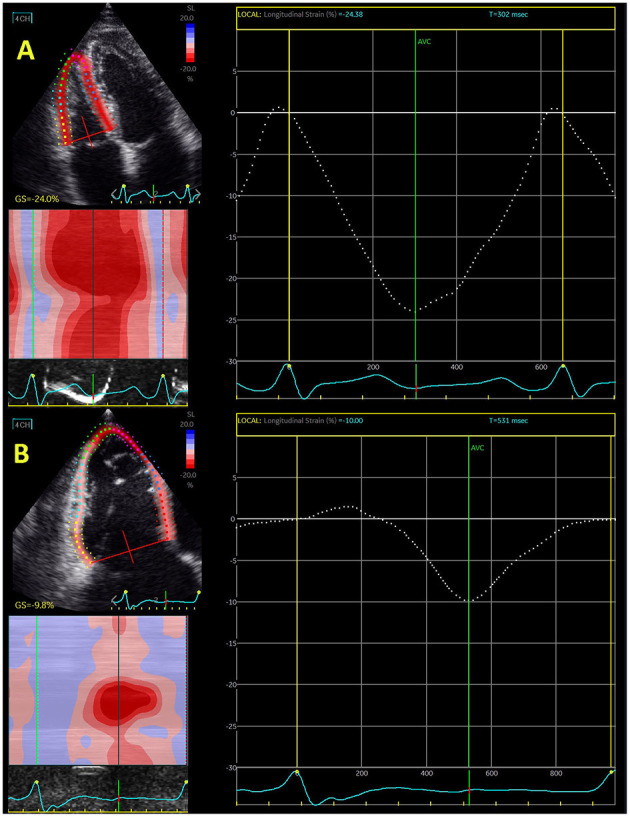
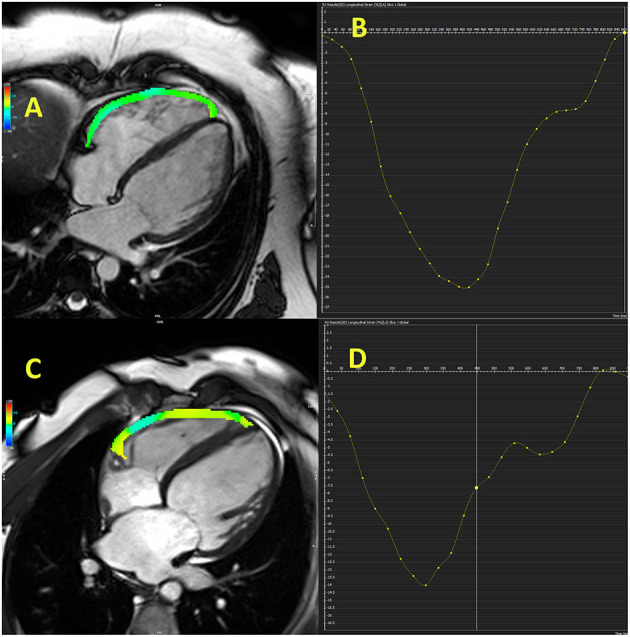
Right ventricular (RV) systolic function has an important role in the prediction of adverse outcomes, including mortality, in a wide range of cardiovascular (CV) conditions. Because of complex RV geometry and load dependency of the RV functional parameters, conventional echocardiographic parameters such as RV fractional area change (FAC) and tricuspid annular plane systolic excursion (TAPSE), have limited prognostic power in a large number of patients. RV longitudinal strain overcame the majority of these limitations, as it is angle-independent, less load-dependent, highly reproducible, and measure regional myocardial deformation. It has a high predictive value in patients with pulmonary hypertension, heart failure, congenital heart disease, ischemic heart disease, pulmonary embolism, cardiomyopathies, and valvular disease. It enables detection of subclinical RV damage even when conventional parameters of RV systolic function are in the normal range. Even though cardiac magnetic resonance-derived RV longitudinal strain showed excellent predictive value, echocardiography-derived RV strain remains the method of choice for evaluation of RV mechanics primarily due to high availability. Despite a constantly growing body of evidence that support RV longitudinal strain evaluation in the majority of CV patients, its assessment has not become the part of the routine echocardiographic examination in the majority of echocardiographic laboratories. The aim of this clinical review was to summarize the current data about the predictive value of RV longitudinal strain in patients with pulmonary hypertension, heart failure and valvular heart diseases.
右心室(RV)收缩功能在预测包括死亡率在内的多种心血管(CV)疾病的不良结局中起着重要作用。由于右心室几何形状复杂且右心室功能参数依赖负荷,传统超声心动图参数如右心室面积变化分数(FAC)和三尖瓣环平面收缩期位移(TAPSE)在大量患者中的预后预测能力有限。右心室纵向应变克服了这些局限性中的大多数,因为它与角度无关、负荷依赖性较小、高度可重复且可测量局部心肌变形。它在肺动脉高压、心力衰竭、先天性心脏病、缺血性心脏病、肺栓塞、心肌病和瓣膜病患者中具有较高的预测价值。即使右心室收缩功能的传统参数在正常范围内,它也能够检测到亚临床右心室损伤。尽管心脏磁共振衍生的右心室纵向应变显示出优异的预测价值,但超声心动图衍生的右心室应变仍然是评估右心室力学的首选方法,主要是因为其可用性高。尽管越来越多的证据支持在大多数心血管疾病患者中评估右心室纵向应变,但在大多数超声心动图实验室中,其评估尚未成为常规超声心动图检查的一部分。本临床综述的目的是总结目前关于右心室纵向应变在肺动脉高压、心力衰竭和心脏瓣膜病患者中的预测价值的数据。