Loreto Flavia, Gunning Stephen, Golemme Mara, Watt Hilary, Patel Neva, Win Zarni, Carswell Christopher, Perry Richard J, Malhotra Paresh A
Department of Brain Sciences, Faculty of Medicine, Imperial College London, London W6 8RP, UK.
Department of Neuropsychology, Imperial College Healthcare NHS Trust, London W6 8RF, UK.
Brain Commun. 2021 Mar 12;3(2):fcab035. doi: 10.1093/braincomms/fcab035. eCollection 2021.
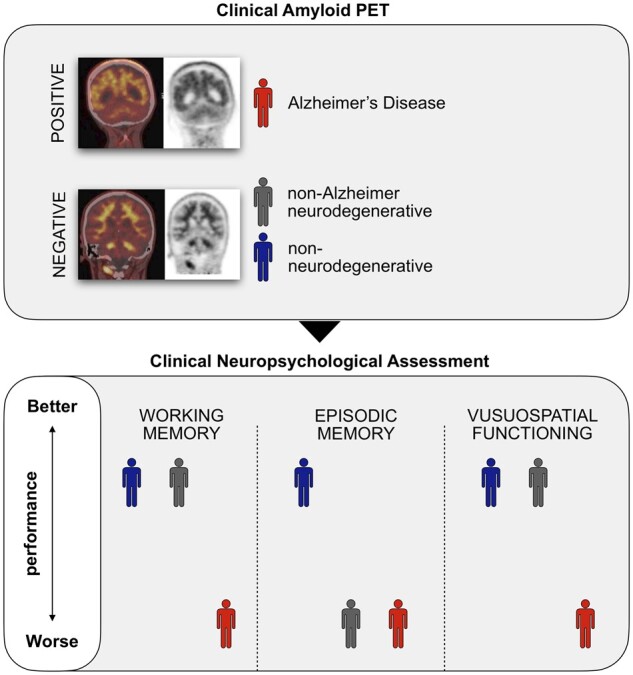
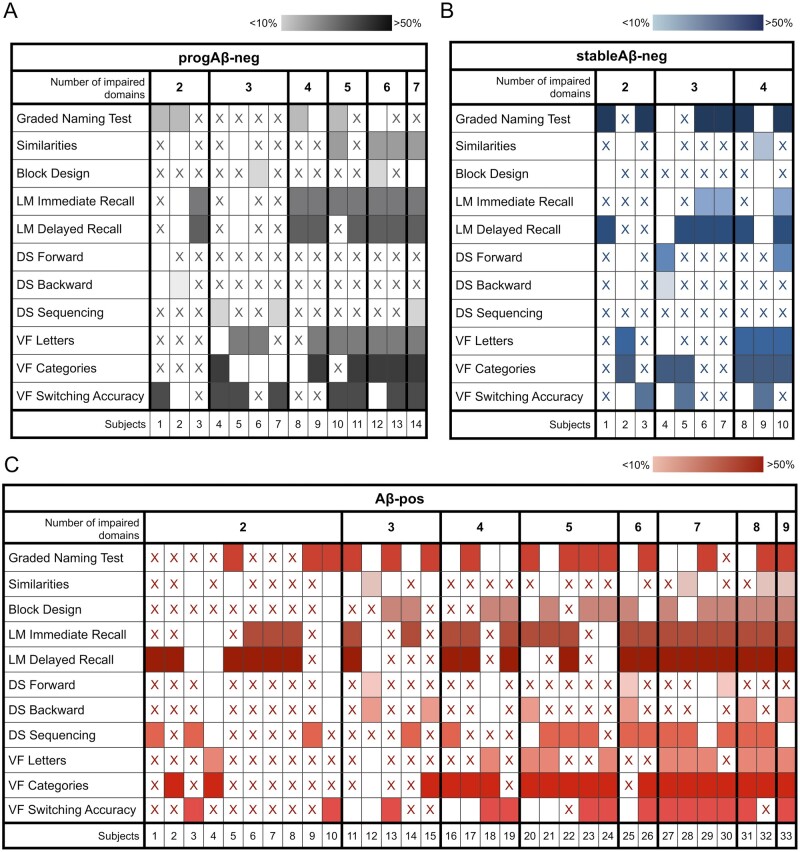
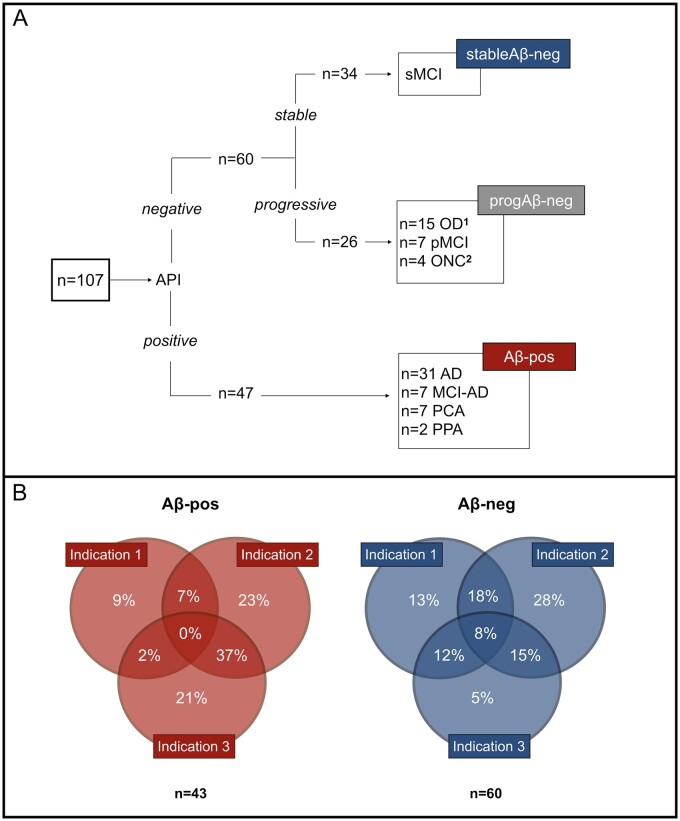
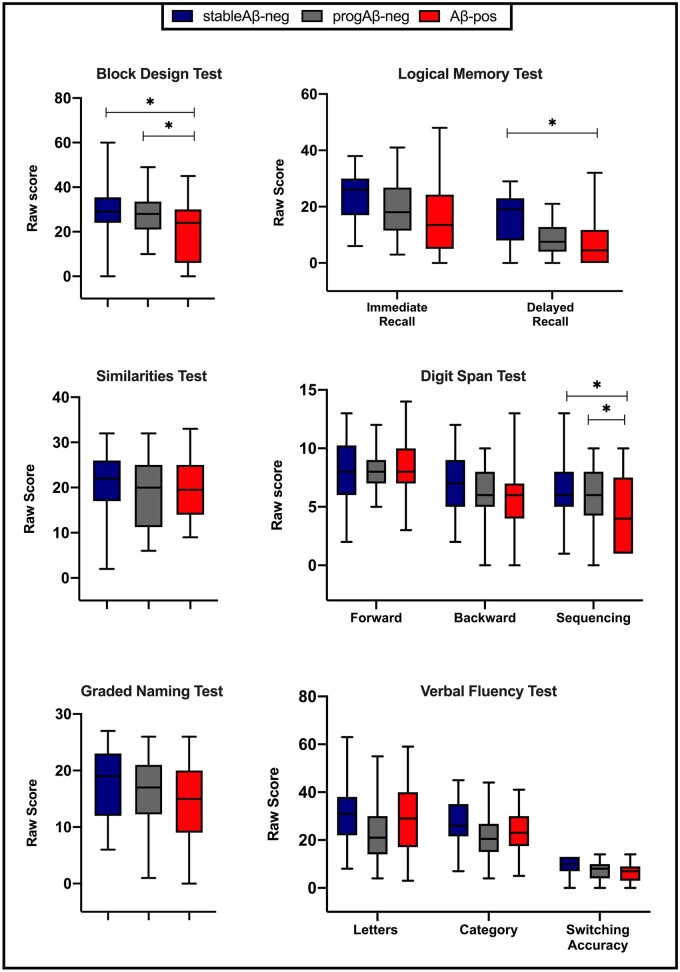
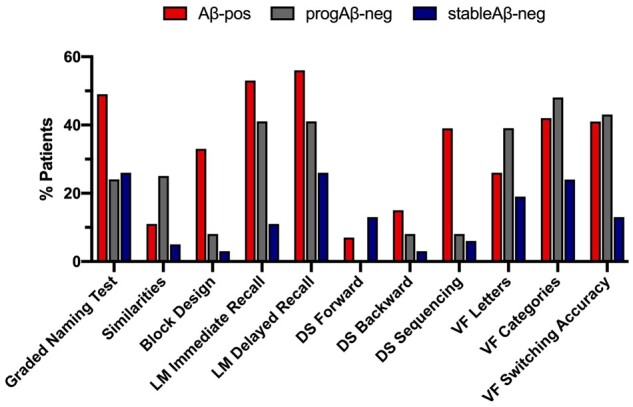
Episodic memory impairment and brain amyloid-beta are two of the main hallmarks of Alzheimer's Disease. In the clinical setting, these are often evaluated through neuropsychological testing and amyloid PET imaging, respectively. The use of amyloid PET in clinical practice is only indicated in patients with substantial diagnostic uncertainty due to atypical clinical presentation, multiple comorbidities and/or early age of onset. The relationship between amyloid-beta and cognition has been previously investigated, but no study has examined how neuropsychological features relate to the presence of amyloid pathology in the clinical population that meets the appropriate use criteria for amyloid PET imaging. In this study, we evaluated a clinical cohort of patients ( = 107) who presented at the Imperial Memory Clinic and were referred for clinical amyloid PET and neuropsychological assessment as part of their diagnostic workup. We compared the cognitive performance of amyloid-positive patients (Aβ-pos, = 47) with that of stable amyloid-negative (stableAβ-neg, = 26) and progressive amyloid-negative (progAβ-neg, = 34) patients. The amyloid-positive group performed significantly worse than both amyloid-negative groups in the visuospatial and working memory domains. Episodic memory performance, however, effectively differentiated the amyloid-positive group from the stable but not the progressive amyloid-negative group. On affective questionnaires, the stable amyloid-negative group reported significantly higher levels of depression than the amyloid-positive group. In our clinical cohort, visuospatial dysfunction and working memory impairment were better indicators of amyloid positivity than episodic memory dysfunction. These findings highlight the limited value of isolated cognitive scores in patients with atypical clinical presentation, comorbidities and/or early age of onset.
情景记忆障碍和脑淀粉样蛋白β是阿尔茨海默病的两个主要标志。在临床环境中,通常分别通过神经心理学测试和淀粉样蛋白PET成像来评估这些指标。淀粉样蛋白PET在临床实践中的应用仅适用于因非典型临床表现、多种合并症和/或发病年龄较早而存在重大诊断不确定性的患者。此前已经对淀粉样蛋白β与认知之间的关系进行了研究,但尚无研究探讨在符合淀粉样蛋白PET成像适当使用标准的临床人群中,神经心理学特征与淀粉样蛋白病理学的存在之间的关系。在本研究中,我们评估了一组临床患者队列(n = 107),这些患者在帝国记忆诊所就诊,并作为诊断检查的一部分被转诊进行临床淀粉样蛋白PET和神经心理学评估。我们比较了淀粉样蛋白阳性患者(Aβ-pos,n = 47)与稳定淀粉样蛋白阴性患者(stableAβ-neg,n = 26)和进行性淀粉样蛋白阴性患者(progAβ-neg,n = 34)的认知表现。淀粉样蛋白阳性组在视觉空间和工作记忆领域的表现明显比两个淀粉样蛋白阴性组差。然而,情景记忆表现有效地将淀粉样蛋白阳性组与稳定但非进行性淀粉样蛋白阴性组区分开来。在情感问卷上,稳定淀粉样蛋白阴性组报告的抑郁水平明显高于淀粉样蛋白阳性组。在我们的临床队列中,视觉空间功能障碍和工作记忆损害比情景记忆功能障碍更能表明淀粉样蛋白阳性。这些发现突出了在具有非典型临床表现、合并症和/或发病年龄较早的患者中,孤立认知分数的价值有限。