Laboratory of Brain Disorders, Ministry of Science and Technology, Collaborative Innovation Center for Brain Disorders, Beijing Institute of Brain Disorders, Beijing Advanced Innovation Center for Big Data-based Precision Medicine, Capital Medical University, Beijing, China.
Department of Neurosurgery, Xuanwu Hospital, Capital Medical University, Beijing, China.
CNS Neurosci Ther. 2021 Aug;27(8):869-882. doi: 10.1111/cns.13642.
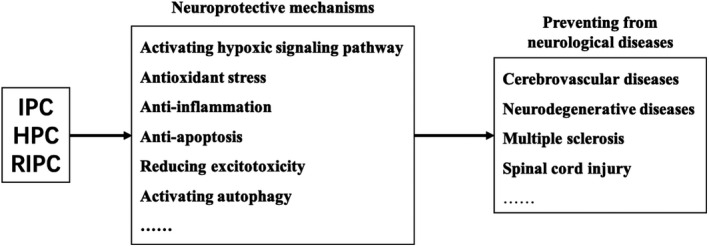
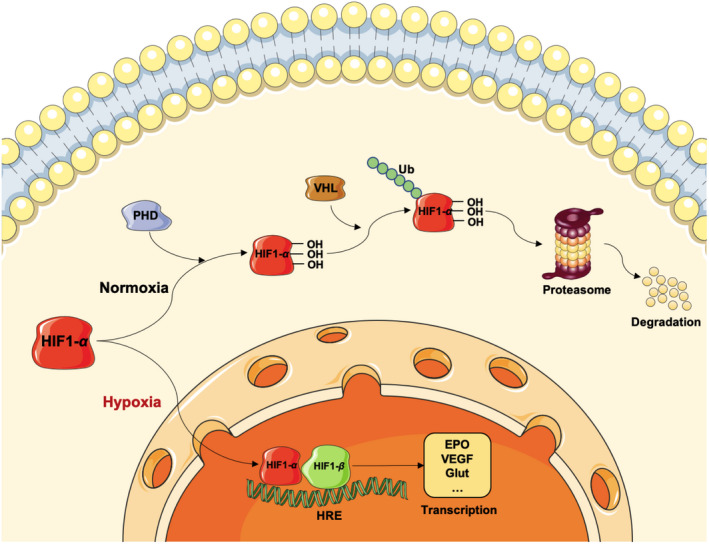
As the organ with the highest demand for oxygen, the brain has a poor tolerance to ischemia and hypoxia. Despite severe ischemia/hypoxia induces the occurrence and development of various central nervous system (CNS) diseases, sublethal insult may induce strong protection against subsequent fatal injuries by improving tolerance. Searching for potential measures to improve brain ischemic/hypoxic is of great significance for treatment of ischemia/hypoxia related CNS diseases. Ischemic/hypoxic preconditioning (I/HPC) refers to the approach to give the body a short period of mild ischemic/hypoxic stimulus which can significantly improve the body's tolerance to subsequent more severe ischemia/hypoxia event. It has been extensively studied and been considered as an effective therapeutic strategy in CNS diseases. Its protective mechanisms involved multiple processes, such as activation of hypoxia signaling pathways, anti-inflammation, antioxidant stress, and autophagy induction, etc. As a strategy to induce endogenous neuroprotection, I/HPC has attracted extensive attention and become one of the research frontiers and hotspots in the field of neurotherapy. In this review, we discuss the basic and clinical research progress of I/HPC on CNS diseases, and summarize its mechanisms. Furthermore, we highlight the limitations and challenges of their translation from basic research to clinical application.
作为对氧气需求最高的器官,大脑对缺血和缺氧的耐受性很差。尽管严重的缺血/缺氧会导致各种中枢神经系统 (CNS) 疾病的发生和发展,但亚致死性损伤通过提高耐受性可能会诱导对随后致命损伤的强烈保护作用。寻找潜在的措施来改善脑缺血/缺氧对于治疗与缺血/缺氧相关的 CNS 疾病具有重要意义。缺血/缺氧预处理 (I/HPC) 是指给予机体短暂的轻度缺血/缺氧刺激,从而显著提高机体对随后更严重的缺血/缺氧事件的耐受性的方法。它已经得到了广泛的研究,并被认为是 CNS 疾病的一种有效治疗策略。其保护机制涉及多个过程,如缺氧信号通路的激活、抗炎、抗氧化应激和自噬诱导等。作为一种诱导内源性神经保护的策略,I/HPC 引起了广泛关注,并成为神经治疗领域的研究前沿和热点之一。在本文中,我们讨论了 I/HPC 在 CNS 疾病中的基础和临床研究进展,并总结了其机制。此外,我们还强调了将其从基础研究转化为临床应用所面临的局限性和挑战。