Kobza Alexandra O, Herman Deena, Papaioannou Alexandra, Lau Arthur N, Adachi Jonathan D
Division of Rheumatology, Department of Medicine, McMaster University, Hamilton, ON, Canada.
Division of Geriatric Medicine, Department of Medicine, McMaster University, Hamilton, ON, Canada.
Open Access Rheumatol. 2021 Jul 2;13:177-190. doi: 10.2147/OARRR.S282606. eCollection 2021.
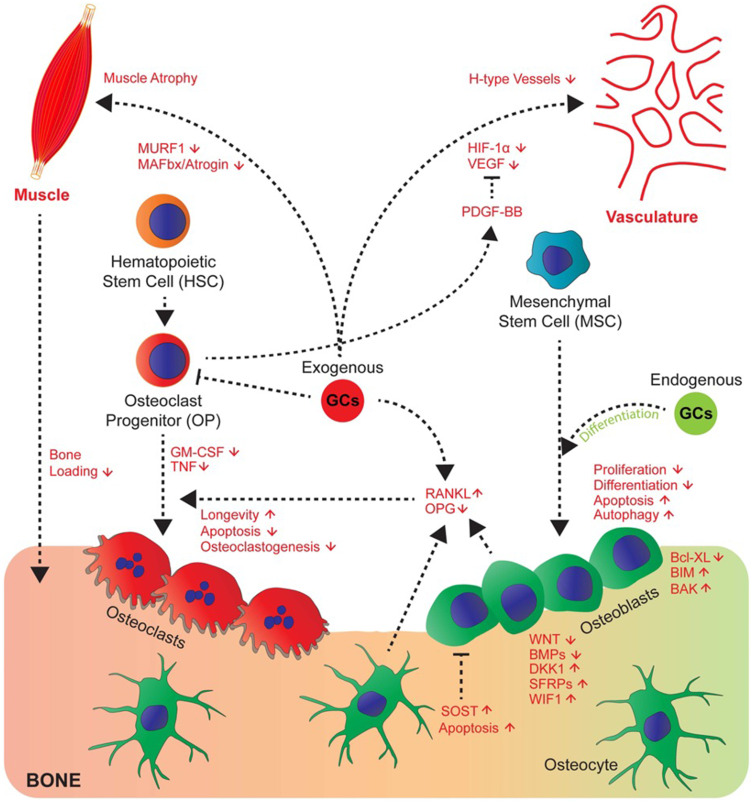
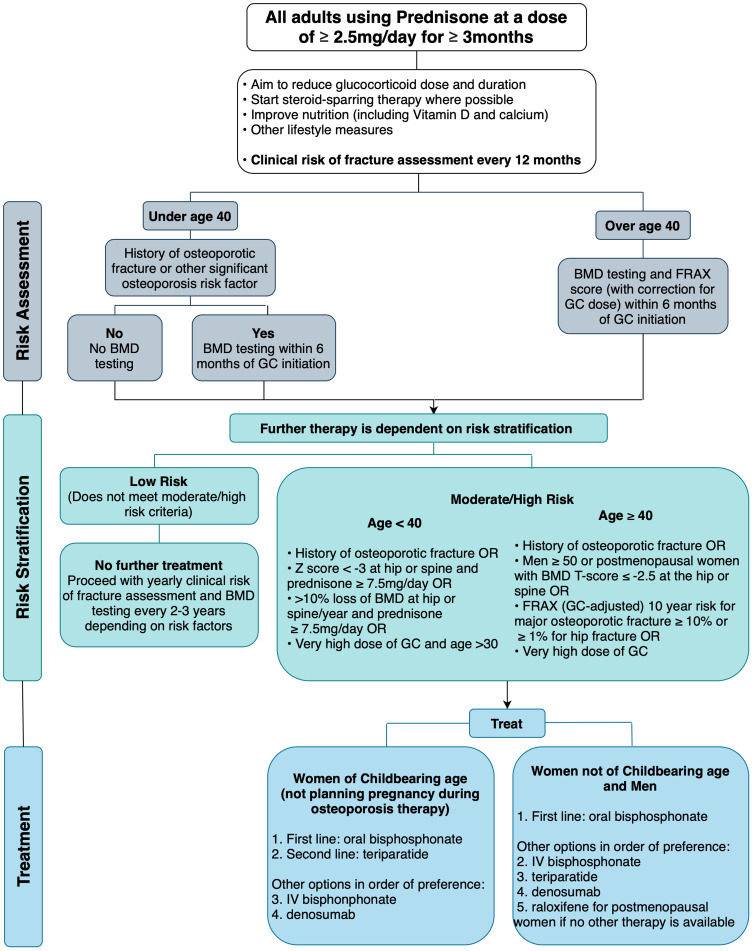
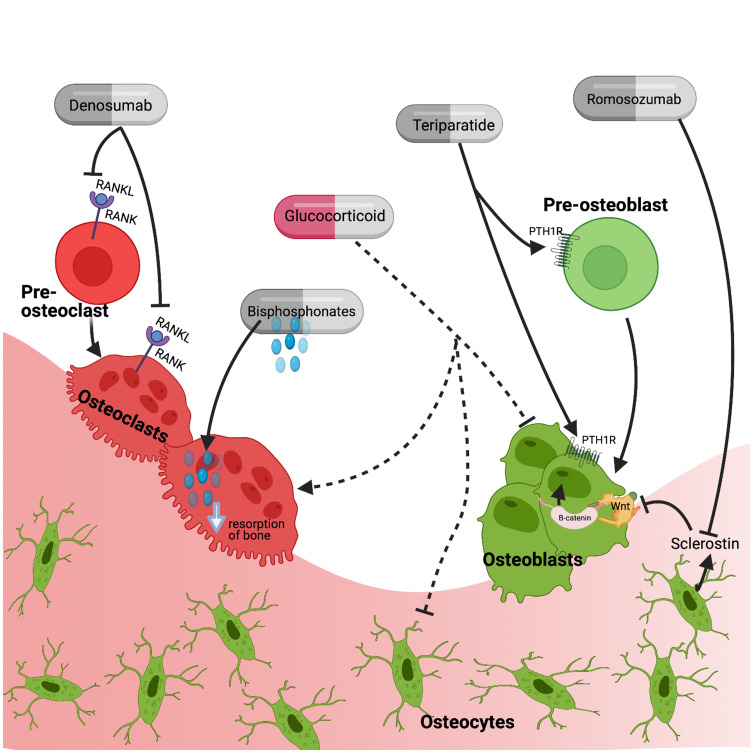
Glucocorticoids are effective immunosuppressants used in a wide variety of diseases. Their use results in secondary osteoporosis in about 30-50% of chronic glucocorticoid users. Glucocorticoids cause a rapid decline in bone strength within the first 3-6 months mostly due to increased bone resorption by osteoclasts. This is followed by a more gradual loss of bone partly due to decreased osteoblastogenesis and osteoblast and osteocyte apoptosis. The loss of bone strength induced by glucocorticoids is not fully captured by bone mineral density measurements. Other tools such as the trabecular bone score and advanced imaging techniques give insight into bone quality; however, these are not used widely in clinical practice. Glucocorticoid-induced osteoporosis should be seen as a widely preventable disease. Currently, only about 15% of chronic glucocorticoid users are receiving optimal care. Glucocorticoids should be prescribed at the lowest dose and shortest duration. All patients should be counselled on lifestyle measures to maintain bone strength including nutrition and weight-bearing exercise. Pharmacological therapy should be considered for all patients at moderate to high risk of fracture as there is evidence for the prevention of bone loss and fractures with a favourable safety profile. Oral bisphosphonates are the current mainstay of therapy, whereas osteoanabolic agents may be considered for those at highest risk of fracture.
糖皮质激素是临床上广泛应用的有效免疫抑制剂。大约30%-50%的长期使用糖皮质激素的患者会出现继发性骨质疏松。糖皮质激素会在最初3-6个月内导致骨强度迅速下降,这主要是由于破骨细胞引起的骨吸收增加所致。随后骨量会逐渐流失,部分原因是成骨细胞生成减少以及成骨细胞和骨细胞凋亡。骨密度测量并不能完全反映糖皮质激素引起的骨强度损失。其他工具如小梁骨评分和先进的成像技术有助于了解骨质量;然而,这些在临床实践中并未广泛应用。糖皮质激素诱导的骨质疏松应被视为一种广泛可预防的疾病。目前,只有约15%的长期使用糖皮质激素的患者得到了最佳治疗。糖皮质激素应采用最低剂量并使用最短疗程。应向所有患者提供关于维持骨强度的生活方式建议,包括营养和负重锻炼。对于所有具有中到高骨折风险的患者都应考虑药物治疗,因为有证据表明药物治疗可预防骨质流失和骨折,且安全性良好。口服双膦酸盐是目前的主要治疗药物,而对于骨折风险最高的患者可考虑使用骨合成代谢药物。