Department of Cardiovascular Surgery, Union Hospital, Tongji Medical College, Huazhong University of Science and Technology, Wuhan, China.
Department of Anesthesiology, The Central Hospital of Wuhan, Tongji Medical College, Huazhong University of Science and Technology.
Int J Biol Sci. 2021 May 27;17(9):2193-2204. doi: 10.7150/ijbs.57130. eCollection 2021.
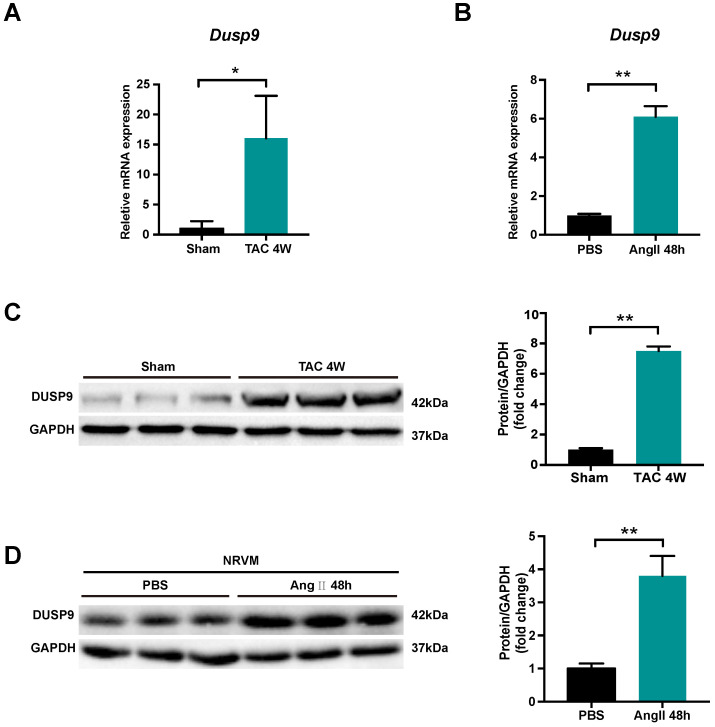
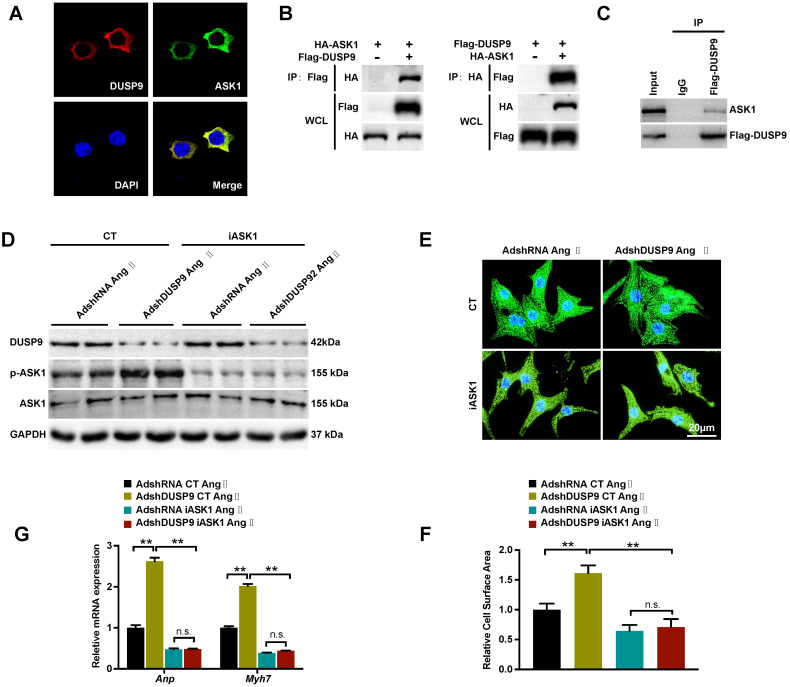
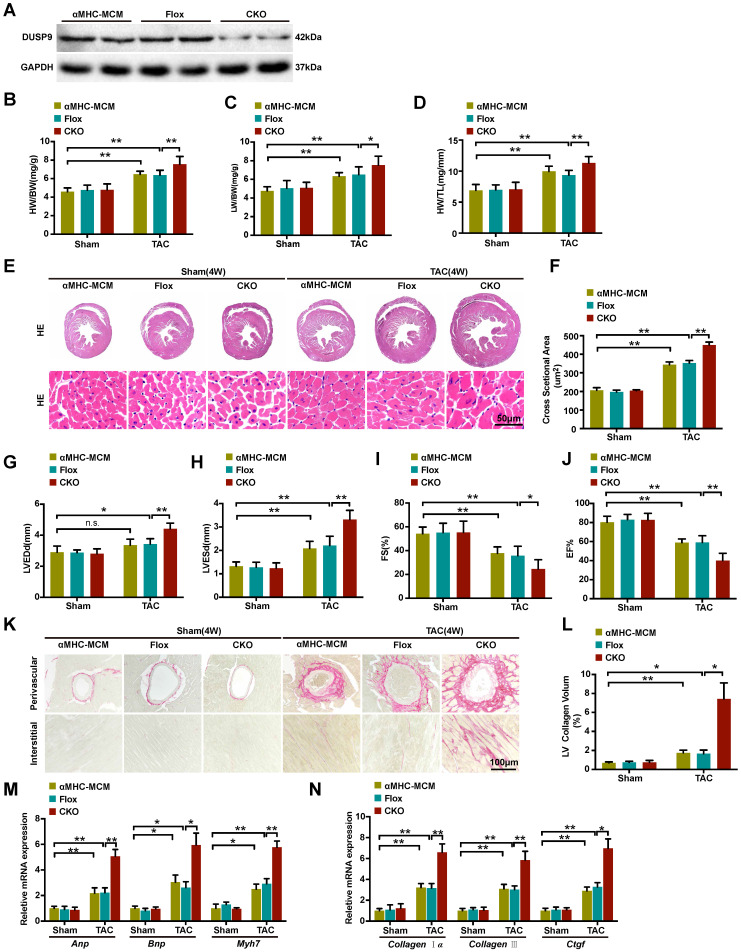
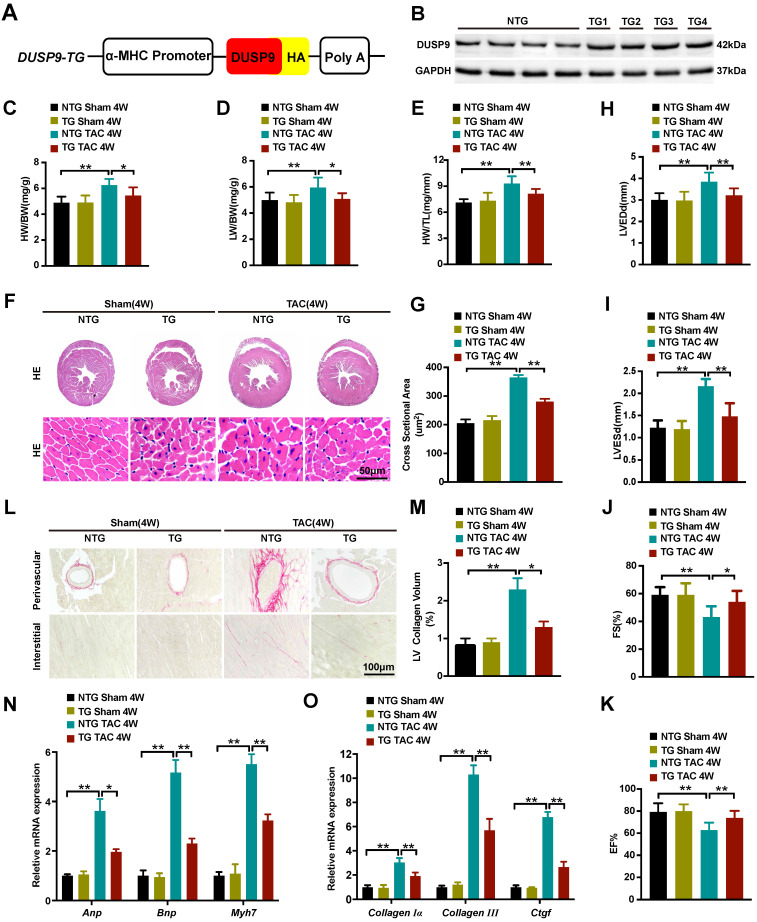
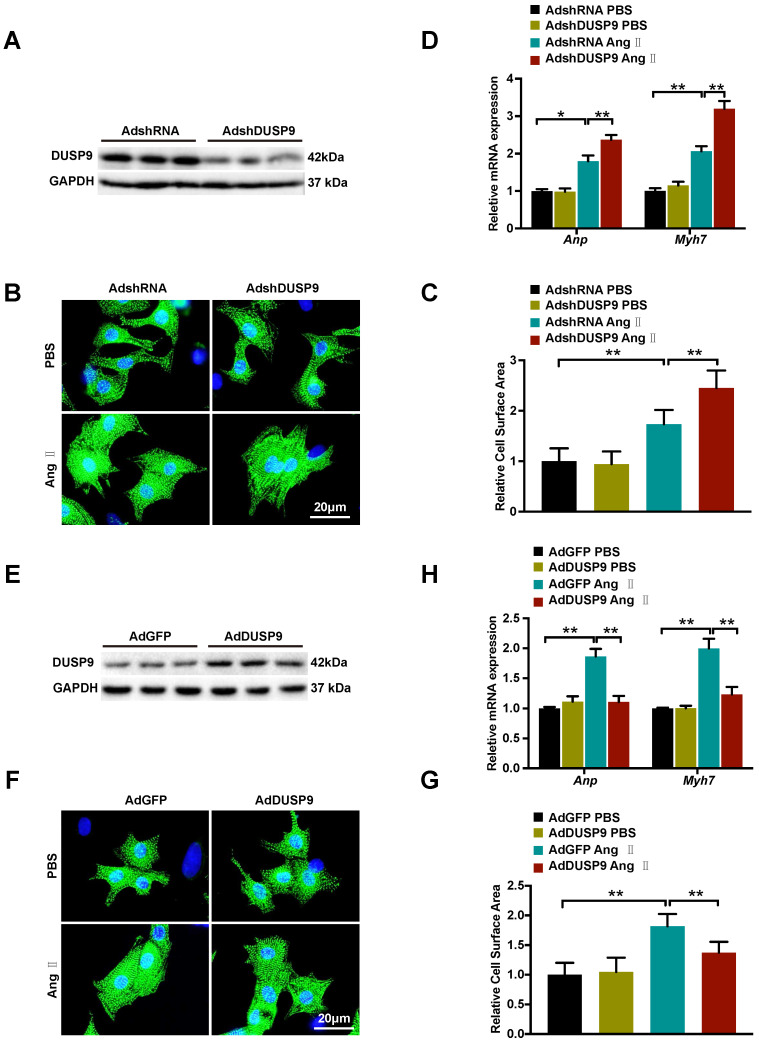
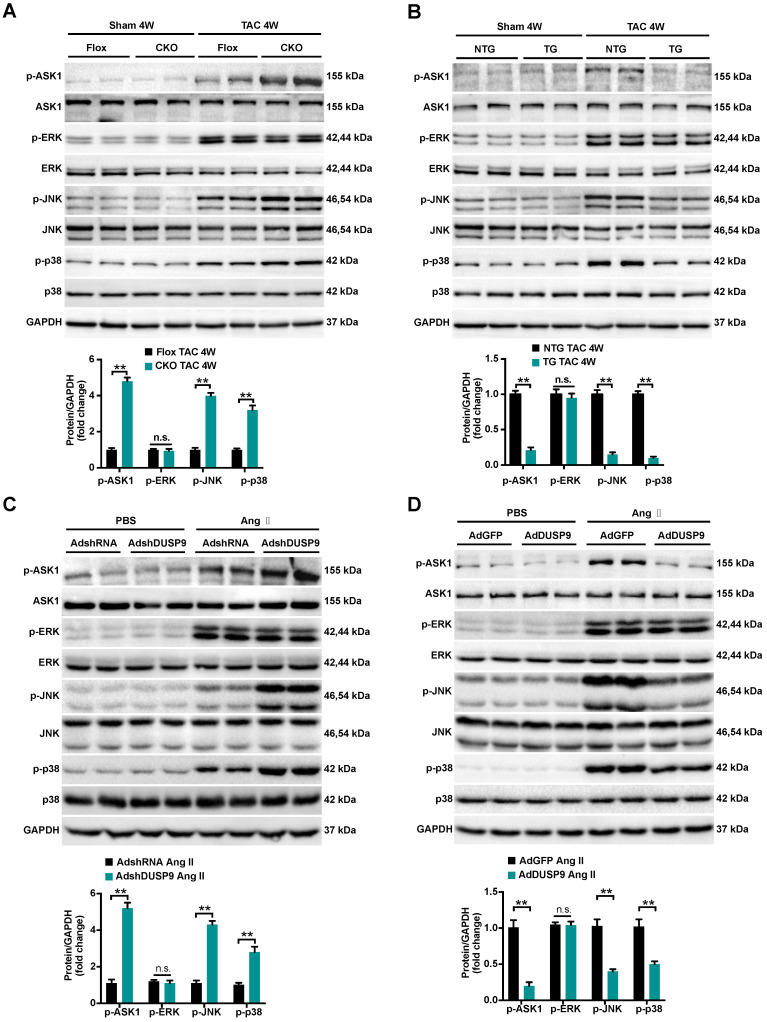
The functions of dual-specificity phosphatase 9 (DUSP9) in hepatic steatosis and metabolic disturbance during nonalcoholic fatty liver disease were discussed in our prior study. However, its roles in the pathophysiology of pressure overload-induced cardiac hypertrophy remain to be illustrated. This study attempted to uncover the potential contributions and underpinning mechanisms of DUSP9 in cardiac hypertrophy. Utilizing the gain-and-loss-of-functional approaches of DUSP9 the cardiac phenotypes arising from the pathological, echocardiographic, and molecular analysis were quantified. The results showed increased levels of DUSP9 in hypertrophic mice heart and angiotensin II treated cardiomyocytes. In accordance with the results of cellular hypertrophy in response to angiotensin II, cardiac hypertrophy exaggeration, fibrosis, and malfunction triggered by pressure overload was evident in the case of cardiac-specific conditional knockout of DUSP9. In contrast, transgenic mice hearts with DUSP9 overexpression portrayed restoration of the hypertrophic phenotypes. Further explorations of molecular mechanisms indicated the direct interaction of DUSP9 with ASK1, which further repressed p38 and JNK signaling pathways. Moreover, blocking ASK1 with ASK1-specific inhibitor compensated the pro-hypertrophic effects induced by DUSP9 deficiency in cardiomyocytes. The main findings of this study suggest the potential of DUSP9 in alleviating cardiac hypertrophy at least partially by repressing ASK1, thereby looks promising as a prospective target against cardiac hypertrophy.
我们之前的研究探讨了双特异性磷酸酶 9(DUSP9)在非酒精性脂肪性肝病中肝脂肪变性和代谢紊乱中的作用。然而,其在心脏压力超负荷诱导的心肌肥厚病理生理学中的作用仍有待阐明。本研究试图揭示 DUSP9 在心肌肥厚中的潜在作用和潜在机制。通过 DUSP9 的功能增益和缺失方法,从病理、超声心动图和分子分析方面对心脏表型进行了量化。结果表明,肥厚小鼠心脏和血管紧张素 II 处理的心肌细胞中 DUSP9 水平升高。与血管紧张素 II 引起的细胞肥大反应结果一致,心脏特异性条件性敲除 DUSP9 后,压力超负荷引起的心肌肥厚加重、纤维化和功能障碍明显。相比之下,DUSP9 过表达的转基因小鼠心脏恢复了肥大表型。对分子机制的进一步探索表明,DUSP9 与 ASK1 直接相互作用,进一步抑制了 p38 和 JNK 信号通路。此外,ASK1 特异性抑制剂阻断 ASK1 可补偿 DUSP9 缺失对心肌细胞引起的促肥大效应。本研究的主要发现表明,DUSP9 至少部分通过抑制 ASK1 来缓解心肌肥厚的潜力,因此有望成为对抗心肌肥厚的潜在靶点。