Mehdizadeh Mahshid, Karami Samira, Ghaffari Nazari Haniyeh, Sankanian Ghazaleh, Hamidpour Mohsen, Hajifathali Abbas
Hematopoietic Stem Cell Research Center Shahid Beheshti University of Medical Sciences Tehran Iran.
Health Sci Rep. 2021 Jul 8;4(3):e322. doi: 10.1002/hsr2.322. eCollection 2021 Sep.
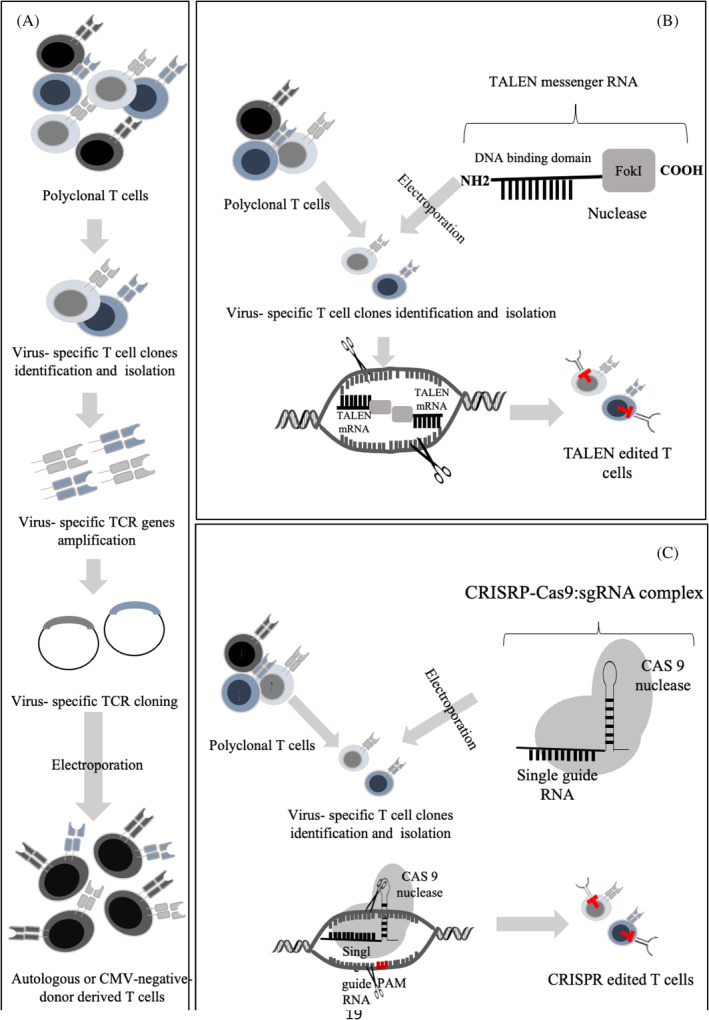
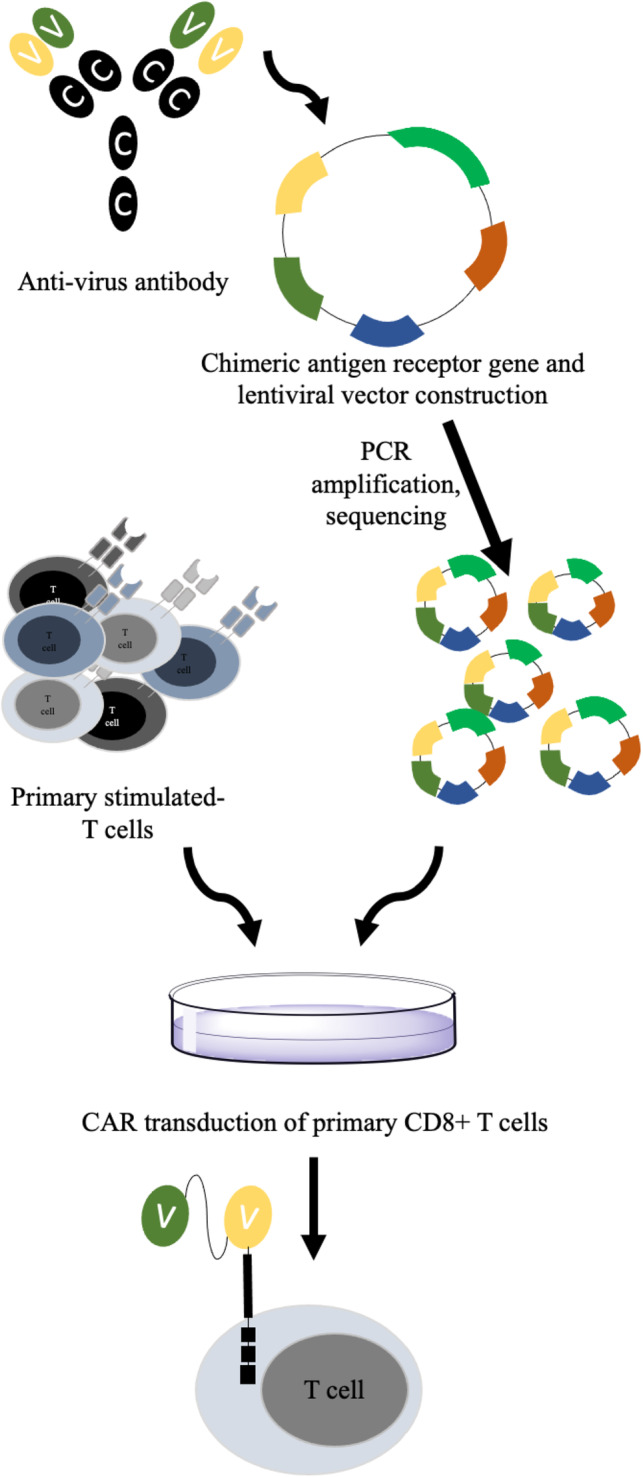
Cytomegalovirus (CMV) infection remains a major complication following allogeneic hematopoietic stem cell transplantation (HSCT). T cell response plays a critical role in inducing long-term immunity against CMV infection/reactivation that impairs during HSCT. Adoptive T cell therapy (ACT) via transferring CMV-specific T cells from a seropositive donor to the recipient can accelerate virus-specific immune reconstitution. ACT, as an alternative approach, can restore protective antiviral T cell immunity in patients. Different manufacturing protocols have been introduced to isolate and expand specific T cells for the ACT clinical setting. Nevertheless, HLA restriction, long-term manufacturing process, risk of alloreactivity, and CMV seropositive donor availability have limited ACT broad applicability. Genetic engineering has developed new strategies to produce TCR-modified T cells for diagnosis, prevention, and treatment of infectious disease. In this review, we presented current strategies required for ACT in posttransplant CMV infection. We also introduced novel gene-modified T cell discoveries in the context of ACT for CMV infection. It seems that these innovations are enabling to improvement and development of ACT utilization to combat posttransplant CMV infection.
巨细胞病毒(CMV)感染仍然是异基因造血干细胞移植(HSCT)后的主要并发症。T细胞反应在诱导针对CMV感染/再激活的长期免疫中起关键作用,而这种免疫在HSCT期间会受到损害。通过将CMV特异性T细胞从血清反应阳性供体转移至受体进行过继性T细胞疗法(ACT),可加速病毒特异性免疫重建。ACT作为一种替代方法,可恢复患者体内具有保护性的抗病毒T细胞免疫。为了在ACT临床应用中分离和扩增特异性T细胞,人们引入了不同的生产方案。然而,HLA限制、长期生产过程、同种异体反应风险以及CMV血清反应阳性供体的可获得性,限制了ACT的广泛应用。基因工程已开发出用于生产TCR修饰T细胞的新策略,以用于传染病的诊断、预防和治疗。在本综述中,我们介绍了移植后CMV感染中ACT所需的当前策略。我们还介绍了在针对CMV感染的ACT背景下新型基因修饰T细胞的发现。这些创新似乎能够改进和发展ACT的应用,以对抗移植后CMV感染。