Pawellek Ruben, Krmar Jovana, Leistner Adrian, Djajić Nevena, Otašević Biljana, Protić Ana, Holzgrabe Ulrike
Institute for Pharmacy and Food Chemistry, University of Würzburg, Am Hubland, 97074, Würzburg, Germany.
Department of Drug Analysis, Faculty of Pharmacy, University of Belgrade, Vojvode Stepe 450, 11 221, Belgrade, Serbia.
J Cheminform. 2021 Jul 15;13(1):53. doi: 10.1186/s13321-021-00532-0.
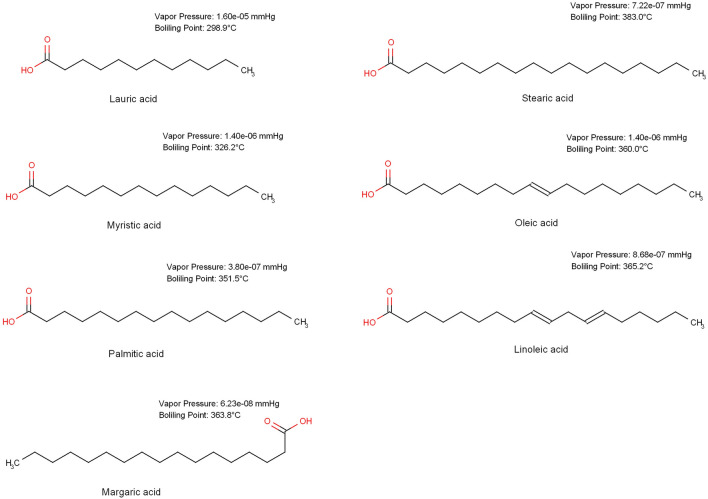
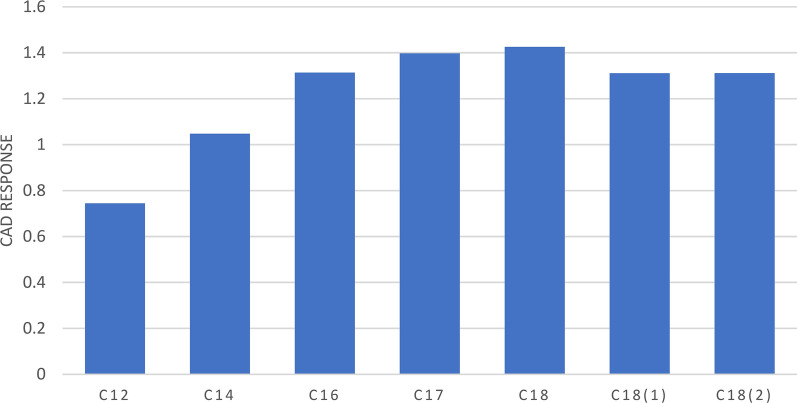
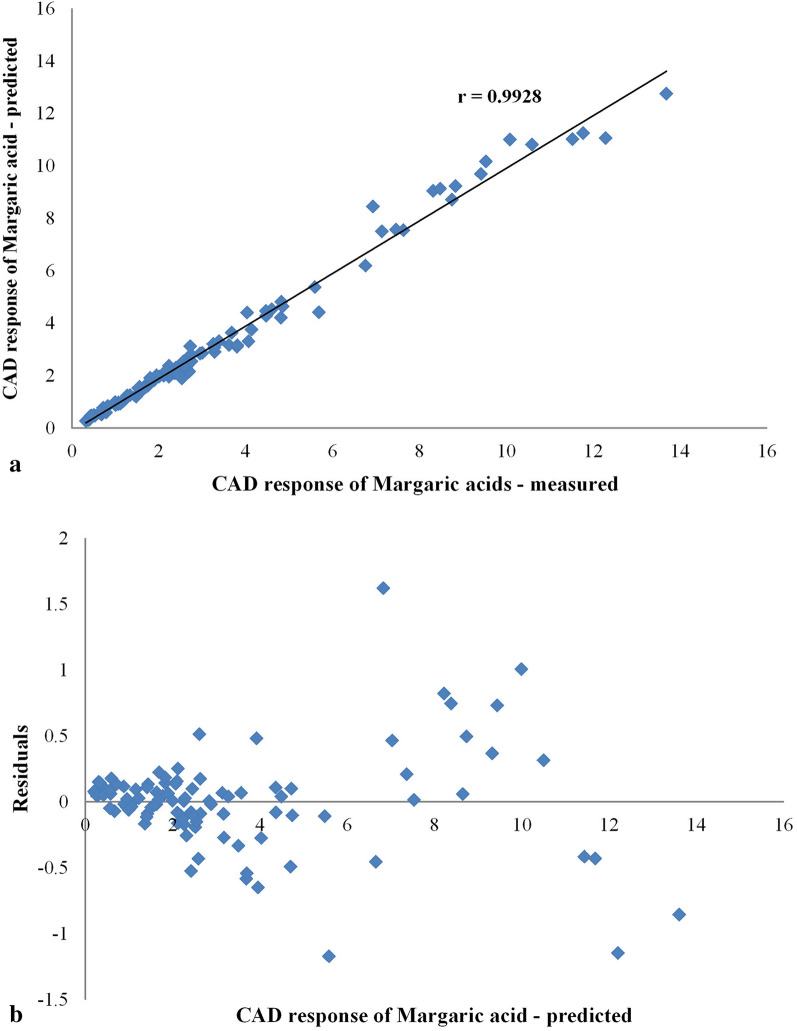
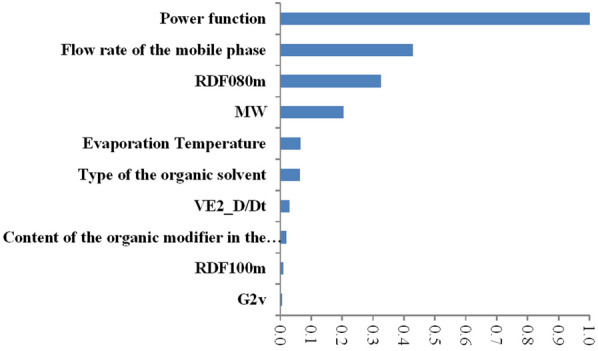
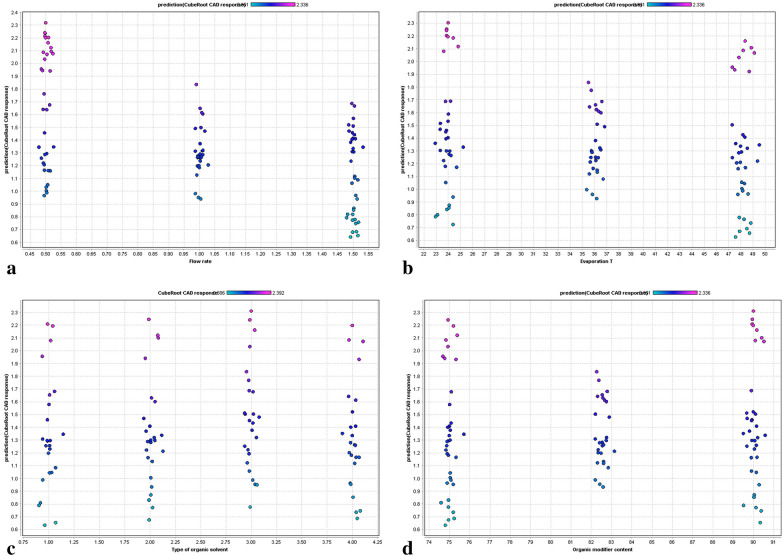
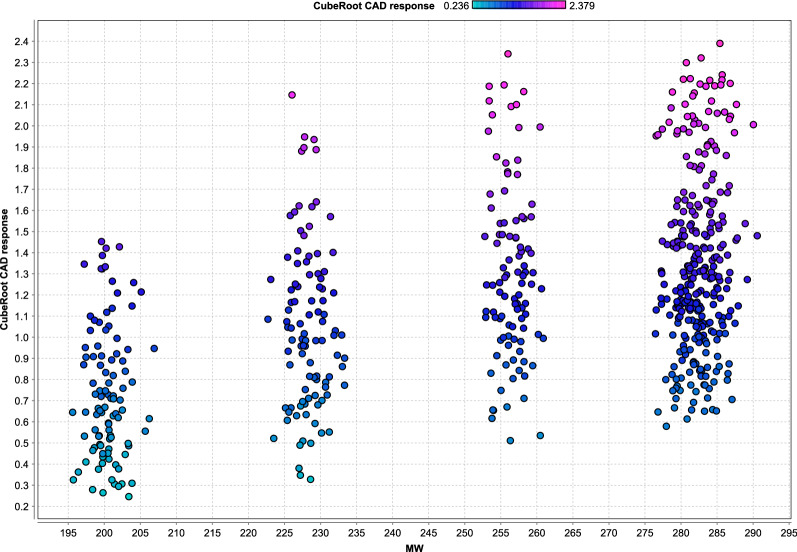
The charged aerosol detector (CAD) is the latest representative of aerosol-based detectors that generate a response independent of the analytes' chemical structure. This study was aimed at accurately predicting the CAD response of homologous fatty acids under varying experimental conditions. Fatty acids from C12 to C18 were used as model substances due to semivolatile characterics that caused non-uniform CAD behaviour. Considering both experimental conditions and molecular descriptors, a mixed quantitative structure-property relationship (QSPR) modeling was performed using Gradient Boosted Trees (GBT). The ensemble of 10 decisions trees (learning rate set at 0.55, the maximal depth set at 5, and the sample rate set at 1.0) was able to explain approximately 99% (Q: 0.987, RMSE: 0.051) of the observed variance in CAD responses. Validation using an external test compound confirmed the high predictive ability of the model established (R: 0.990, RMSEP: 0.050). With respect to the intrinsic attribute selection strategy, GBT used almost all independent variables during model building. Finally, it attributed the highest importance to the power function value, the flow rate of the mobile phase, evaporation temperature, the content of the organic solvent in the mobile phase and the molecular descriptors such as molecular weight (MW), Radial Distribution Function-080/weighted by mass (RDF080m) and average coefficient of the last eigenvector from distance/detour matrix (Ve2_D/Dt). The identification of the factors most relevant to the CAD responsiveness has contributed to a better understanding of the underlying mechanisms of signal generation. An increased CAD response that was obtained for acetone as organic modifier demonstrated its potential to replace the more expensive and environmentally harmful acetonitrile.
带电气溶胶检测器(CAD)是基于气溶胶的检测器的最新代表,其产生的响应与分析物的化学结构无关。本研究旨在准确预测不同实验条件下同源脂肪酸的CAD响应。由于具有半挥发性特征,会导致CAD行为不均匀,因此使用C12至C18的脂肪酸作为模型物质。考虑到实验条件和分子描述符,使用梯度提升树(GBT)进行了混合定量结构-性质关系(QSPR)建模。由10个决策树组成的集合(学习率设置为0.55,最大深度设置为5,采样率设置为1.0)能够解释CAD响应中约99%(Q:0.987,RMSE:0.051)的观察到的方差。使用外部测试化合物进行的验证证实了所建立模型的高预测能力(R:0.990,RMSEP:0.050)。关于固有属性选择策略,GBT在模型构建过程中几乎使用了所有自变量。最后,它赋予幂函数值、流动相流速、蒸发温度、流动相中有机溶剂的含量以及分子量(MW)、质量加权径向分布函数-080(RDF080m)和距离/迂回矩阵最后一个特征向量的平均系数(Ve2_D/Dt)等分子描述符最高的重要性。确定与CAD响应性最相关的因素有助于更好地理解信号产生的潜在机制。使用丙酮作为有机改性剂获得的CAD响应增加,表明其有潜力替代更昂贵且对环境有害的乙腈。