Lee Jae Joon, Shin Joon-Ho
Department of Rehabilitation Medicine, National Rehabilitation Center, Ministry of Health and Welfare, Seoul, South Korea.
Translational Research Center for Rehabilitation Robots, National Rehabilitation Center, Ministry of Health and Welfare, Seoul, South Korea.
Front Neurol. 2021 Jul 1;12:668923. doi: 10.3389/fneur.2021.668923. eCollection 2021.
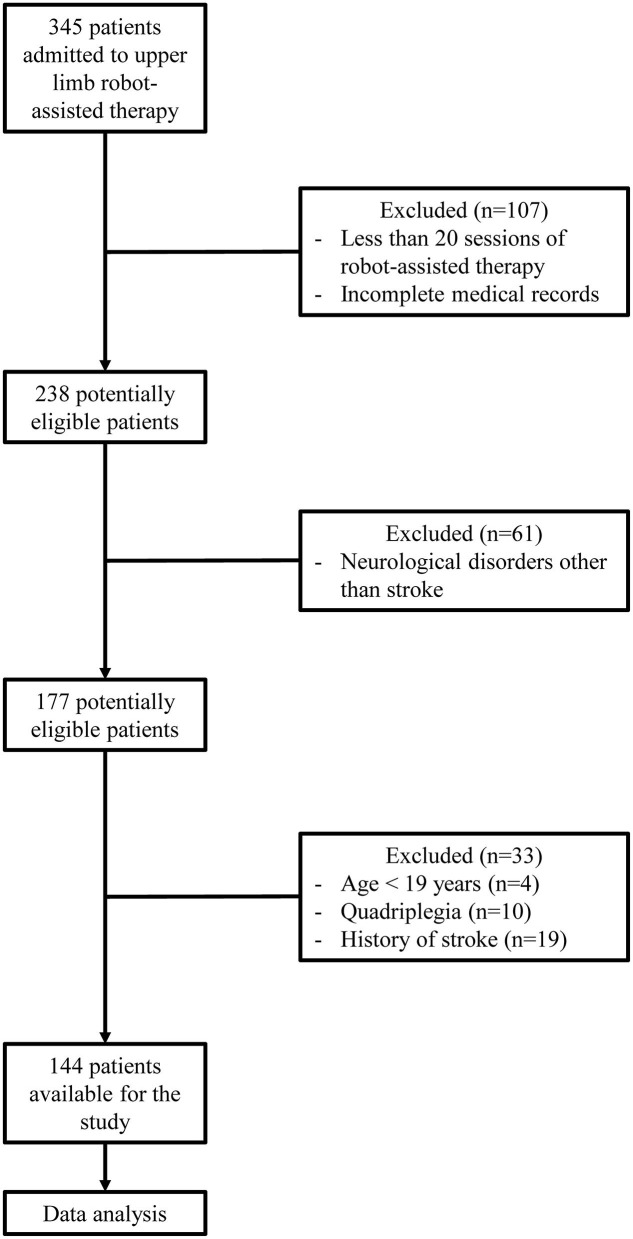
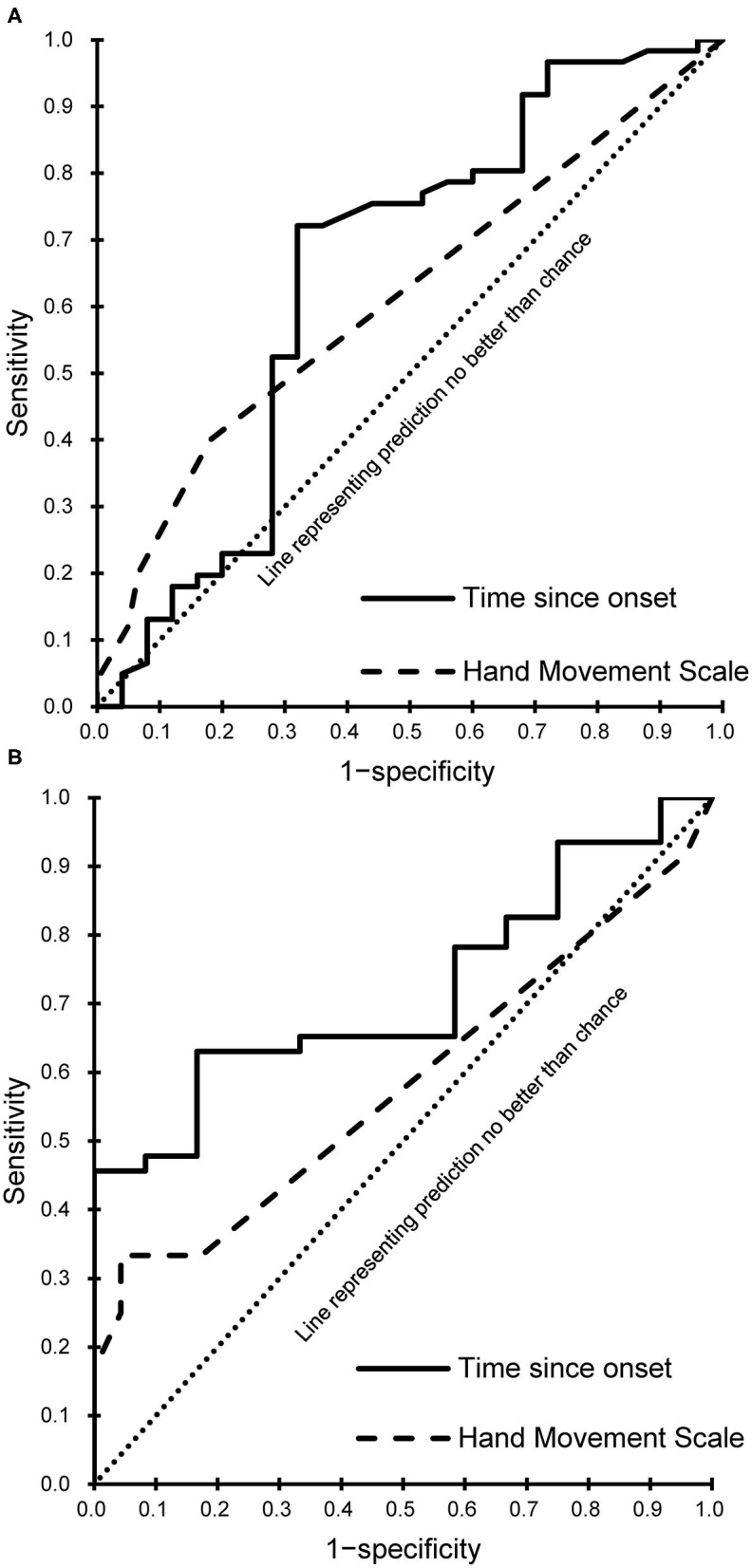
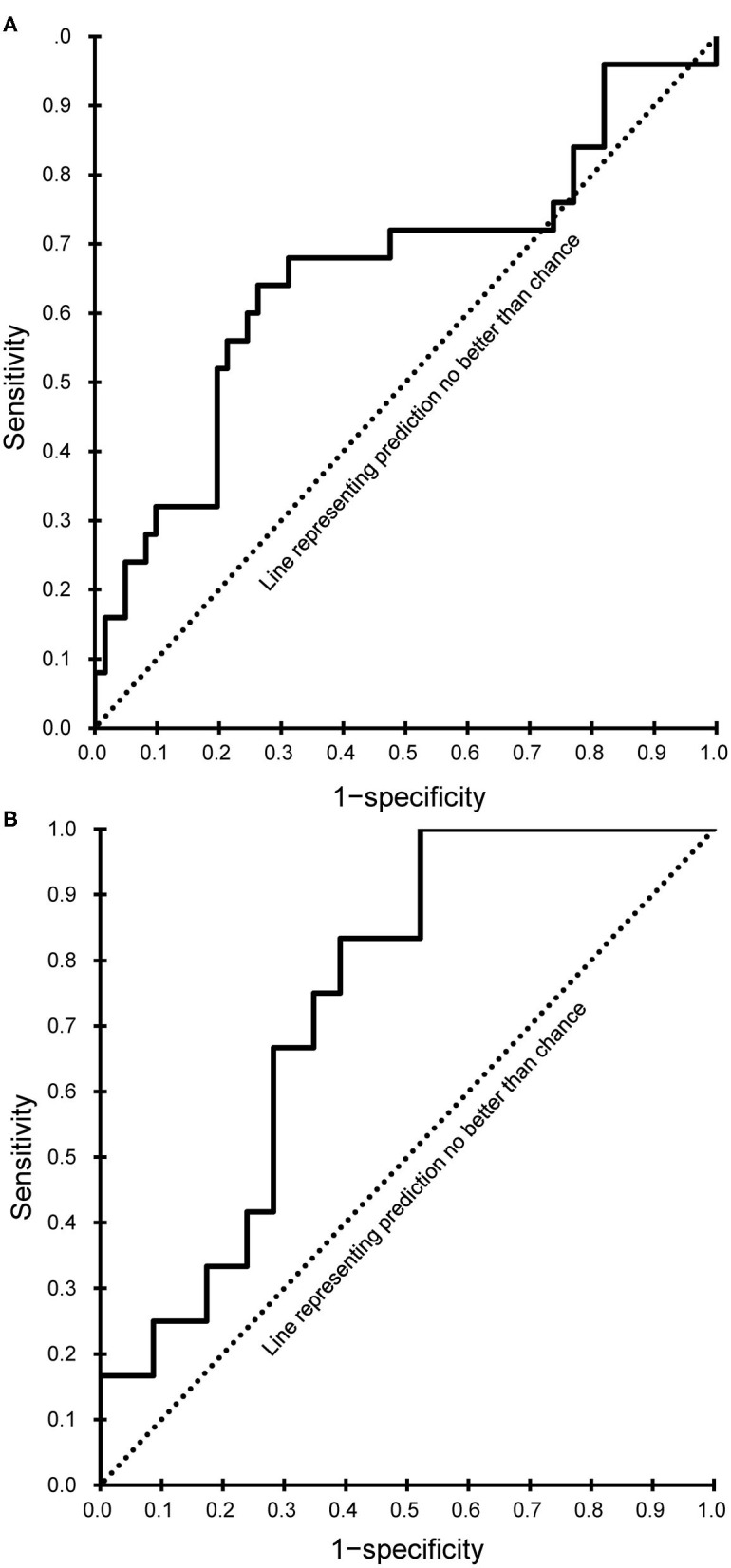
Prior studies examining predictors of favorable clinical outcomes after upper limb robot-assisted therapy (RT) have many shortcomings. Therefore, the aim of this study was to identify meaningful predictors and a prediction model for clinically significant motor improvement in upper limb impairment after RT for each stroke phase. This retrospective, single-center study enrolled patients with stroke who received RT using InMotion2 along with conventional therapy (CT) from January 2015 to September 2019. Demographic characteristics, clinical measures, and robotic kinematic measures were evaluated. The primary outcome measure was the Fugl-Meyer Assessment-Upper Extremity (FMA-UE) and we classified patients with improvement more than the minimal clinically important difference as responders for each stroke phase. Univariable and multivariable logistic regression analyses were performed to assess the relationship between potential predictors and RT responders and determine meaningful predictors. Subsequently, meaningful predictors were included in the final prediction model. One hundred forty-four patients were enrolled. The Hand Movement Scale and time since onset were significant predictors of clinically significant improvement in upper limb impairment ( = 0.045 and 0.043, respectively), as represented by the FMA-UE score after RT along with CT, in patients with subacute stroke. These variables were also meaningful predictors with borderline statistical significance in patients with chronic stroke ( = 0.076 and 0.066, respectively). Better hand movement and a shorter time since onset can be used as realistic predictors of clinically significant motor improvement in upper limb impairment after RT with InMotion2 alongside CT in patients with subacute and chronic stroke. This information may help healthcare professionals discern optimal patients for RT and accurately inform patients and caregivers about outcomes of RT.
先前关于上肢机器人辅助治疗(RT)后良好临床结局预测因素的研究存在诸多不足。因此,本研究的目的是为每个卒中阶段上肢功能障碍经RT治疗后临床上显著的运动改善确定有意义的预测因素和预测模型。这项回顾性单中心研究纳入了2015年1月至2019年9月期间接受InMotion2机器人辅助治疗及传统治疗(CT)的卒中患者。评估了患者的人口统计学特征、临床指标和机器人运动学指标。主要结局指标是Fugl-Meyer上肢评估量表(FMA-UE),我们将每个卒中阶段改善超过最小临床重要差异的患者分类为反应者。进行单变量和多变量逻辑回归分析,以评估潜在预测因素与RT反应者之间的关系,并确定有意义的预测因素。随后,将有意义的预测因素纳入最终预测模型。共纳入144例患者。对于亚急性卒中患者,手部运动量表和发病时间是上肢功能障碍临床显著改善的重要预测因素(分别为 = 0.045和0.043),以RT联合CT治疗后的FMA-UE评分表示。在慢性卒中患者中,这些变量也是具有临界统计学意义的有意义预测因素(分别为 = 0.076和0.066)。更好的手部运动和更短的发病时间可作为亚急性和慢性卒中患者在InMotion2机器人辅助治疗联合CT后上肢功能障碍临床显著运动改善的实际预测因素。这些信息可能有助于医疗保健专业人员识别适合RT治疗的最佳患者,并准确告知患者及其护理人员RT治疗的结果。