Zhang Qiang, Budde Klemens, Schmidt Danilo, Halleck Fabian, Duerr Michael, Naik Marcel G, Mayrdorfer Manuel, Duettmann Wiebke, Klauschen Frederick, Rudolph Birgit, Wu Kaiyin
Department of Nephrology and Medical Intensive Care, Charité-Universitätsmedizin Berlin, Berlin, Germany.
Department of Organ Transplant, The First Affiliated Hospital, Sun Yat-sen University, Guangzhou, China.
Front Med (Lausanne). 2021 Jul 2;8:666319. doi: 10.3389/fmed.2021.666319. eCollection 2021.
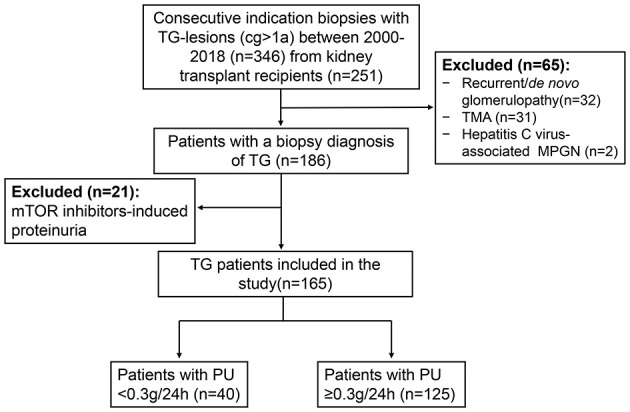
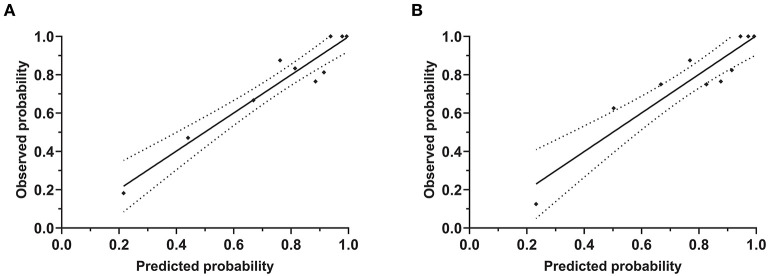
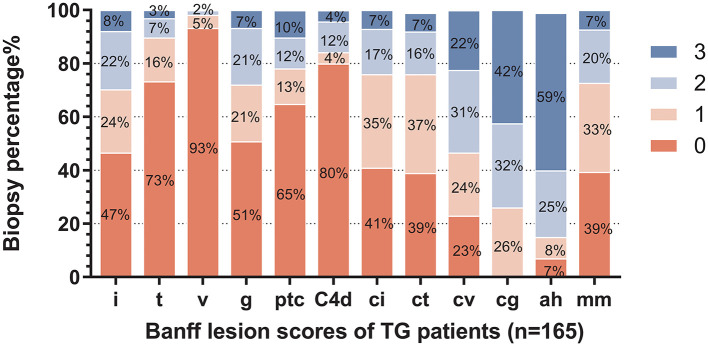
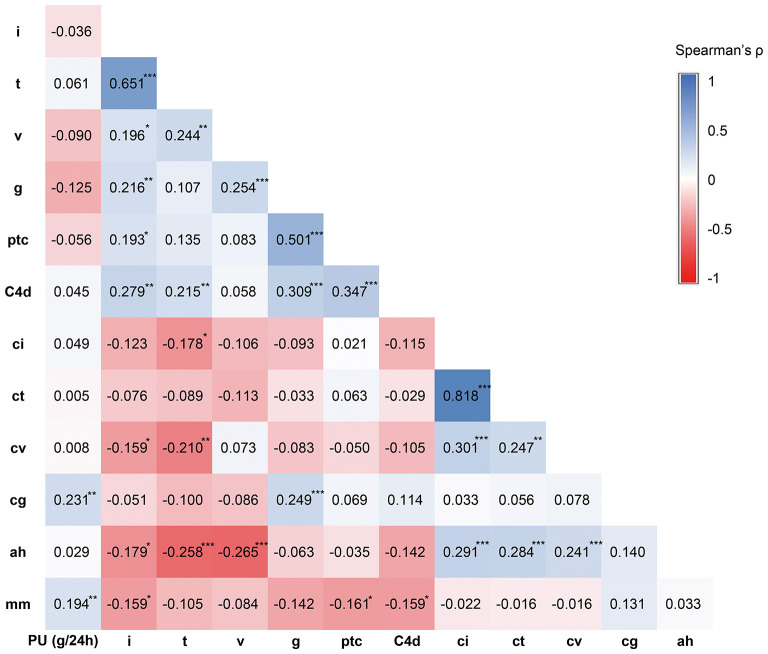
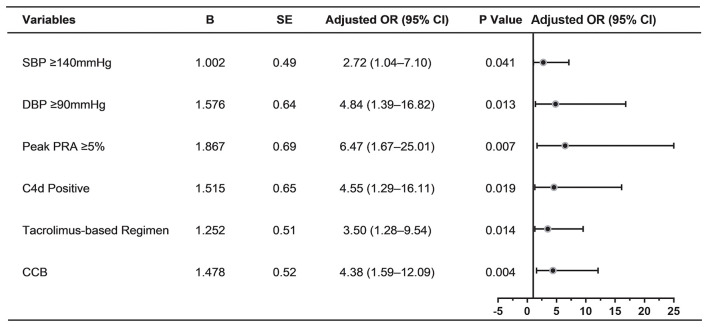
Transplant glomerulopathy (TG) is one of the main causes of post-transplant proteinuria (PU). The features and possible risk factors for proteinuria in TG patients are uncertain. We investigated all patients who had biopsy-proven TG from 2000 to 2018 in our center. The clinical and histological data were compared between two groups with or without PU (cut-off = 0.3 g/day). Spearman correlation analysis was used to evaluate the relationship between PU and pathological changes. The risk factors for PU in TG patients were determined by multivariable logistic regression analysis. One hundred and twenty-five (75.76%) of all enrolled 165 TG patients had proteinuria ≥0.3 g/day at the time of biopsy. TG patients' PU level was significantly correlated with Banff lesion score cg (ρ = 0.247, = 0.003), and mm (ρ = 0.257, = 0.012). Systolic blood pressure ≥140 mmHg (OR 2.72, 95% CI 1.04-7.10, = 0.041), diastolic blood pressure ≥90 mmHg (OR 4.84, 95% CI 1.39-16.82, = 0.013), peak PRA ≥5% (OR 6.47, 95% CI 1.67-25.01, = 0.007), positive C4d staining (OR 4.55, 95% CI 1.29-16.11, 0.019), tacrolimus-based regimen (OR 3.5, 95% CI 1.28-9.54, = 0.014), and calcium channel blocker usage (OR 4.38, 95% CI 1.59-12.09, = 0.004) were independent risk factors for PU. Proteinuria is common in TG patients. systolic blood pressure ≥140 mmHg, diastolic blood pressure ≥90 mmHg, peak PRA ≥5%, positive C4d staining, tacrolimus-based regimen, and calcium channel blocker usage are associated with proteinuria in TG patients.
移植肾小球病(TG)是移植后蛋白尿(PU)的主要原因之一。TG患者蛋白尿的特征和可能的危险因素尚不确定。我们对2000年至2018年在本中心经活检证实为TG的所有患者进行了调查。比较了有或无PU(临界值=0.3g/天)的两组患者的临床和组织学数据。采用Spearman相关性分析评估PU与病理变化之间的关系。通过多变量逻辑回归分析确定TG患者PU的危险因素。在所有纳入的165例TG患者中,125例(75.76%)在活检时蛋白尿≥0.3g/天。TG患者的PU水平与Banff病变评分cg(ρ=0.247,P=0.003)和mm(ρ=0.257,P=0.012)显著相关。收缩压≥140mmHg(OR 2.72,95%CI 1.04 - 7.10,P=0.041)、舒张压≥90mmHg(OR 4.84,95%CI 1.39 - 16.82,P=0.013)、峰值PRA≥5%(OR 6.47,95%CI 1.67 - 25.01,P=0.007)、C4d染色阳性(OR 4.55,95%CI 1.29 - 16.11,P=0.019)、基于他克莫司的治疗方案(OR 3.5,95%CI 1.28 - 9.54,P=0.014)和使用钙通道阻滞剂(OR 4.38,95%CI 1.59 - 12.09,P=0.004)是PU的独立危险因素。蛋白尿在TG患者中很常见。收缩压≥140mmHg、舒张压≥90mmHg、峰值PRA≥5%、C4d染色阳性、基于他克莫司的治疗方案和使用钙通道阻滞剂与TG患者的蛋白尿有关。