Department of Oncology, Jinan Central Hospital, Cheeloo College of Medicine, Shandong University, Jinan, P.R. China.
Graduate School, Shandong First Medical University and Academy of Medical Sciences, Jinan, P.R. China.
Biosci Rep. 2021 Aug 27;41(8). doi: 10.1042/BSR20210866.
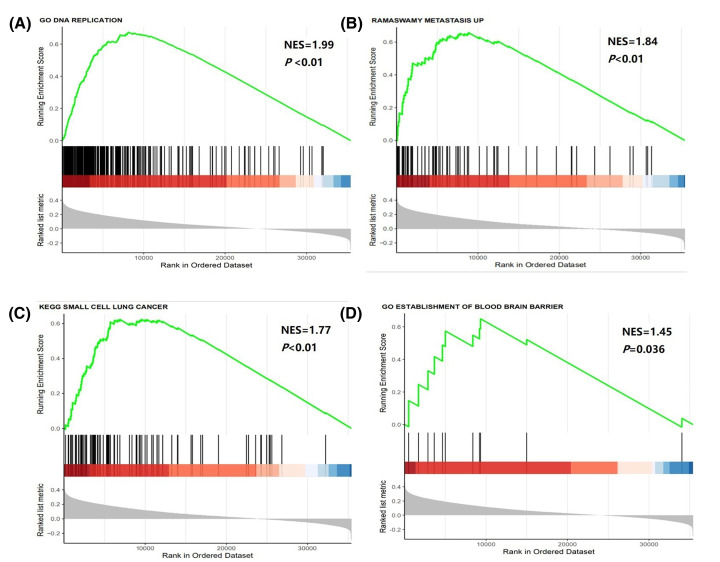
Increased serum neuron-specific enolase (NSE) level was found in a substantial proportion (30-69%) of patients with non-small-cell lung cancer (NSCLC), but little was known about the clinical properties of NSE in NSCLC.
We aimed to assess the level of serum NSE to predict prognosis and treatment response in patients with advanced or metastatic non-neuroendocrine NSCLC.
We retrospectively analyzed 363 patients with advanced and metastatic NSCLC between January 2011 and October 2016. The serum NSE level was measured before initiation of treatment.
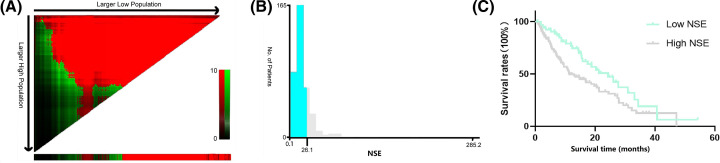
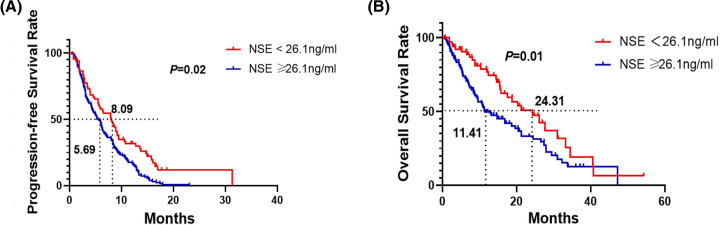
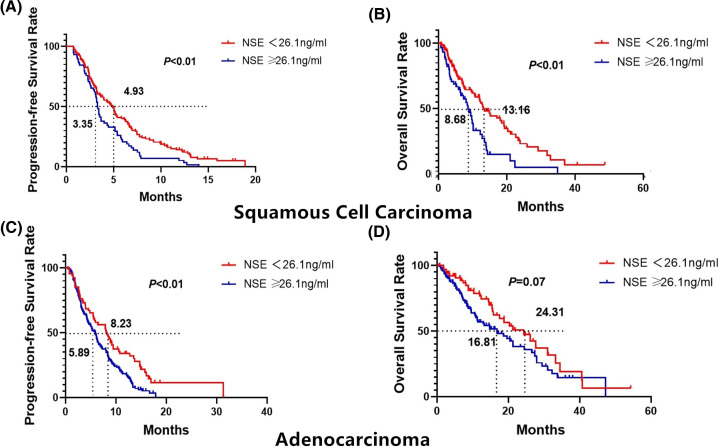
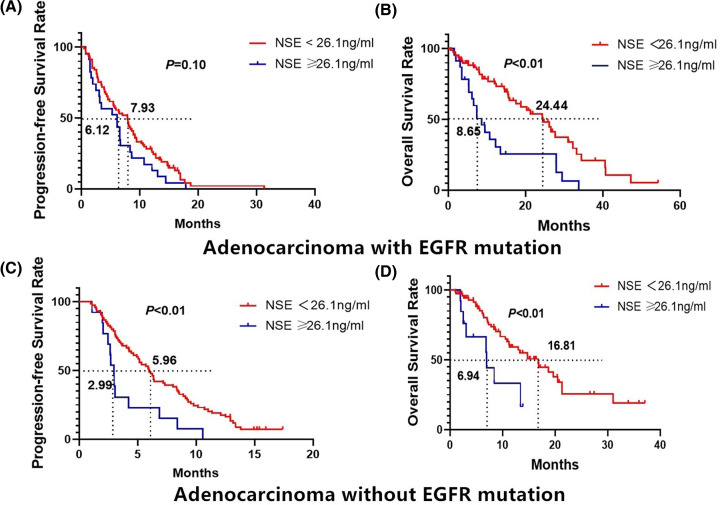
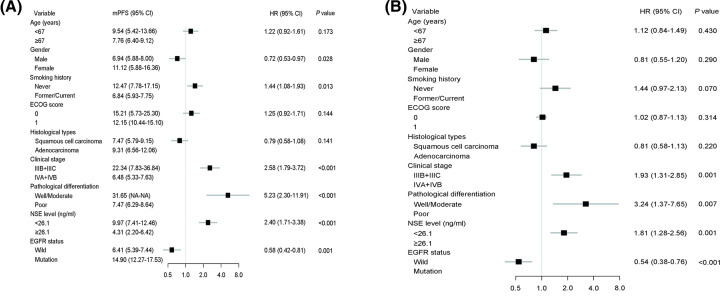
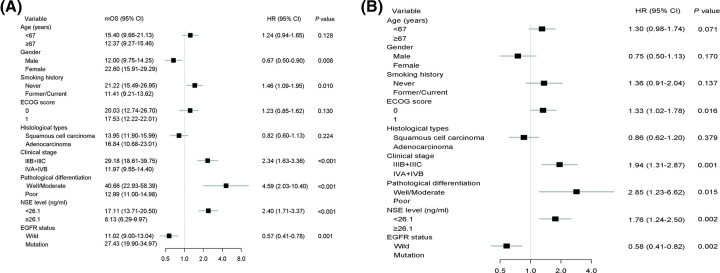
Patients with high NSE level (≥26.1 ng/ml) showed significantly shorter progression-free survival (PFS) (5.69 vs 8.09 months; P=0.02) and significantly shorter overall survival (OS) than patients with low NSE level (11.41 vs 24.31 months; P=0.01). NSE level was an independent prognostic factor for short PFS (univariate analysis, hazard ratio [HR] = 2.40 (1.71-3.38), P<0.001; multivariate analysis, [HR] = 1.81 (1.28-2.56), P=0.001) and OS (univariate analysis, [HR] = 2.40 (1.71-3.37), P<0.001; multivariate analysis, [HR] = 1.76 (1.24-2.50), P=0.002).
The survival of NSCLC patients with high serum NSE level was shorter than that of NSCLC patients with low serum NSE levels. Serum NSE level was a predictor of treatment response and an independent prognostic factor.
在相当一部分(30-69%)非小细胞肺癌(NSCLC)患者中发现血清神经元特异性烯醇化酶(NSE)水平升高,但对于 NSCLC 中 NSE 的临床特征知之甚少。
我们旨在评估血清 NSE 水平,以预测晚期或转移性非神经内分泌 NSCLC 患者的预后和治疗反应。
我们回顾性分析了 2011 年 1 月至 2016 年 10 月期间 363 例晚期和转移性 NSCLC 患者。在开始治疗前测量血清 NSE 水平。
高 NSE 水平(≥26.1ng/ml)患者的无进展生存期(PFS)(5.69 个月比 8.09 个月;P=0.02)和总生存期(OS)(11.41 个月比 24.31 个月;P=0.01)明显短于低 NSE 水平患者。NSE 水平是 PFS (单因素分析,HR=2.40(1.71-3.38),P<0.001;多因素分析,HR=1.81(1.28-2.56),P=0.001)和 OS (单因素分析,HR=2.40(1.71-3.37),P<0.001;多因素分析,HR=1.76(1.24-2.50),P=0.002)的独立预后因素。
高血清 NSE 水平的 NSCLC 患者的生存时间短于低血清 NSE 水平的 NSCLC 患者。血清 NSE 水平是治疗反应的预测指标,也是独立的预后因素。