Vesperini Doriane, Montalvo Galia, Qu Bin, Lautenschläger Franziska
Department of Experimental Physics, Saarland University, 66123 Saarbrücken, Germany.
Center for Biophysics, Saarland University, 66123 Saarbrücken, Germany.
Biophys Rev. 2021 Feb 11;13(2):185-202. doi: 10.1007/s12551-021-00787-9. eCollection 2021 Apr.
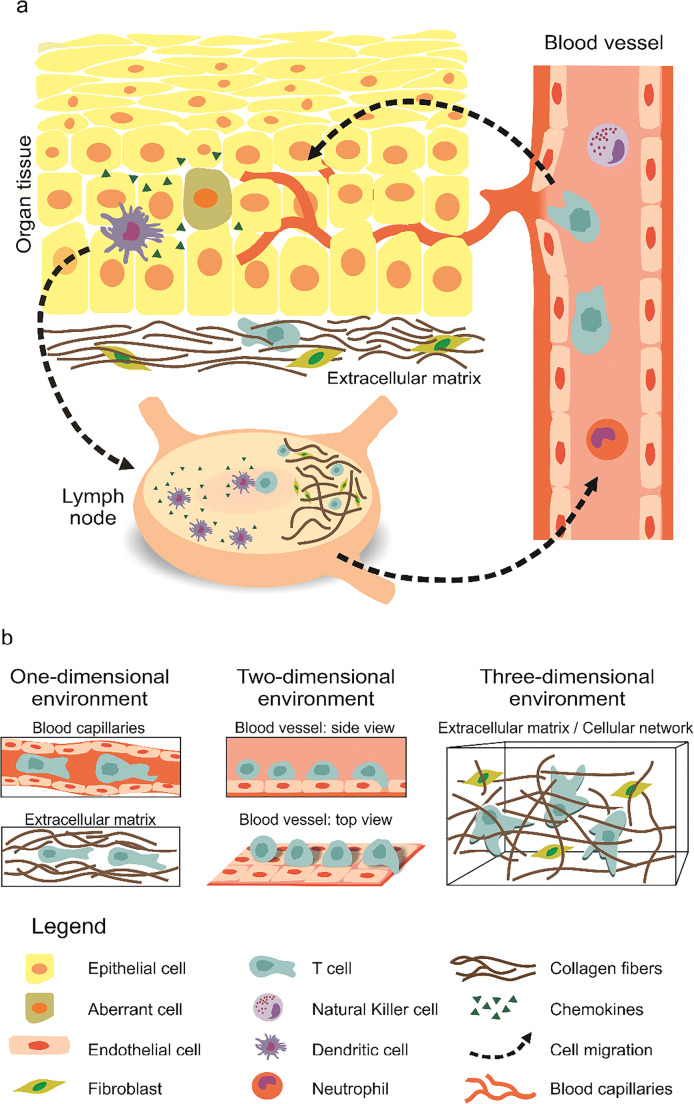
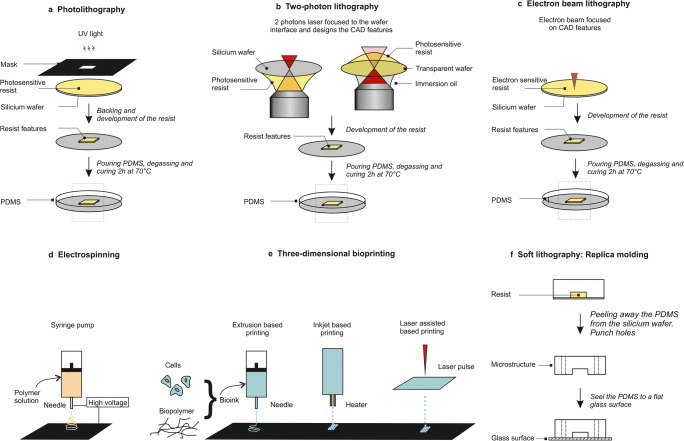
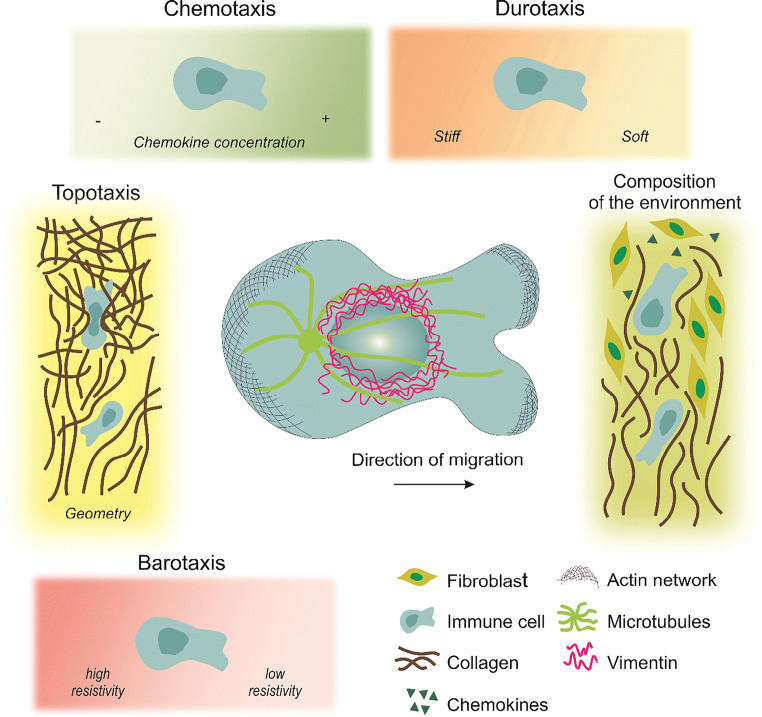
The immune system provides our defense against pathogens and aberrant cells, including tumorigenic and infected cells. Motility is one of the fundamental characteristics that enable immune cells to find invading pathogens, control tissue damage, and eliminate primary developing tumors, even in the absence of external treatments. These processes are termed "immune surveillance." Migration disorders of immune cells are related to autoimmune diseases, chronic inflammation, and tumor evasion. It is therefore essential to characterize immune cell motility in different physiologically and pathologically relevant scenarios to understand the regulatory mechanisms of functionality of immune responses. This review is focused on immune cell migration, to define the underlying mechanisms and the corresponding investigative approaches. We highlight the challenges that immune cells encounter in vivo, and the microfabrication methods to mimic particular aspects of their microenvironment. We discuss the advantages and disadvantages of the proposed tools, and provide information on how to access them. Furthermore, we summarize the directional cues that regulate individual immune cell migration, and discuss the behavior of immune cells in a complex environment composed of multiple directional cues.
免疫系统为我们抵御病原体和异常细胞,包括致瘤细胞和受感染细胞。运动性是免疫细胞的基本特征之一,即使在没有外部治疗的情况下,也能使免疫细胞找到入侵的病原体、控制组织损伤并消除原发性肿瘤。这些过程被称为“免疫监视”。免疫细胞的迁移紊乱与自身免疫性疾病、慢性炎症和肿瘤逃逸有关。因此,在不同的生理和病理相关情况下表征免疫细胞的运动性对于理解免疫反应功能的调节机制至关重要。本综述聚焦于免疫细胞迁移,以确定其潜在机制和相应的研究方法。我们强调了免疫细胞在体内遇到的挑战,以及模拟其微环境特定方面的微制造方法。我们讨论了所提出工具的优缺点,并提供了如何获取这些工具的信息。此外,我们总结了调节单个免疫细胞迁移的定向线索,并讨论了免疫细胞在由多个定向线索组成的复杂环境中的行为。