Institute of Legal Medicine, University Medical Center Hamburg-Eppendorf, Hamburg, Germany.
Institute of Macroscopic and Clinical Anatomy, University of Graz, Graz, Austria.
Int J Legal Med. 2021 Nov;135(6):2363-2383. doi: 10.1007/s00414-021-02661-5. Epub 2021 Jul 22.
Conventional autopsies remain the gold standard of postmortem healthcare quality assurance and help gathering extended knowledge on diseases. In answer to constantly declining autopsy rates non- or minimally invasive autopsy methods were introduced. Ultrasound is a well-established tool for imaging commonly used in clinical practice. This narrative review aims to summarize the current literature regarding the feasibility and validity of ultrasound in a forensic context.
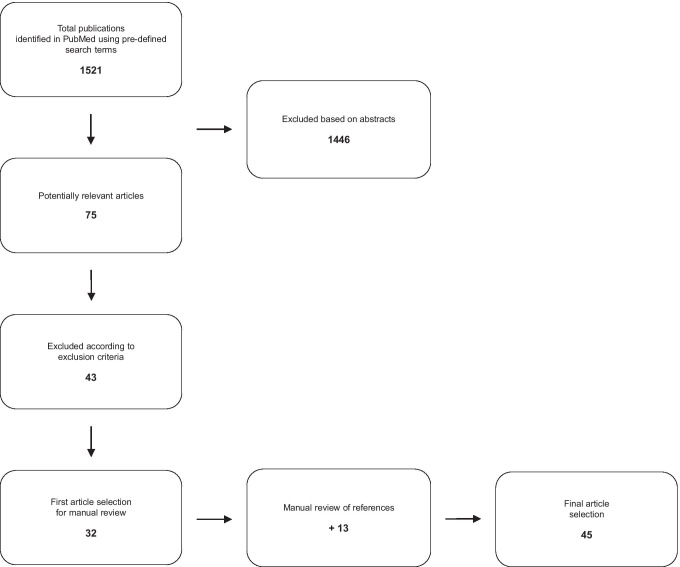
A PubMed database search was carried out. Abstracts were scanned for pre-defined ex- and inclusion criteria, followed by a snowball search procedure applied to the primarily included articles.
Forty-five publications met our inclusion criteria. The selected articles concern the feasibility of ultrasound in pre- or postmortem settings, forensic age estimation, and minimally invasive approaches. For imaging, ultrasound was deemed a reliable tool for the examination of epiphyses und superficial wounds, with limitations regarding internal organs and image quality due to postmortem changes. Ultrasound-guided minimally invasive approaches yielded higher success rates for adequate tissue sampling. Many investigations were carried out in low- and middle-income countries focusing on infectious diseases.
Ultrasound seems a promising but underutilized imaging tool in legal medicine to date. Promising approaches on its feasibility have been conducted. Especially for minimally invasive methods, ultrasound offered significant improvements on qualified biopsy sampling and thus appropriate diagnostics. Moreover, ultrasonic evaluation of epiphyses for age estimation offered valuable results. Nevertheless, further assessment of ultrasonic feasibility in forensic contexts is needed.
传统尸检仍然是医疗保健质量保证的金标准,有助于获得更多关于疾病的知识。为了应对尸检率不断下降的问题,引入了非侵入性或微创尸检方法。超声是一种在临床实践中广泛应用的成像工具。本综述旨在总结目前关于超声在法医学背景下的可行性和有效性的文献。
进行了 PubMed 数据库检索。扫描摘要以确定预定义的排除和纳入标准,然后对主要纳入的文章进行滚雪球搜索程序。
符合纳入标准的有 45 篇文献。所选文章涉及超声在生前或死后环境中的可行性、法医年龄估计和微创方法。对于成像,超声被认为是检查骺和浅表伤口的可靠工具,但由于死后变化,内部器官和图像质量存在限制。超声引导的微创方法可提高适当组织取样的成功率。许多调查都是在中低收入国家进行的,主要关注传染病。
到目前为止,超声似乎是法医学中一种有前途但未得到充分利用的成像工具。已经进行了关于其可行性的有前途的研究。特别是对于微创方法,超声在合格的活检取样和适当的诊断方面提供了显著的改进。此外,超声评估骺对年龄估计也提供了有价值的结果。然而,需要进一步评估超声在法医背景下的可行性。