Agnello Lisa, Tortorella Silvia, d'Argenio Annachiara, Carbone Clarissa, Camorani Simona, Locatelli Erica, Auletta Luigi, Sorrentino Domenico, Fedele Monica, Zannetti Antonella, Franchini Mauro Comes, Cerchia Laura
Institute of Experimental Endocrinology and Oncology "Gaetano Salvatore", CNR, Via S. Pansini 5, 80131, Naples, Italy.
University of Campania "L.Vanvitelli" Department of Precision Medicine, S. Andrea delle Dame - Via L. De Crecchio, 7 - 80138, Naples, Italy.
J Exp Clin Cancer Res. 2021 Jul 22;40(1):239. doi: 10.1186/s13046-021-02039-w.
Management of triple-negative breast cancer (TNBC) is still challenging because of its aggressive clinical behavior and limited targeted treatment options. Cisplatin represents a promising chemotherapeutic compound in neoadjuvant approaches and in the metastatic setting, but its use is limited by scarce bioavailability, severe systemic side effects and drug resistance. Novel site-directed aptamer-based nanotherapeutics have the potential to overcome obstacles of chemotherapy. In this study we investigated the tumor targeting and the anti-tumorigenic effectiveness of novel cisplatin-loaded and aptamer-decorated nanosystems in TNBC.
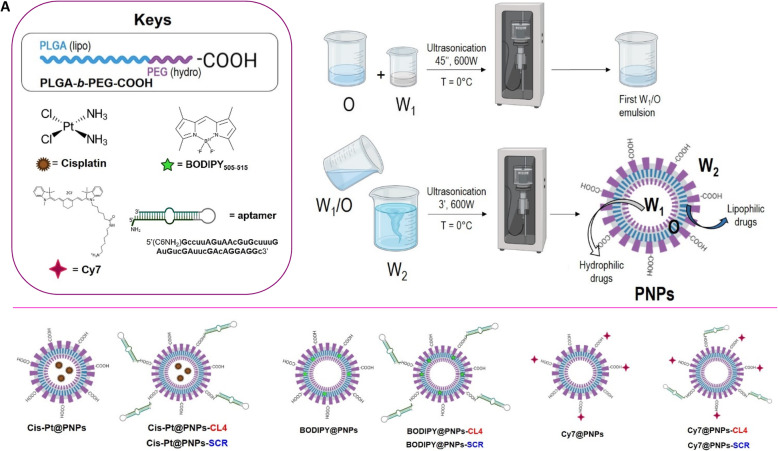
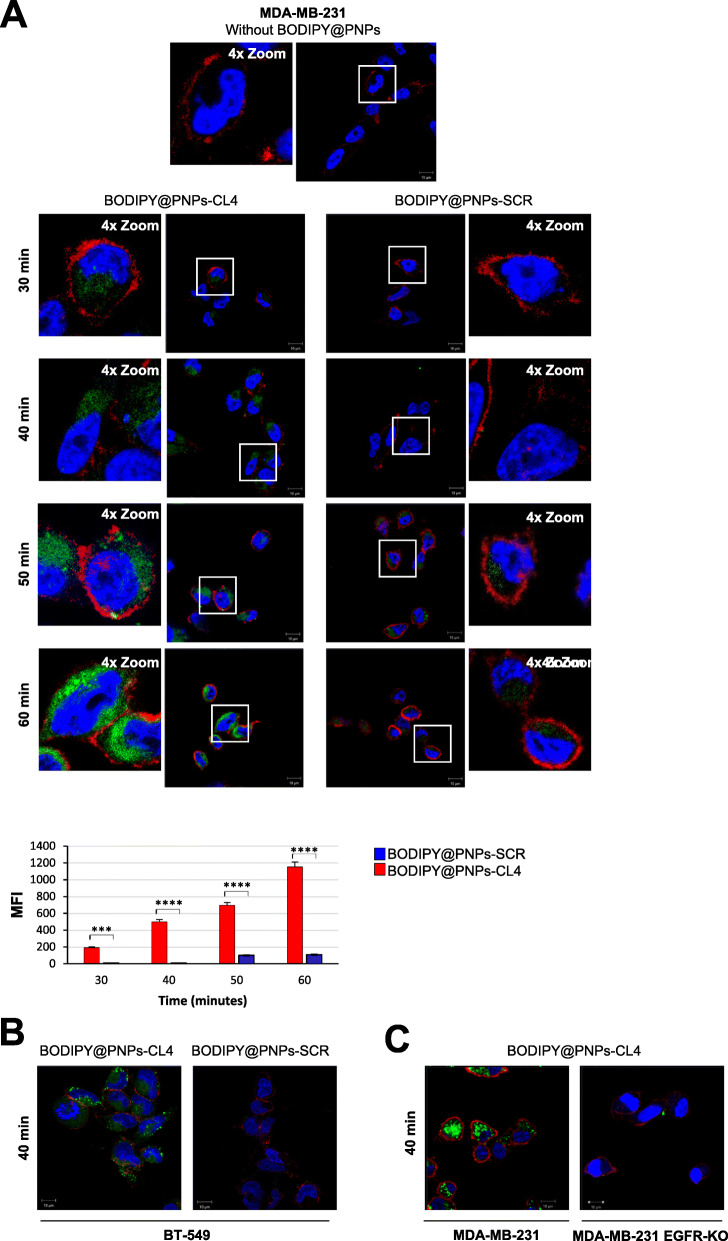
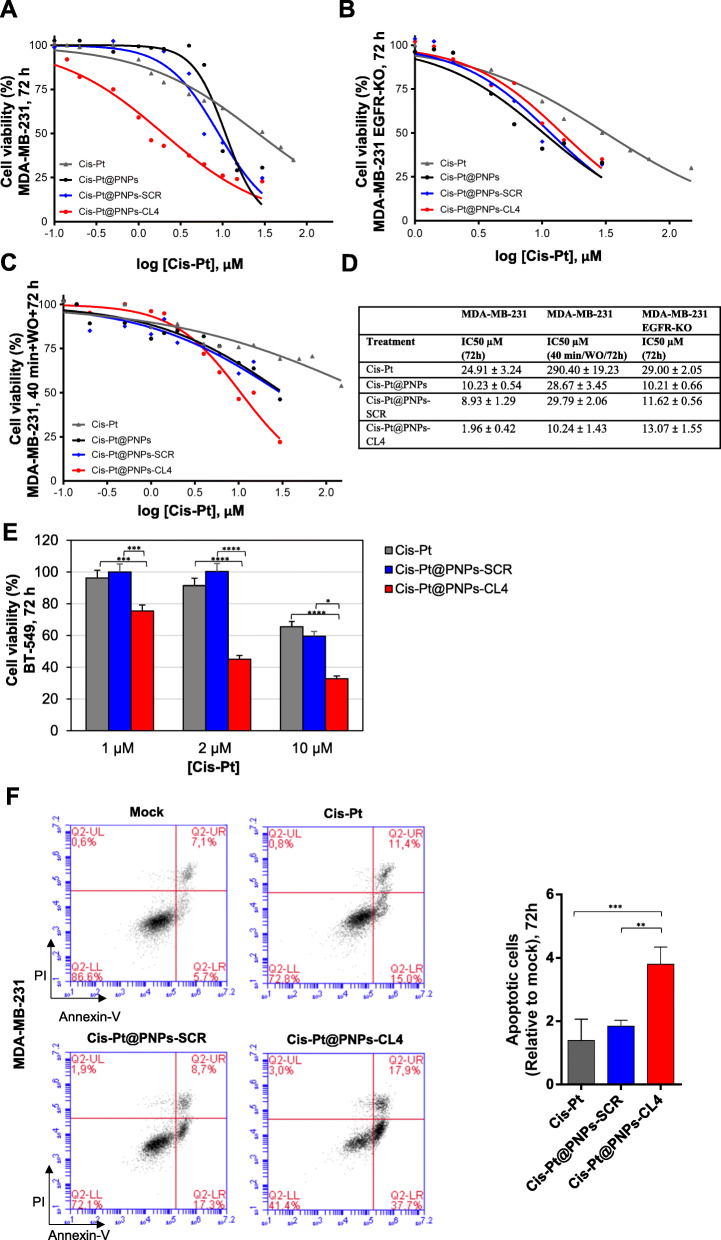
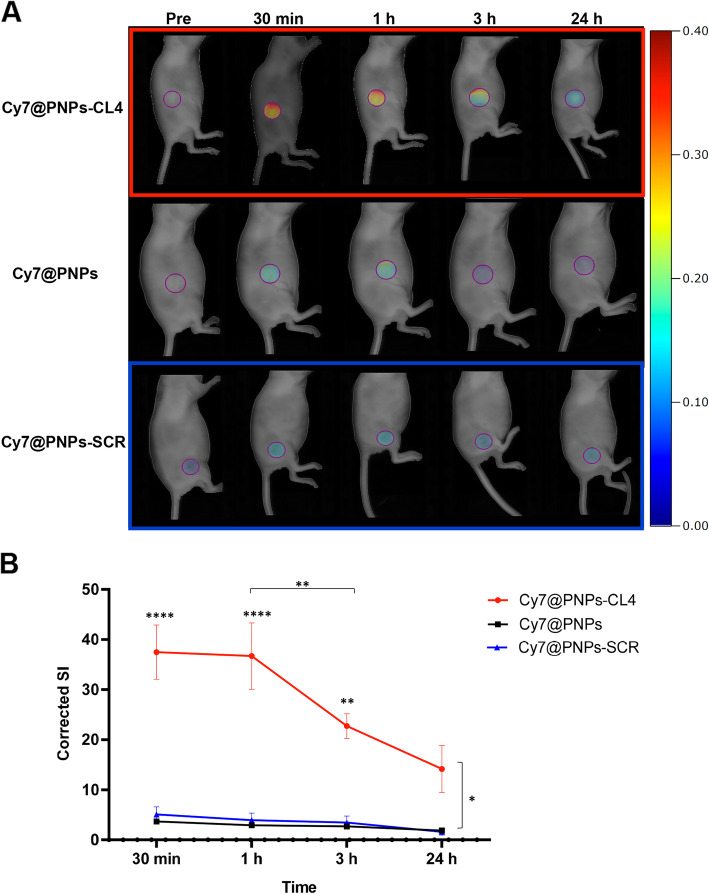
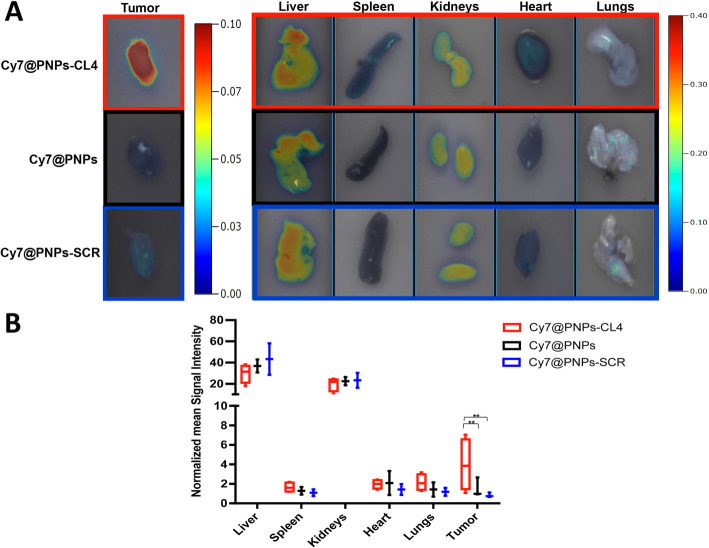
Nanotechnological procedures were applied to entrap cisplatin at high efficacy into polymeric nanoparticles (PNPs) that were conjugated on their surface with the epidermal growth factor receptor (EGFR) selective and cell-internalizing CL4 aptamer to improve targeted therapy. Internalization into TNBC MDA-MB-231 and BT-549 cells of aptamer-decorated PNPs, loaded with BODIPY505-515, was monitored by confocal microscopy using EGFR-depleted cells as negative control. Tumor targeting and biodistribution was evaluated by fluorescence reflectance imaging upon intravenously injection of Cyanine7-labeled nanovectors in nude mice bearing subcutaneous MDA-MB-231 tumors. Cytotoxicity of cisplatin-loaded PNPs toward TNBC cells was evaluated by MTT assay and the antitumor effect was assessed by tumor growth experiments in vivo and ex vivo analyses.
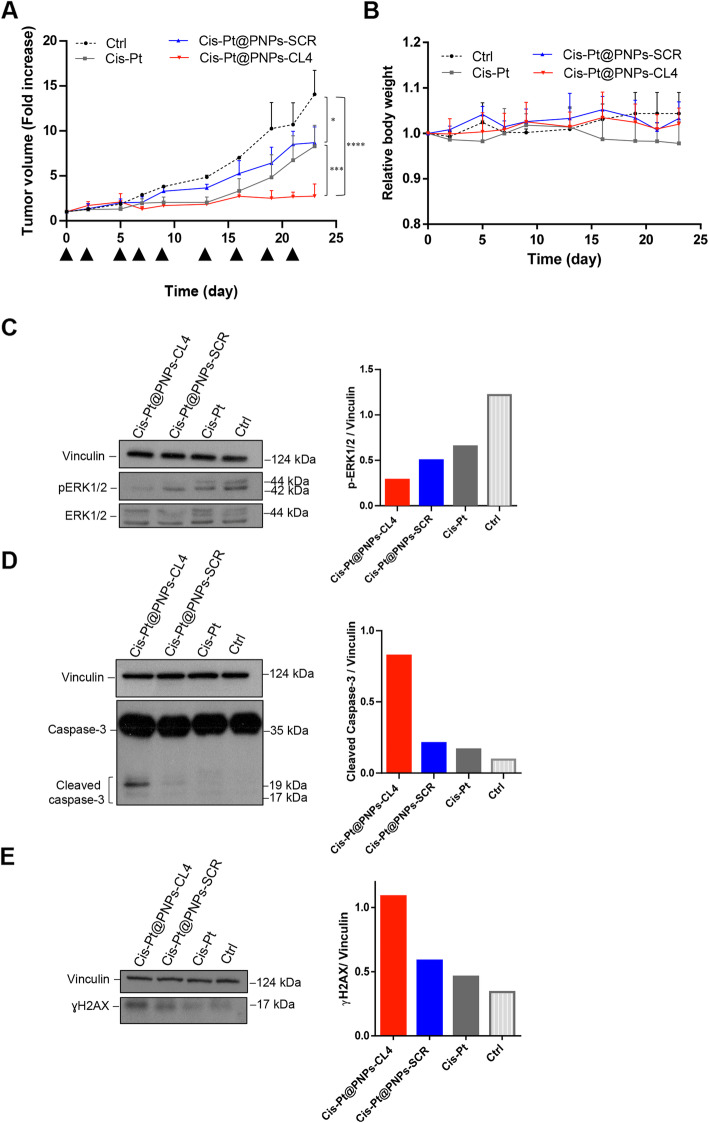
We demonstrate specific, high and rapid uptake into EGFR-positive TNBC cells of CL4-conjugated fluorescent PNPs which, when loaded with cisplatin, resulted considerably more cytotoxic than the free drug and nanovectors either unconjugated or conjugated with a scrambled aptamer. Importantly, animal studies showed that the CL4-equipped PNPs achieve significantly higher tumor targeting efficiency and enhanced therapeutic effects, without any signs of systemic toxicity, compared with free cisplatin and untargeted PNPs.
Our study proposes novel and safe drug-loaded targeted nanosystems for EGFR-positive TNBC with excellent potential for the application in cancer diagnosis and therapy.
三阴性乳腺癌(TNBC)的治疗仍然具有挑战性,因为其临床行为具有侵袭性且靶向治疗选择有限。顺铂在新辅助治疗和转移性治疗中是一种有前景的化疗药物,但其应用受到生物利用度低、严重的全身副作用和耐药性的限制。新型基于位点定向适配体的纳米疗法有潜力克服化疗的障碍。在本研究中,我们调查了新型载顺铂且用适配体修饰的纳米系统在TNBC中的肿瘤靶向性和抗肿瘤有效性。
应用纳米技术程序将顺铂高效包封于聚合物纳米颗粒(PNPs)中,这些纳米颗粒在其表面与表皮生长因子受体(EGFR)选择性且可内化细胞的CL4适配体偶联,以改善靶向治疗。通过共聚焦显微镜监测用BODIPY505 - 515负载的、用适配体修饰的PNPs内化到TNBC MDA - MB - 231和BT - 549细胞中的情况,使用EGFR缺失的细胞作为阴性对照。通过在携带皮下MDA - MB - 231肿瘤的裸鼠中静脉注射花菁7标记的纳米载体后进行荧光反射成像来评估肿瘤靶向性和生物分布。通过MTT法评估载顺铂的PNPs对TNBC细胞的细胞毒性,并通过体内肿瘤生长实验和体外分析评估抗肿瘤效果。
我们证明了CL4偶联的荧光PNPs能特异性、高效且快速地被EGFR阳性的TNBC细胞摄取,当载有顺铂时,其细胞毒性比游离药物以及未偶联或与乱序适配体偶联的纳米载体显著更高。重要的是,动物研究表明,与游离顺铂和非靶向PNPs相比,配备CL4的PNPs实现了显著更高 的肿瘤靶向效率和增强的治疗效果,且没有任何全身毒性迹象。
我们的研究提出了用于EGFR阳性TNBC的新型且安全的载药靶向纳米系统,在癌症诊断和治疗中具有优异的应用潜力。