Centre for Rheumatology, Division of Medicine and Division of Infection and Immunity and Transplantation, University College London, London WC1E 6JF, UK.
Evergrande Center for Immunologic Diseases, Harvard Medical School, Boston, MA 02115, USA.
Med. 2021 Jul 9;2(7):864-883.e9. doi: 10.1016/j.medj.2021.04.013.
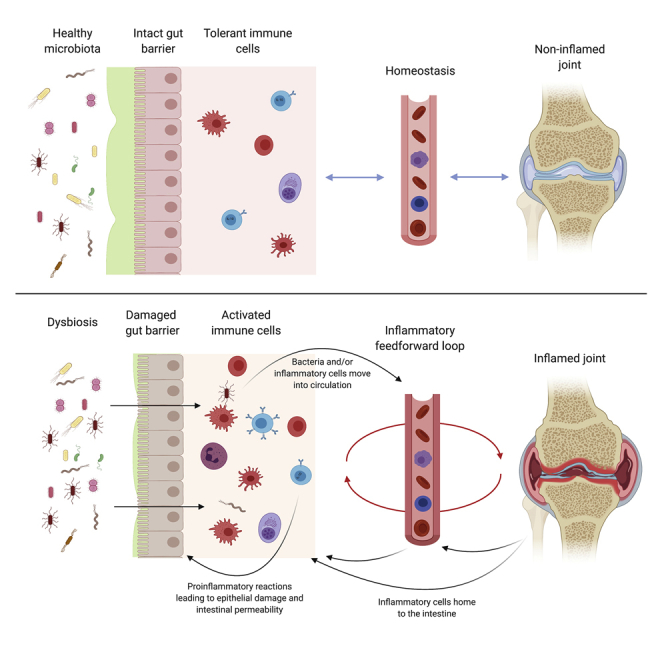
Evidence suggests an important role for gut-microbiota dysbiosis in the development of rheumatoid arthritis (RA). The link between changes in gut bacteria and the development of joint inflammation is missing. Here, we address whether there are changes to the gut environment and how they contribute to arthritis pathogenesis.
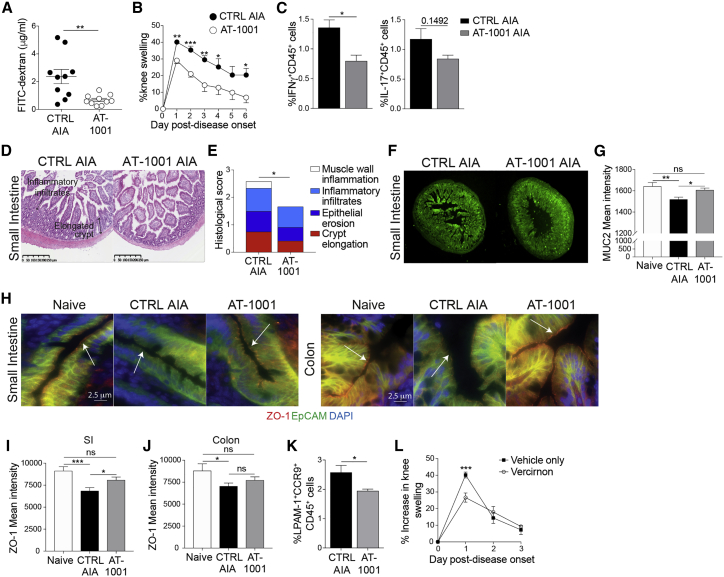
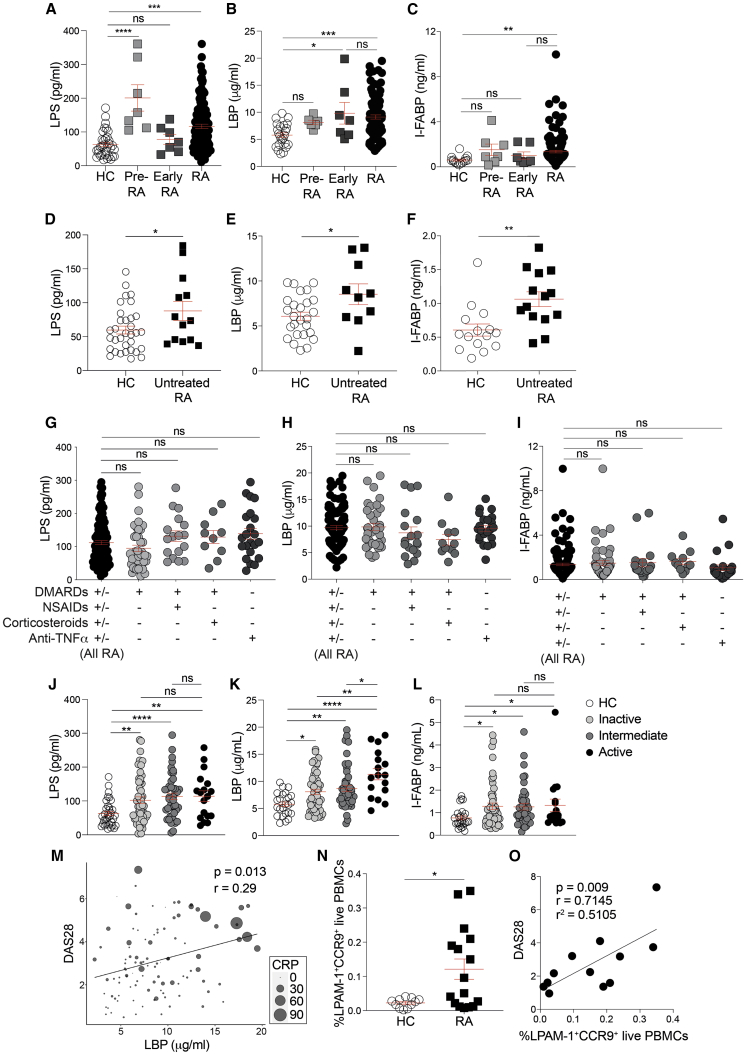
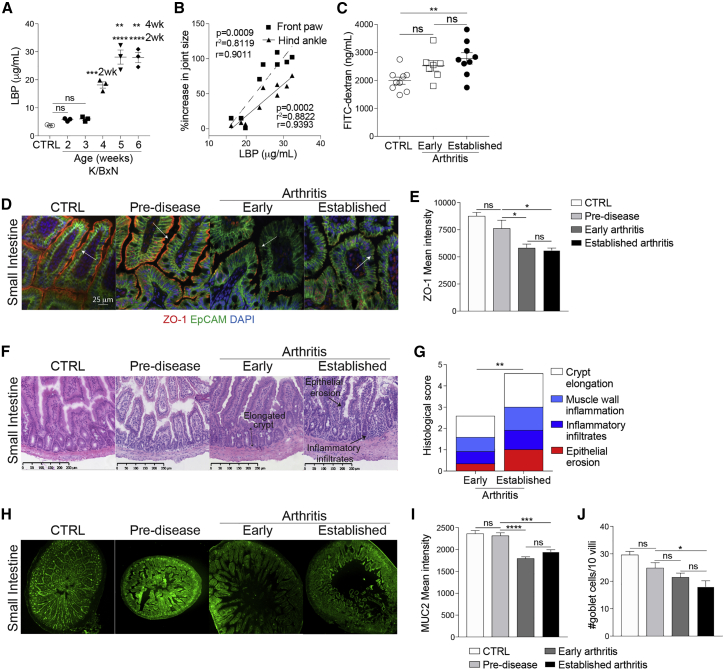
We analyzed changes in markers of gut permeability, damage, and inflammation in peripheral blood and serum of RA patients. Serum, intestines, and lymphoid organs isolated from K/BxN mice with spontaneous arthritis or from wild-type, genetically modified interleukin (IL)-10R
RA patients display increased levels of serum markers of gut permeability and
We suggest that breakdown of gut-barrier integrity contributes to arthritis development and propose restoration of gut-barrier homeostasis as a new therapeutic approach for RA.
Funded by Versus Arthritis (21140 and 21257) and UKRI/MRC (MR/T000910/1).
有证据表明,肠道微生物失调在类风湿关节炎(RA)的发展中起着重要作用。肠道细菌变化与关节炎症发展之间的联系尚不清楚。在这里,我们研究了肠道环境是否发生了变化,以及这些变化如何导致关节炎发病机制。
我们分析了 RA 患者外周血和血清中肠道通透性、损伤和炎症的标志物变化。从自发性关节炎的 K/BxN 小鼠或野生型、基因改造的白细胞介素(IL)-10R 缺乏型小鼠中分离血清、肠道和淋巴器官。
RA 患者血清中肠道通透性和损伤的标志物水平升高,而抗炎细胞因子 IL-10 水平降低。
我们认为肠道屏障完整性的破坏导致关节炎的发展,并提出恢复肠道屏障稳态作为治疗 RA 的新方法。
由抗关节炎协会(21140 和 21257)和英国研究与创新署/医学研究委员会(MR/T000910/1)资助。