Department of Nephrology, Renji Hospital, School of Medicine, Shanghai Jiao Tong University, Shanghai 200127, P.R. China.
Mol Med Rep. 2021 Sep;24(3). doi: 10.3892/mmr.2021.12305. Epub 2021 Jul 23.
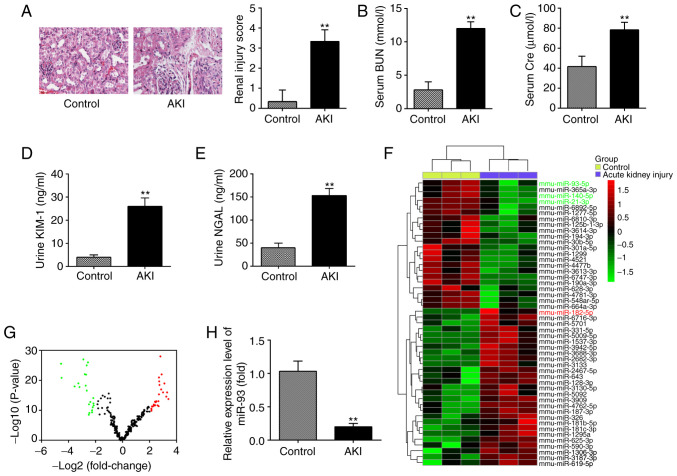
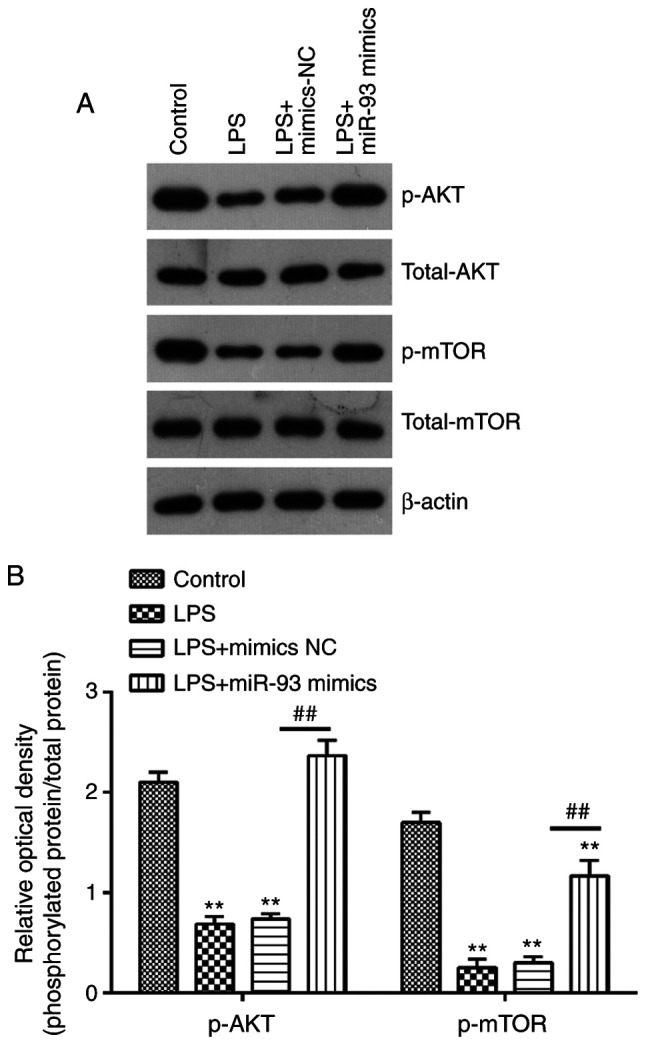
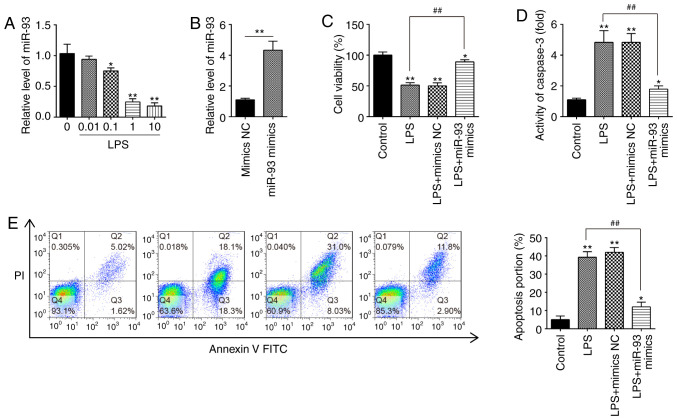
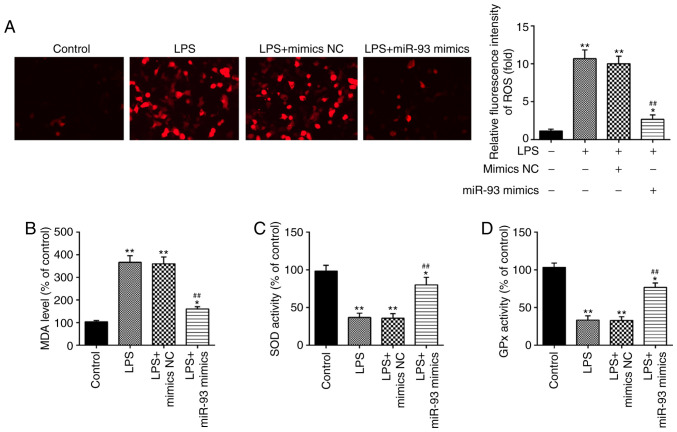
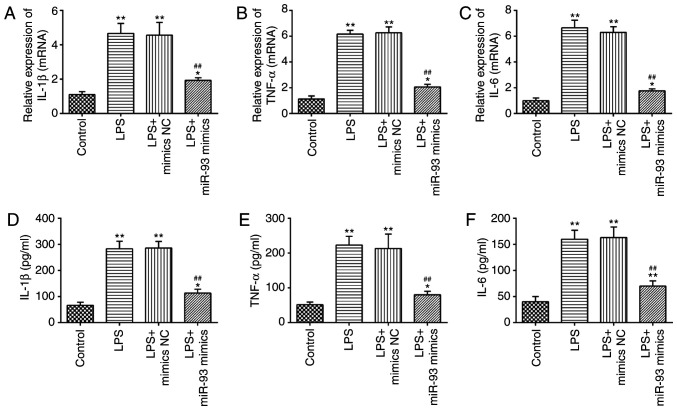
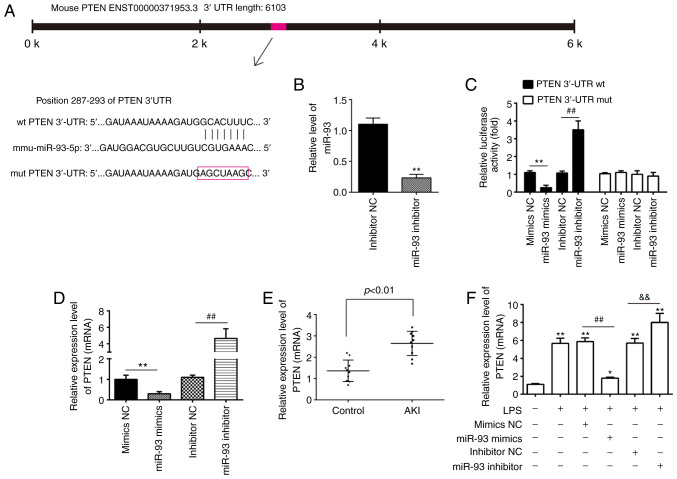
Renal tubular epithelial cell injury is the main cause of septic acute kidney injury (AKI), which is characterized by the excessive inflammatory response and apoptosis. Numerous studies have demonstrated that miRNAs are associated with inflammatory response and apoptosis in numerous diseases. The present study mainly focuses on investigating the association between microRNA (miRNA/miR) expression and inflammatory response and apoptosis in the pathogenesis of AKI. and models of AKI were simulated using lipopolysaccharide (LPS)‑administrated kidney epithelial cells and mice, respectively. The miRNA expression profile was examined using miRNA microarray in kidney tissues. Next, the effects of miR‑93 upregulation on the apoptosis, cytokine expression and oxidative stress in the LPS‑stimulated TCMK‑1 were tested. The target genes of this miRNA were investigated, and the regulatory association between miR‑93 and the AKT/mTOR pathway was investigated. The results demonstrated that miR‑93 was the most downregulated miRNA in mice kidney. Furthermore, in LPS‑induced renal tubular epithelial cells (TECs) injury model, that upregulation of miR‑93 was found to attenuate the apoptosis and inflammatory response, as well as reactive oxygen species generation. Mechanistically, phosphatase and tensin homolog deleted on chromosome 10 (PTEN) was identified as a target of miR‑93. Further experiments revealed that LPS‑induced the decrease of phosphorylated (p)‑AKT and p‑mTOR protein expression are reversed by the overexpression of miR‑93. The results of the present study suggested that the protective effect of miR‑93 on AKI may be associated with the activation of PTEN/AKT/mTOR pathway. miR‑93 may serve as a potential therapeutic target in sepsis‑induced AKI.
肾小管上皮细胞损伤是导致脓毒症急性肾损伤 (AKI) 的主要原因,其特征为过度炎症反应和细胞凋亡。大量研究表明,miRNA 与多种疾病的炎症反应和细胞凋亡有关。本研究主要探讨了 miRNA 表达与 AKI 发病机制中炎症反应和细胞凋亡的关系。分别采用脂多糖 (LPS) 处理的肾小管上皮细胞和小鼠模拟 AKI 模型。采用 miRNA 微阵列检测肾脏组织中的 miRNA 表达谱。接下来,检测 miR-93 上调对 LPS 刺激的 TCMK-1 细胞凋亡、细胞因子表达和氧化应激的影响。研究该 miRNA 的靶基因,并探讨 miR-93 与 AKT/mTOR 通路的调控关系。结果表明,miR-93 是小鼠肾脏中下调最明显的 miRNA。此外,在 LPS 诱导的肾小管上皮细胞 (TEC) 损伤模型中,发现上调 miR-93 可减轻细胞凋亡和炎症反应,并减少活性氧的产生。机制上,发现第 10 号染色体缺失的磷酸酶和张力蛋白同源物 (PTEN) 是 miR-93 的靶基因。进一步的实验表明,LPS 诱导的磷酸化 (p)-AKT 和 p-mTOR 蛋白表达的减少可被 miR-93 的过表达逆转。本研究结果表明,miR-93 对 AKI 的保护作用可能与激活 PTEN/AKT/mTOR 通路有关。miR-93 可能成为脓毒症诱导 AKI 的潜在治疗靶点。