Center for Translational Medicine, Department of Physiology, Temple University Lewis Katz School of Medicine, Philadelphia, PA 19140, USA.
Dipartimento di Biologia e Biotecnologie "Charles Darwin", Sapienza Università di Roma, 00185 Rome, Italy.
Int J Mol Sci. 2021 Jul 15;22(14):7566. doi: 10.3390/ijms22147566.
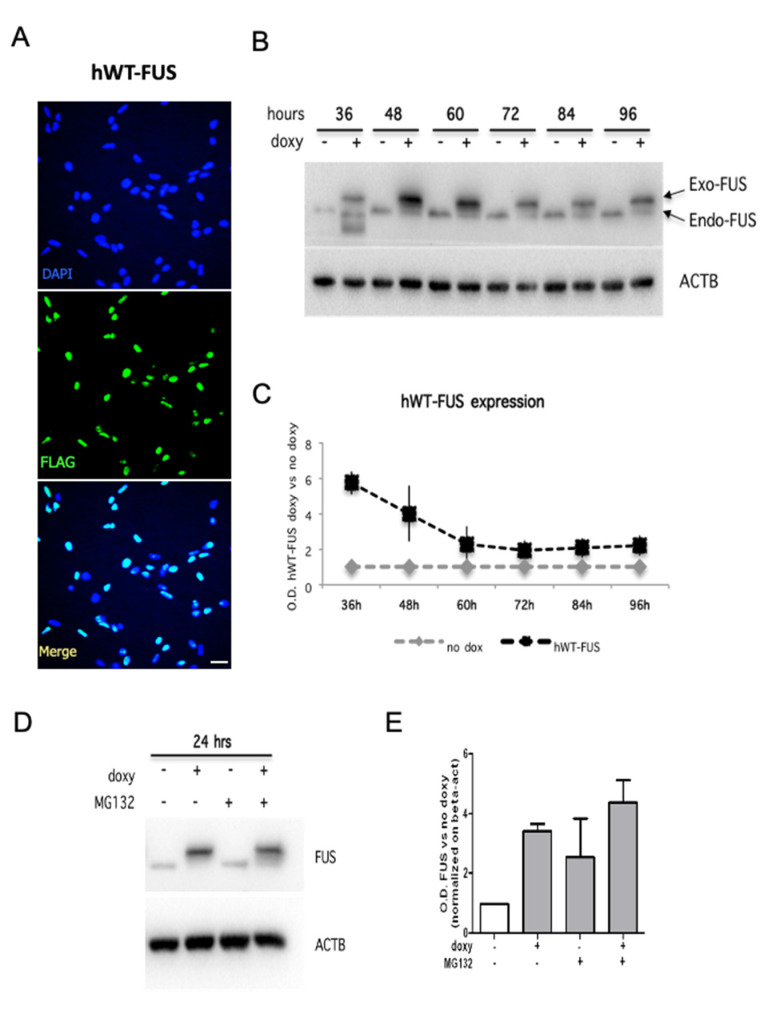
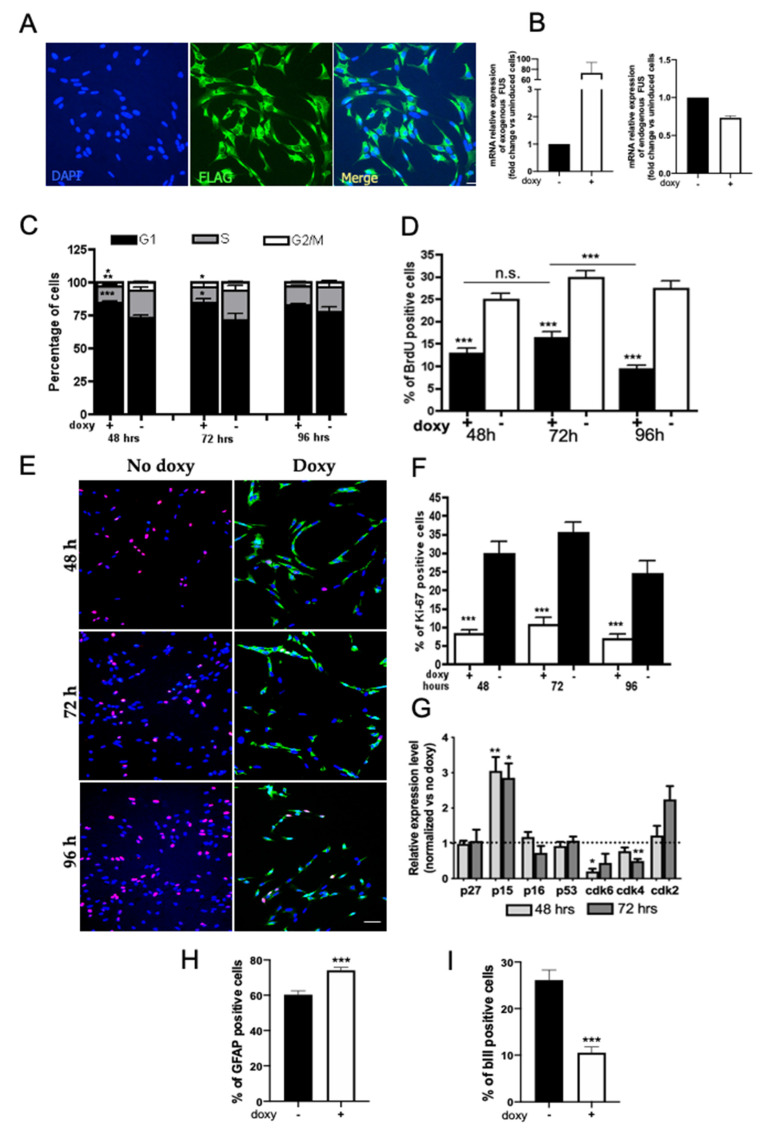
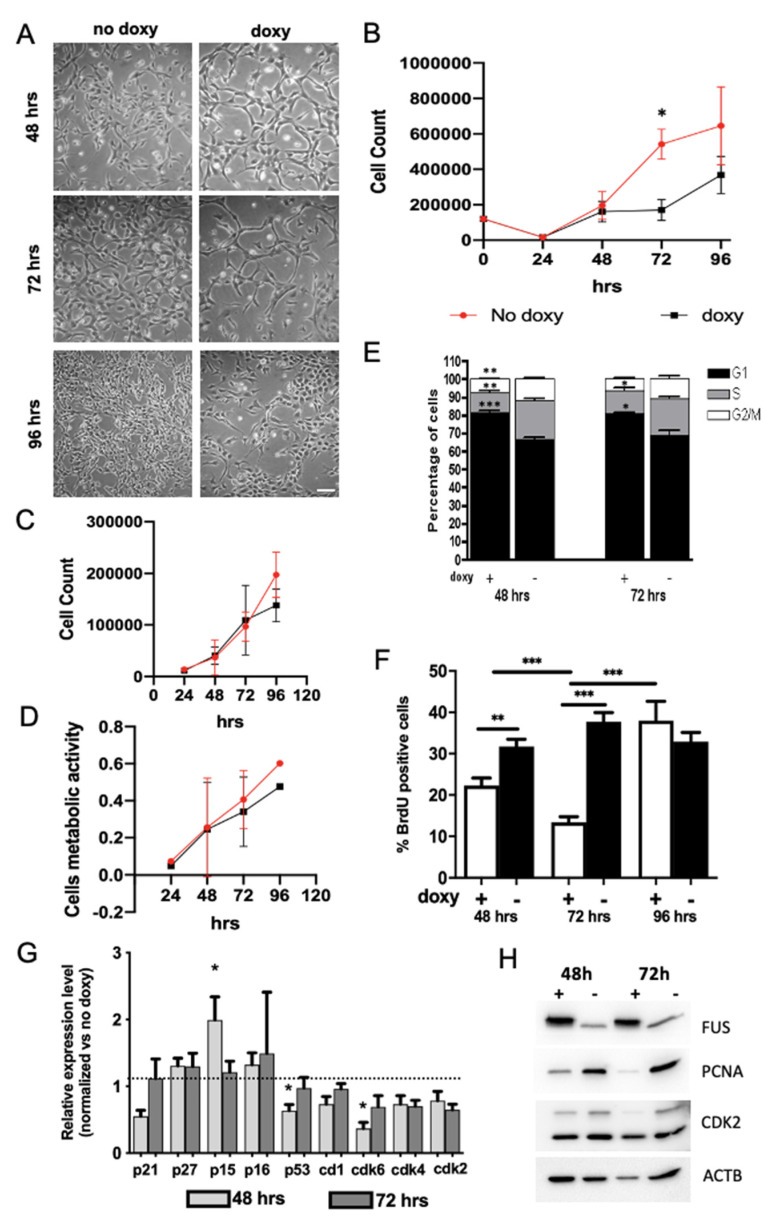
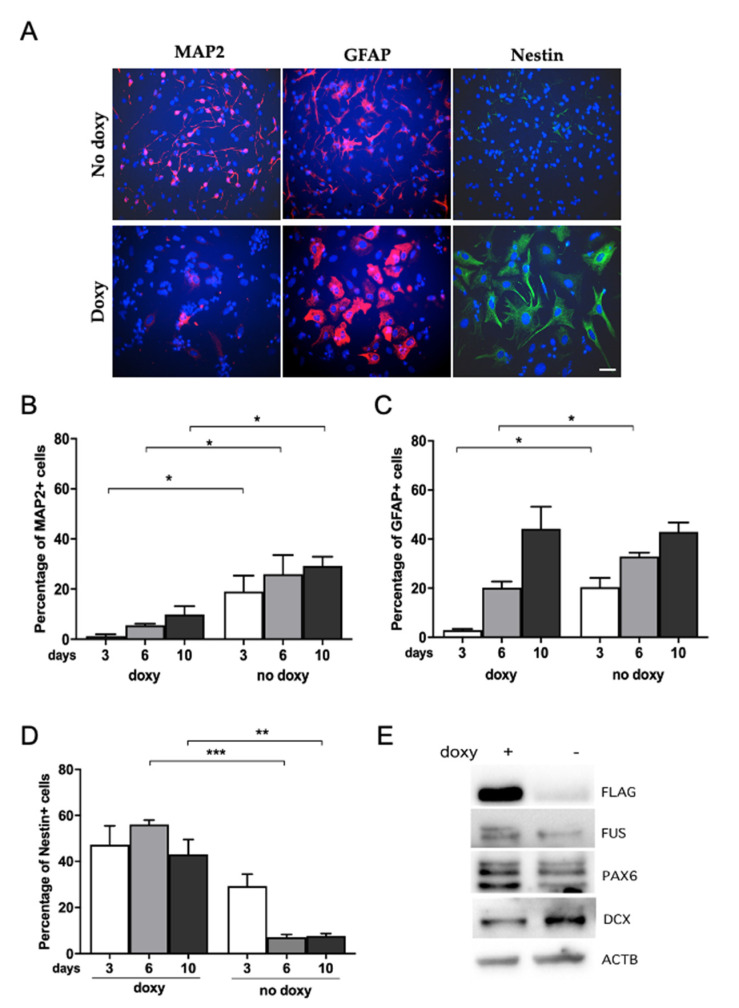
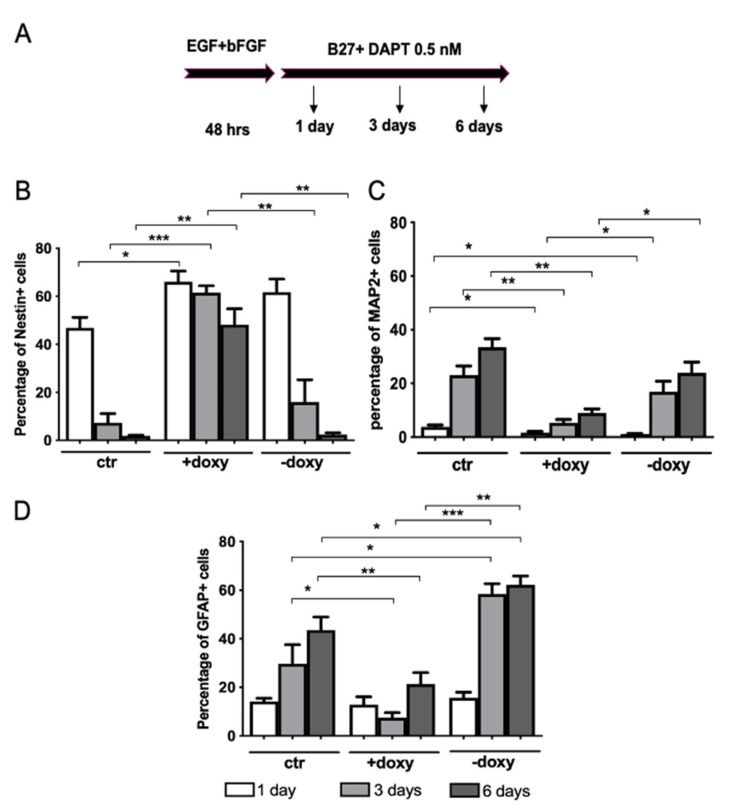
Nervous system development involves proliferation and cell specification of progenitor cells into neurons and glial cells. Unveiling how this complex process is orchestrated under physiological conditions and deciphering the molecular and cellular changes leading to neurological diseases is mandatory. To date, great efforts have been aimed at identifying gene mutations associated with many neurodegenerative diseases, including amyotrophic lateral sclerosis (ALS). Mutations in the RNA/DNA binding protein Fused in Sarcoma/Translocated in Liposarcoma (FUS/TLS) have been associated with motor neuron degeneration in rodents and humans. Furthermore, increased levels of the wild-type protein can promote neuronal cell death. Despite the well-established causal link between FUS mutations and ALS, its role in neural cells remains elusive. In order to shed new light on FUS functions we studied its role in the control of neural stem progenitor cell (NSPC) properties. Here, we report that human wild-type Fused in Sarcoma (WT FUS), exogenously expressed in mouse embryonic spinal cord-derived NSPCs, was localized in the nucleus, caused cell cycle arrest in G1 phase by affecting cell cycle regulator expression, and strongly reduced neuronal differentiation. Furthermore, the expression of the human mutant form of FUS (P525L-FUS), associated with early-onset ALS, drives the cells preferentially towards a glial lineage, strongly reducing the number of developing neurons. These results provide insight into the involvement of FUS in NSPC proliferation and differentiation into neurons and glia.
神经系统的发育涉及祖细胞的增殖和细胞特化,使其分化为神经元和神经胶质细胞。揭示这一复杂过程在生理条件下是如何协调的,以及解析导致神经退行性疾病的分子和细胞变化,是至关重要的。迄今为止,人们已经做出了巨大的努力来识别与许多神经退行性疾病相关的基因突变,包括肌萎缩侧索硬化症(ALS)。RNA/DNA 结合蛋白融合肉瘤/脂肪肉瘤易位(FUS/TLS)的突变与啮齿动物和人类的运动神经元退化有关。此外,野生型蛋白水平的升高会促进神经元细胞死亡。尽管 FUS 突变与 ALS 之间存在明确的因果关系,但它在神经细胞中的作用仍不清楚。为了阐明 FUS 的功能,我们研究了其在控制神经干细胞祖细胞(NSPC)特性中的作用。在这里,我们报告说,外源性表达于小鼠胚胎脊髓源性 NSPC 中的人源融合肉瘤 WT FUS 位于细胞核中,通过影响细胞周期调节因子的表达导致 G1 期细胞周期停滞,并强烈减少神经元分化。此外,与早发性 ALS 相关的人类突变型 FUS(P525L-FUS)的表达促使细胞优先向神经胶质谱系分化,强烈减少发育神经元的数量。这些结果提供了 FUS 参与 NSPC 增殖和分化为神经元和神经胶质的见解。